The SusChem News Blog is now hosted on the SusChem website in the News Room. You will be redirected there in 10 seconds
.

Showing posts with label BBI JTI. Show all posts

Monday, 14 March 2016

Back to back BBI and SPIRE events in April

Both the BioBased Industries Joint Undertaking (BBI) and the Sustainable Process Industry through Resource and Energy Efficiency (SPIRE) PPP are organising public events in April that will be of interest to SusChem stakeholders.

BBI Brokerage
Registration is now open for the BBI Open Info Day and brokerage event taking place on 21 April 2016 in the European Commission’s Charlemagne Building in Brussels. Registration for the event is free but mandatory with places offered on a ‘first-come, first-served’ basis so to guarantee a place register as soon as possible.

The aim of the 21 April event is to bring together potential participants interested in the BBI JU 2016 Calls for proposals. All potential applicants are welcome including SMEs, large industry and academic and research organisations.

The morning sessions will provide information about the BBI JU initiative and on all aspects of the BBI JU Call process. Details of the 2016 Call topics, more information about the event and an agenda for the day is available on the BBI JU website.

The sessions will give participants useful information about how to participate in BBI JU’s 2016 Call for proposals, including how to apply, tips and tricks on writing a proposal, BBI Call rules, and how to submit a proposal. More information on the 2016 Call topics can be found in the BBI's 2016 Annual Work Plan.

The afternoon will provide an opportunity for participants to hold face-to-face introductory meetings using the BBI JU Partnering Platform. To take advantage of this opportunity delegates will first need to create or update a professional/corporate profile on the BBI JU partnering platform. More information on, and access to, the BBI JU Partnering platform can be accessed here.

In parallel with the brokerage event, participants will also have the opportunity to find out more about the Bio-based Industries Consortium (BIC), how synergies with other programmes (including SPIRE) are being realised and to meet national representatives from a number of member states. BBI JU programme office staff will also be on hand to answer specific questions about the BBI JU Call process and procedure.

SPIRE projects
The day before the BBI event SPIRE is organising a conference to introduce its current project portfolio. This continues last year’s event “Introducing SPIRE-2014 projects” that attracted a large audience from the SPIRE community and beyond. The event on 20 April will feature SPIRE projects granted funding in 2014 and 2015 and will take place at the Silken Berlaymont Hotel on Boulevard Charlemagne in Brussels.

The SPIRE projects conference will aim to:

  • Disseminate the objectives and targets of the current SPIRE projects to the broad audience of SPIRE members, the European Commission, supporters, partners and other stakeholders
  • Discuss possible synergies and actions that can support the projects deliver on their objectives as well as future uptake of their deliverables

The meeting agenda will be organised around specific technological areas allowing representatives of various projects to learn about approaches and innovations in other projects, to exchange experiences on common issues and discuss new ideas.

The agenda for the 20 April event can be accessed here and information on current SPIRE projects can be accessed here. Registration for this event is open now, but closes on 31 March.

The fourth SPIRE Brokerage event looking at SPIRE 2017 calls will take place on 15 June 2016.

Monday, 29 February 2016

Biobased Consortia Building in Manchester on 3 March

The UK's KTN (Knowledge Transfer Network) is organising a major event on Thursday 3 March to promote the 2016 calls from the Biobased Industries Consortium/ BioBased Industries Joint Undertaking (BBI JU). This free to attend event will give details about the new call for proposals from the BBI JU that opens in April.

The event is aimed at companies and research organisations that are interested in European Funding for Biobased Industries and who wish to work with European counterparts in collaborative research and innovation projects.  During the morning the event will highlight information about the 2016 call for proposals from the Biobased Industries Consortium including views from industry and an overview of the purpose and objectives of the BBI JU. In the afternoon a highly participative session will support consortia building and proposal development.

To find out more information and to register please click here.

Biobased focus
The event will focus in particular on consortia building for the following call topics:
  • BBI 2016.R4 - Flexible biorefining technologies able to handle different feedstock, leading to new value chains or enlarging existing ones by using the same processing plant 
  • BBI 2016.R5 - Advanced biomaterials for smart food packaging
  • BBI 2016.R8 - Emerging technologies for conversion of the organic content of Municipal Solid Waste and improving waste-to-chemicals value chains 
  • BBI 2016.R9 - Exploiting algae and other aquatic biomass for production of molecules for pharma, nutraceutic, food additives and cosmetic applications 
  • BBI 2016.R10 – Industrial biotransformation for the production of bio-based chemicals
Many of the calls topics under the BBI JU require environmental and socio-economic assessments, such as LCA, therefore organisations with recognised strengths in this area are especially welcome to participate in this event.

The event will take place at the Chancellors Hotel (part of the University of Manchester) on the Fallowfields campus in south Manchester, UK.

Monday, 22 February 2016

BBI and SPIRE work to increase coordination

The Public-Private-Partnerships (PPPs) ‘Sustainable Process Industry through Resource and Energy Efficiency’ (SPIRE) and ‘Bio-based-Industries Joint Undertaking’ (BBI) are both striving to improve the sustainability of European manufacturing industry in terms of global competitiveness, ecology, jobs and growth. On Monday 15 February participants at a joint workshop for the two PPPs explored ways in which the two entities could coordinate aspects of their work programmes and add value to European research and innovation outcomes in areas of common interest. The workshop was hosted by the European Commission at it Covent Garden offices in Place Rogier, Brussels, was organised under the SusChem banner and initiated and sponsored by Evonik Industries.

The two PPPs approach their common goals from complementary angles. SPIRE comprises projects that improve all aspects of resource and/or energy efficiency across a variety of manufacturing sectors, while BBI supports the establishment of a new bio-industrial structure in Europe, from the generation of biomass in the field or forest to its value-generating industrial conversion to biobased products.


When the two PPPs were being established in 2012 a joint narrative was developed which looked to establish coordination mechanisms between the two PPPs and to ensure that their respective activities were linked and harmonised whenever technically and economically reasonable. The workshop looked at how the ambitions of the joint narrative could be implemented in practice.

SusChem editor Tim Reynolds moderated the workshop that was entitled ‘Exploring the Synergies of SPIRE & BBI-JU’ and brought together stakeholders from both PPPs. The day was split into two sessions. In the morning the full group listened to perspectives from the European Commission, industry and the PPPs themselves. And in the afternoon two group discussions worked on possible actions and organisational issues.

Perspectives
Waldemar Kütt, Head of Unit for BioBased products and processing at the European Commission reminded the audience that both PPPs were industry led and driven and that both must provide important inputs to the development and implementation of the bioeconomy and circular economy.

Søren Bowadt, the Commission’s Programme Officer for SPIRE said that the Commission’s role was to support the PPPs’ decisions. He thought that the workshop was very timely and outlined a number of areas – such as waste water, industrial symbiosis, and the circular economy – where complimentary activities would be useful to both parties.

From industry Peter Nagler, Head of International Innovation at Evonik Industries AG and member of the SusChem Board, said that from the start SusChem had believed that the bioeconomy and biotechnology must play an important part in a future sustainable chemical industry. Both PPPs had launched a number of calls: it was now time to look at where complementarities could be leveraged and to identify any gaps that needed to be addressed in the short to medium term.

Christophe Rupp-Dahlem, Head of Global Public Affairs at Roquette, President of the Plant-based Chemistry Association and Vice-chair of the board of the Biobased Industries Consortium (BIC) representing the industrial partners behind BBI underlined the importance of cooperation and communication between the two PPPs and remarked that the BBI programme in 2016 will include a Coordination and Support Action (CSA) call for a Roadmap for relevant research and innovation activities for the Chemical Industry.

For SPIRE Executive Director of SPIRE’s industrial association, Loredana Ghinea, reminded the workshop that SPIRE worked with seven other large industry sectors as well as the chemical industry. She outlined a number of past calls that were of clear relevance to the bioeconomy and also announced that SPIRE was undertaking a gap analysis of past calls as part of the formulation process for future calls.  

Dirk Carrez, Executive Director of BIC reminded participants that BBI calls were open to all. He believed that the discussion should not be about competing technologies but about synergies between the two PPP programmes.

Fruitful discussion
Possible opportunities for early synergy was outlined by Nelo Emerencia of BIC who described upcoming 2016 BBI calls of potential interest to SPIRE participants, while Søren Bowadt similarly highlighted relevant SPIRE calls  for BBI stakeholders.


The two small discussion groups worked through the possibilities for the scope of a joint working group that could guide cooperation between the PPPs and also generated ideas and areas of common interest for future joint work through a brain storming session.

Key outcomes of the workshop discussion included:
  • A small joint working group (JWG) should be established quickly to prepare a platform for coordination. Members of the JWG would be drawn from BBI, SPIRE and SusChem. The platform would work under the auspices of SusChem and its role would be to connect content and programme coordinators to help development of programmes / calls that are complementary. It could also help in organising further brainstorming sessions and motivate stakeholders to participate.
  • Both PPPs have undertaken or are in the process of undertaking gap analyses of their current calls. Comparison of these analyses would be very useful in identifying areas of common interest and priorities for future content that could be taken up through the two PPPs' calls (attention should be paid to connecting TRLs and timings of deliverables).
  • It was important that existing communication channels worked effectively to ensure that information on the calls in from both PPPs were effectively disseminated to all the stakeholders in both PPPs – perhaps with topics of specific interest highlighted. 
  • In the short term, both PPPs will try to motivate their respective stakeholders to look for complementarity during project consortium formation.
The workshop concluded that enhanced cooperation between SPIRE and BBI should yield valuable synergies and that swift implementation of the JWG was important. Further discussions on areas of common interest would be undertaken at upcoming PPP events and a joint session could also be useful at the next SusChem stakeholder event on 16 June in 2016.

The discussion continued at a networking cocktail in the Sheraton Rogier Hotel.

Monday, 9 November 2015

Sustainable chemistry solving the innovation puzzle

Innovation – a simple concept and an essential one for the chemical industry is the message of a recent special report in ICIS Chemical Business that featured SusChem and the SPIRE PPP.  Both Cefic’s Executive Director, Research and Innovation Pierre Barthélemy and Loredana Ghinea, executive director of SPIRE are interviewed in the article by ICIS editor John Baker.

In his interview Pierre Barthélemy (right) emphasises the commitment of the chemical industry to innovation to increase industry’s contribution to GDP and address global societal challenges like climate change and an ageing population. “Addressing these issues is something we can do only if we innovate,” he says.

Pierre also talked about the chemical industry’s role in improving resource efficiency through developing better materials and processes and stimulating collaboration along value chains.

SusChem
Pierre points out that the industry’s recognition of the need to invest more in innovation collectively was a major driver behind the SusChem initiative. In particular the platform has helped to identify and develop major public-private-partnerships (PPPs) – specifically the SPIRE PPP (see below) and the BioBased Industries Joint Undertaking.

He also highlights SusChem’s work in progressing initiatives for the use and valorisation of carbon dioxide. These innovations have the potential to provide opportunities for new chemical feedstocks and for chemical energy storage, he explains.

SPIRE PPP
The two key goals for the PPP ‘Sustainable Process Industry through Resource and Energy Efficiency’ (SPIRE) are spelled out in its title and also require innovation. As well as delivering environmental benefits energy and resource intensity are two prime costs in the process industries. “There is a drive to innovate with new technologies that deal with these costs,” says Loredana Ghinea.

SPIRE aims to address three fundamental challenges in Europe:

  • The urgency to create growth and increase competitiveness in a global market
  • The need to rejuvenate the European process industry
  • The imperative to reduce resource and energy inefficiency and the environmental impact of industrial activity

SPIRE has its own strategy for research and innovation. “We are already attracting high interest and the first very promising projects have begun this year, with 18 now agreed and up and running,” says Loredana (left).

The SPIRE PPP is clearly of importance to the chemical sector with 27 chemical companies already involved. “We are bringing companies together to discuss and identify strategic innovation priorities and actions,” she states.

You can read the full article here.

Tuesday, 27 October 2015

Bio-Based Industries Joint Undertaking now fully operational!

On 26 October the Bio-Based Industries Joint Undertaking (BBI JU) became fully autonomous, enabling it to manage its own budget and launch its own calls for proposals, grants and public procurement. The €3.7 billion public-private partnership has remained under the European Commission’s supervision since its formal launch in July 2014. But now the BBI JU will function as an independent body, with its own staff and offices.

The European Commission, which provides €975 million of the overall budget for the BBI JU, welcomed the new status. Carlos Moedas, European Commissioner for Research, Science and Innovation, said: “This is great news for the EU’s efforts to develop a more sustainable economy. Once again, we are joining forces with industry and investing together in the huge potential of the bioeconomy. BBI will help expand our knowledge of how we can convert Europe’s untapped renewable resources and waste into greener everyday products and biofuels".

BBI JU Executive Director, Philippe Mengal, commented that it was a proud moment for the Joint Undertaking. "It has only been a year since it was formally set up, but we have worked hard to launch calls for proposals and grants, identifying promising initiatives across Europe,” he said. Philippe Mengal became Executive Director on 1 October 2015. He has some 25 years’ experience in green technologies, engineering and the food/life sciences industries.

Important role
The BBI JU plays an important role in supporting business models that link economic actors all along the entire bioeconomy value chain. The BBI JU’s second call for proposals, published on 25 August 2015, aims to improve cooperation between the different economic sectors: from the biomass supply (breeding and plant production, forestry, farming) to biorefineries and consumers of bio-based products.

Marcel Wubbolts, Chief Technology Officer at DSM, commented: “This marks a vital step in the BBI JU’s evolution: innovate in products from locally grown feedstocks, invest in regional value chains and inspire citizens in Europe that the biobased economy creates jobs, growth and a sustainable future.” Marcel Wubbolts is chairman of the Bio-based Industries Consortium (BIC) - the private partner in the public-private partnership BBI.

About autonomy
Under Article 19 of Council Regulation (EC) 560/2014 of 6 May 2014 that established the BBI JU, the European Commission is responsible for the establishment and initial operation until the JU has the operational capacity to implement its own budget. The budget of the BBI JU must be established and implemented in accordance with the principles of unity, budgetary accuracy, annularity, equilibrium, unit of account, universality, specification, and sound financial management which requires effective and efficient internal control and transparency.

More information
Along with the SPIRE PPP the BBI JU is one of two public-private partnership (PPPs) under Horizon 2020 that can be said to be ‘SusChem inspired’. The BBI JU PPP is part of the EU’s plan to move its economy to a post-petroleum era. It is expected to help make the EU’s economy more resource-efficient and sustainable, while supporting growth and employment. The BBI is dedicated to realising the potential of the European bioeconomy and contributing to a sustainable circular economy, by turning biological residues and wastes (from agro-food, forestry and municipal) into greener everyday products, through innovative technologies and biorefineries, which are at the heart of the bioeconomy.

Tuesday, 20 October 2015

EFIB 2015: The Chemical Industry and ‘Biobased’

The European Forum for Industrial Biotechnology and the Bioeconomy (EFIB) 2015 takes place on 27-29 October at the Square in Brussels and the eighth EFIB promises to be bigger than ever. SusChem and Cefic are organising a dedicated session on biobased chemical value chains as part of the conference on 29 October. In advance of the session Cefic’s Executive Director Research and Innovation Pierre Barthélemy and Dr. Henrike Gebhardt of Evonik Industries AG have been interviewed by EFIB organisers.

With major chemical players looking to move into biobased products and processes the interview focuses on key questions surrounding the session: ‘Is the chemical industry catching up with biobased’. The interview covers changing attitudes and approaches by the chemical sector to biobased, the measures needed to accelerate uptake of renewable feedstocks, views on the most significant recent developments in the biobased industry sector and what they hope the EFIB session will achieve.

Pierre (right) says: “It is important to keep looking at success stories and achievements in the chemical industry, but it is even more important to highlight the challenges faced by the chemical industry to embrace the bio-based approach more widely.  Switching to different feedstock is not just a technical challenge.  It creates new value chains with different stakeholders that have to understand each other.  It is essential for the chemical industry to explain its expectations and challenges in order to make progress in building the connections between stakeholders in these new value chains.”

“EFIB is an excellent platform to network with stakeholders from academia, finance, governments, industry, and NGOs,” comments Henrike (left). “This year I am especially looking forward to getting a insight into the approach of several brand owners to bio-based products, because they are closest to customers’ needs.”

Joining Pierre and Heinrike at the EFIB session will be Reinhard Buescher, Head of Unit for Chemicals Industry at DG Grow giving the view of the European Commission. Further insights from industry will be presented by François Monnet, Exec VP for Renewable Chemistry at Solvay, Dr. Stefan Lundmark of Perstorp AB, and Dr Marcel Wubbolts from DSM who was recently awarded CTO of the Year 2015. The presentations will be followed by a group discussion.

The session will cover topics such as differentiation in times of barrel price volatility, meeting changing consumer needs and connecting uncommon partners in new biobased value chains.

Industrial Biotechnology is currently worth €23 billion – this represents just 6% of sales in the overall worldwide chemicals market. However, the sector is significantly out-performing the overall chemicals market at an impressive 20% annual growth rate and has the potential to become the dominant technology of tomorrow’s chemicals industry - and represents a huge future opportunity.

SusChem and the bioeconomy
The SusChem Strategic Innovation and Research Agenda (SIRA) includes has a dedicated chapter on ‘A Sustainable and Inclusive Bioeconomy’ and SusChem is an essential link between the chemical industry, industrial biotechnology and stakeholders in the bioeconomy.

The platform is actively involved in two large and relevant PPPs between the European Commission and industry launched in 2014:


SusChem contributes to the alignment of both initiatives. The interface between BBI and SPIRE is the provision and use of biobased platform chemicals. In addition, both PPPs may support projects using biotechnological conversion processes and specific improvements of biotechnology processes may be eligible for funding through either PPP. SusChem will enable the coherence of on-going and future funding initiatives and the deployment of flagship projects that demonstrate technological leadership and that Europe is a globally competitive location to invest in the bioeconomy.

More information on EFIB
The conference kicks off with a set of pre-conference Workshops on 27 October with the full conference programmes on 28 October and 29 October.

Register your place today here!

Tuesday, 25 August 2015

€106 million Call for Proposals for the BBI JU Published

Today (25 August) a new €106 million call for research and development was unveiled for biobased initiatives to turn renewable resources into useful biobased products. This second call for proposals for the BioBased Industries Joint Undertaking (BBI JU) will support research and innovation actions, including demonstration actions, for making the best use of biomass, enabling a functioning bioeconomy in Europe and supporting the establishment of a sustainable circular economy.

The call for proposals is aimed at speeding up the development of new biorefineries. Moreover, it focuses on exploiting synergies across sectors. This means new business models that integrate economic actors all along complete value chains. It also means improving strategic cooperation between the different economic sectors: linking actors involved in biomass supply (breeding and plant production, forestry, farming) to biorefineries and consumers of biobased products. This integration of producers, refineries and consumers will help SMEs as their technologies, equipment and instruments will be needed to assist large enterprises as well as stand-alone projects.

Budget allocation
The budget for the proposals will be split as follows:
€28 million will be allocated for Research and Innovation Actions covering the following topics:

  • Converting the streams of lignin (the complex organic polymers that make wood cells rigid) in biorefineries so they can be eventually used in sectors like chemical, transport, aerospace, textile, energy, and construction industries
  • Pre-treating lignocellulose (plant dry matter) while simultaneously removing contaminants and separating lignin and cellulosic fractions. Solving this challenge will remove a major hurdle to processing biomass into feedstock
  • Developing biobased molecules for coating and surface treatment, a growing market as businesses aim to increase the shelf life of products
  • Separating and extracting technologies to pull added value compounds such as bark and branches from wood and forest-based residues
  • Promoting practices to improve effective forest management, so there is more access to wood resources with less of an environmental impact
  • Developing sustainable cellulose based materials to ensure their strong market prospects as textiles, films and thermoplastics meet tight environmental demands
  • Tailoring tree species to produce wood designed for industrial processes and biorefining purposes. This means engineering and generating wood feedstock with a chemical structure designed for later processing steps
  • Increasing productivity of industrial multi-purpose agricultural crops: with limited natural resources, this means developing more efficient nutrient uptake, water use and land regeneration
  • Making the most of the aquatic biomass: water plants like algae and microalgae have high value applications such as food ingredients, polymers, feed proteins, cosmetics, pharma, etc but the costs of the extraction and conversion need to come down. 

An additional €12 million is assigned for Innovative and efficient biorefinery technologies. The aim is to improve the technologies pioneered by existing biorefineries so they become cost-competitive with respect to fossil counterparts. Most biorefineries today are designed to process only one kind of feedstock, which means most of the important value chains are not exploited.

The bulk of the call funding, €64 million, will be allocated for Demonstration Actions that address the following areas:

  • Showing how lignocellulosic feedstocks can be turned into chemical building blocks and high added value products, with products and processes benchmarked against fossil based alternatives
  • Developing innovative cellulose-based composite packaging solutions, mainly to improve their mechanical properties and address contaminant control (dust, bacteria and other impurities)
  • Producing biobased elastomers from Europe-grown feedstock
  • Developing high purity biobased intermediates and end products from vegetable oils and fats
  • Making the most of agricultural residues and side streams from the agro-food industry
  • Extracting organic acids from municipal solid waste
  • Overcoming low product yields from fermentation processes in the production of industrial products like alcohols, acids, proteins, amino acids, and specialty carbohydrates.

A further €2 million of funding will cover Coordination and Support Actions. Part of this is focused on helping biobased products meet the standards and regulations needed to trade across the EU and expand their market potential. Other actions are aimed at enhancing awareness of biobased products and their benefits in order to get public acceptance and reach the success of a bioeconomy.

About BBI JU
The call for proposals follows the July 2014 launch of the BBI JU, a €3.7 billion public-private partnership aimed at supporting the development of Europe’s emerging bioeconomy. The BBI JU is a public-private partnership (PPP), part of the EU’s plan to move its economy to a post-petroleum era.

BBI JU is expected to help make the EU’s economy more resource-efficient and sustainable, while supporting growth and employment. €3.7 billion will fund the BBI JU between 2014 and 2024, with €975 million coming from the European Commission and €2.7 billion from its private partner, the Bio-based Industries Consortium (BIC). The BBI is responsible for the implementation of open calls for proposals for research and innovation actions, as well as coordination and support actions, in line with the Horizon 2020 rules for participation.

More information on the calls can be found on the Horizon 2020 portal site.

Friday, 26 June 2015

BBI launches €200 million EU call for bioeconomy at Brussels Info Day

 Today (26 June) the second call for proposals for Bio-Based Industries Joint Undertaking (BBI JU) were announced at their Info Day in Brussels and the results of the first call were confirmed with the signing of the first 10 grant agreements. 

Europe’s biobased economy received a major boost with the announcement of the new €200 million+ call for proposals on June 26 at the Bio-Based Industries Joint Undertaking (BBI JU) in Brussels. The latest call for proposals follows the July 2014 launch of the BBI JU, a €3.7 billion public-private partnership aimed at supporting the development of Europe’s emerging bioeconomy.

The 2015 call for proposals were formally announced at the Info Day - an information and awareness event gathering together research and innovation programme managers and experts from across Europe.

The 2015 call is aimed at attracting project proposals that can fill the technological gaps within specific value chains in the bioeconomy, or actions addressing the whole value chain from feedstock sourcing to the market applications. Demonstration actions should include building a demo-scale production facility in Europe, while flagship actions should support the first application in the market of a proven innovation that has not yet deployed. Details of the second call can be found here.


The packed Info Day meeting (above) at the European Commission’s Borschette Centre in Brussels was opened by BBI JU’s Interim Executive Director, Barend Verachtert. He hailed the new call for proposals as a landmark for Europe in its progress towards a fully sustainable bioeconomy. “Today is an important day for the BBI JU,” said Verachtert. “It shows that we are on the way to building a strong bioeconomy in Europe.”

Bioeconomy, circular economy
The new call comes just two weeks after G7 leaders meeting in Germany agreed to end all fossil fuel use by the end of the century and the day after a major conference meeting in Brussels highlighted the role of sustainable chemistry and biotechnology in achieving the aims of the circular economy.

Verachtert said that the new call reflects Europe’s clear commitment to develop cleaner ways to exploit its natural resources. “The bio-based industrial sector will significantly reduce Europe’s dependency on fossil-based products, help the European Union meet climate change targets, and lead to greener and more environmentally-friendly growth,” he said.

Moreover, Verachtert pointed out the social and economic effects of the BBI JU proposals, in particular their focus on small and medium-sized enterprises (SMEs). “These proposals can go a long way to help SMEs produce the innovative bio-based products needed to lift Europe’s sustainable economy,” he said. “With the bioeconomy now at the heart of the EU’s investment agenda, the proposals underline a joint will to build new value chains between sectors like agro-food, chemicals and energy,” he added.


Following presentations on the BBI and the European biobased industries and Horizon 2020 and a full briefing on all aspects of the 2nd call in the morning, the afternoon of the Info Day was devoted to networking and the initial steps towards consortium building and proposal preparation.

New BBI JU projects
The second round announcement comes days after the BBI JU signed its first 10 grant agreements. The BBI JU 2014 call for proposals included support for the development of biorefining technologies to sustainably transform renewable natural resources into biobased products, materials and fuels.
The call resulted in the submission of 38 proposals, of which 10 received grants. The total BBI JU contribution for these 10 projects is almost €50 million with an additional industry contribution of over € 70 million.

Seven of the projects are Research and Innovation Actions (RIAs) aimed at replacing fossil-based materials with biobased materials. The seven projects are:

  • US4GREENCHEM - the pre-treatment of lignocellulosic or plant dry matter feedstock
  • PROVIDES - new sustainable pulping technologies
  • SmartLi and Greenlight - fibres and polymers from lignin
  • CARBOSURF - fermentation processes to produce biosurfactants and specialty carbohydrates
  • PROMINENT - extracting protein products from plant residues
  • NewFert - nutrient recovery from waste streams and residues

A further three grants are for demonstration and flagship projects aimed at testing technologies. The projects are:

  • PULP2VALUE - (DEMO) a biorefinery system for sugar beet pulp and products for detergents, personal care, oil and gas, paints and composites
  • ValChem -  (DEMO) techno-economic viability tests on the production of chemicals from wood
  • FIRST2RUN - (FLAGSHIP) exploiting underutilised oil crops to extract vegetable oils
The links will take you to the project's CORDIS Horizon 2020 project webpage if it exists. A Commission background paper on the projects is available here.


About the BBI JU
The BBI JU is a public-private partnership (PPP), part of the EU’s plan to move its economy to a post-petroleum era. It is expected to help make the EU’s economy more resource-efficient and sustainable, while supporting growth and employment. €3.7 billion will fund the BBI JU between 2014 and 2024, with €975 million coming from the European Commission and €2.7 billion from its private partner, the Bio-based Industries Consortium (BIC).

The EU’s bioeconomy currently has an annual turnover of around €2 trillion and employs more than 22 million people.

Monday, 15 June 2015

Relive #SusChem2015!

SusChem's 2015 Stakeholder event was a great success! With new exciting and interactive elements, the SusChem community put some serious work into working up future ideas for SusChem inspired projects across our portfolio of priority research and innovation challenges. The outcomes from the two-day event will move the implementation of SusChem's Strategic Innovation and Research Agenda (SIRA) forward. As well as generating a buzz in the conference itself #SusChem2015 made a big impact in the virtual world too. With tweeted photos and short videos the event was a #trending topic on both 8 and 9 June!  


Proceedings were led by SusChem chairman Klaus Sommer (above) with contributions from academia, industry and European Commission officials. There was also a clear focus on SMEs and facilitating their access to European research and innovation programmes and funding. To coincide with #SusChem2015, the technology platform published a new SME Funding Guide and the event ended with a very stimulating showcase involving 19 of Europe's most innovative SMEs 'pitching' their ideas and expertise to a panel of industry experts.

Breakout sessions
The first day of #SusChem2015 focused on the implementation of priorities from the the new SusChem SIRA in six parallel breakout sessions.


Climate Action, Environment, Resource Efficiency and Raw Materials was led by Philippe Krafft of Solvay (above) examining a wide range of material and process challenges including industrial symbiosis.

The Secure, Clean and Efficient Energy group chaired by Jens Rieger of BASF who looked at how chemistry and materials for energy storage can enable full integration of renewable energy sources.


ICT and the Chemical Industry was led by Thorsten Potter of Bayer discussing how smart processes and smart materials can deliver improved competitiveness for  the chemical industry in Europe.


The Sustainable and inclusive bioeconomy discussion was orchestrated by Joanna Dupont of EuropaBio covering challenges for chemistry along the full value chain from agriculture and forestry to new markets for platform biobased chemicals


Health, Demographic Change and Well-being was led by Rodney Townsend of the Royal Society of Chemistry focusing on modelling pharmokinetic processes to improve targeted delivery of Active Ingredients.


Finally Smart, Green and Integrated Transport chaired by Peter Nagler of Evonik debated the chemical and material challenges of clean and green mobility.

The outcomes of the breakout sessions were discussed on the second day of  #SusChem2015 in an extended panel discussion and audience Q&A.

Commission contributions
The European Commission were active across two days with word of encouragement and insights on future plans for European collaborative research and innovation. The opening plenary of the event was given by Rudolf Strohmeier, Deputy Director General of DG Research and Innovation (below).


He acknowledged SusChem's role in driving forward the research and innovation agenda in Europe and had particular praise for the SusChem-inspired SPIRE PPP. He also stated that the Commission was fully aware that if the regulatory framework conditions in Europe did not improve then industry would not invest and asked the SusChem community to contribute to the ongoing consultation on this topic in the context of the circular economy and more generally. He also highlighted a recent joint workshop on CO2 conversion technology. This could be a first step towards a possible project of Common European Interest and a 'lighthouse example' for circular economy thinking.


On the second day further insights on how the Horizon 2020 programme had proceeded so far in the 2014 and 2015 calls was given by Soren Bowadt from DG R&I (above).


Christos Tokamanis from DG R&I described Commission work in the area of materials technologies and the major societal challenges.


The Open Innovation SME Workshop was prefaced with a presentation by Catherine Eginard from the Commission's DG GROW describing initiatives for SMEs including the work of the Executive Agency for Small and Medium Sized Enterprise (EASME).


Another important contribution was the final plenary presentation on 9 June: a joint presentation on the SusChem-inspired Horizon 2020 PPPs with Dirk Carrez of the Biobased Industries Consortium (above, left) and Loredana Ghinea of SPIRE.

Friday, 22 May 2015

BBI – JU launches €100 million Call

The Bio-based Industries (BBI) Joint Undertaking (JU) PPP has just launched a €100 million Call for Proposals. This second call from the BBI JU is dedicated to Innovation Actions (aka ‘Flagship projects’) and focuses on lignocellulosic feedstock (BBI Value Chain 1), valorisation of cellulose (BBI Value Chain 2) and innovative processes for sugar recovery and conversion from Municipal Solid Waste (BBI Value Chain 4). See the BBI JU value chains below.

The Bio-based Industries Joint Undertaking will be holding an Info Day session in Brussels on the morning of 26 June on this call followed by a networking and brokerage session in the afternoon. 


All three sub-calls will be subject to a single stage selection process and proposals must be submitted by the closing deadline of 15 September 2015. The call documentation estimates that proposals with total eligible budgets up to €35 million should allow the specified challenges to be addressed appropriately.

In addition any proposals should look to include industrial symbiosis and integration of actors along the whole value chain in their proposed projects and, wherever possible, make use of existing facilities.

The topics chosen in this call reflect elements of the section on 'A Sustainable and Inclusive Bioeconomy' in SusChem's recently published Strategic Innovation and Research Agenda (SIRA). The three sub-calls are summarised below with links to their specific Horizon 2020 call page (click on the header).

Lignocellulosic biomass is one of the most abundant resources of fixed renewable carbon on earth present in woody crops, agricultural and forest and other process residues. While bio-based chemicals, materials and ethanol produced from food crops are already on the market production from lignocellulosic feedstock would open up large opportunities in terms of enhanced sustainability, avoiding land conflicts and expanding resource potential.

Research and innovation activities in this area are on-going, but the challenge lies in establishing at industrial scale a first-of-a-kind, cost-effective biorefinery concept leading to the conversion of lignocellulosic feedstock into biobased chemicals, materials and ethanol. Therefore the principal objective of this call is the demonstration of the techno-economic viability of transformation of one or multiple lignocellulosic feedstock into a bio-based product such as bioethanol (targeting a production capacity of at least 50 000 ton/year); and/or diols and/or diacids (targeting a production capacity of at least 5 000 ton/year). Proposals should address their further conversion into sustainable biomaterials within an integrated biorefinery concept applying a cascading approach.

Cellulose is a well-known and widely exploited material, but recent technological developments are opening up opportunities for its use in new and higher added value applications. This enhances competitiveness and also significantly improves environmental performance. As for lignocellulosic feedstock, while demonstration activities are being pursued, the challenge in this call lies in demonstrating at industrial scale first-of-a-kind cost-effective biorefinery concepts leading to the production of economically competitive cellulose-based products for bulk materials and volume applications.

Proposals should aim to demonstrate the techno-economic viability of biorefinery concepts leading to new cellulose-based products with tailored functionalities for either microfibrillar cellulose (MFC) based additives (at a scale of at least 1 000 ton/year) or lightweight structural composites based on (bio-based and/or conventional) polymers reinforced with cellulose pulp fibres (demonstrated at 25 000 ton/year of composite materials).

The biodegradable fraction of Municipal Solid Waste (MSW) is an abundant feedstock rich in sugars and suitable for conversion into biobased chemicals and fuels through biotechnological processes. However, its quality is highly variable and contains other components, such as proteins, fats, ashes and other inhibitor compounds which affect the overall yield of fermentation and enzymatic conversion processes. This call again looks to demonstrating at industrial scale a first-of-a-kind, cost effective new value chain for the recovery and conversion of MSW-based sugars into biobased products for the whole value chain: from sourcing and management of MSW to its conversion. 

What is the BBI JU?
The Bio-Based Industries Joint Undertaking is a €3.7 billion Public-Private Partnership (PPP) between the EU and the Bio-based Industries Consortium (BIC). It is dedicated to realising the European bioeconomy potential, turning biological residues and wastes into greener everyday products through innovative technologies and biorefineries, which are at the heart of the bioeconomy. The BBI is about connecting key sectors, creating new value chains and producing a range of innovative bio-based products to ultimately form a new bio-based community and economy.

For more information on the BBI JU visit the BBI JU website or contact the BIC secretariat.

Tuesday, 12 May 2015

Bio-based Industries Info day 2015

The Bio-based Industries Joint Undertaking (BBI JU) will be holding an Info Day session on the morning of 26 June followed by a networking and brokerage session in the afternoon. The Info Day will take place from 09:00 to 12:30 at the Charlemagne Building, Rue de la Loi 170, B-1000 Brussels.

The Info day session will address the following questions:

  • What benefits does the Bio based Joint Undertaking offer you?
  • What is included in the new Call?
  • How can you apply for funding? 

The BBI Info Day 2015 in Brussels on 26 June will give you first-hand information on this new EU funding instrument. The Info Day is organised by the BBI JU to provide full information on the 2015 Call for Proposals. Participation is free of charge but registration is compulsory.

Registration is open until 19 June 2015 via the BBI website on the "Events" section or via the link below. To attend the conference please fill in the on-line registration form as soon as possible. When registering please specify the organisation you belong to. All applications will be considered on a “first come, first served” basis.

To register for the BBI Partnering Platform visit http://www.bbi-europe.eu/participate/bbi-partnering-platform.

What is the BBI JU?
The Bio-Based Industries Joint Undertaking is a €3.7 billion Public-Private Partnership (PPP) between the EU and the Bio-based Industries Consortium (BIC). It is dedicated to realising the European bioeconomy potential, turning biological residues and wastes into greener everyday products through innovative technologies and biorefineries, which are at the heart of the bioeconomy. The BBI is about connecting key sectors, creating new value chains and producing a range of innovative bio-based products to ultimately form a new bio-based community and economy.

Monday, 22 December 2014

Season’s Greetings from SusChem

This year in June we celebrated the 10th anniversary of the European Technology Platform for Sustainable Chemistry “SusChem”. When we established SusChem in 2004 we knew that we had set the sustainable chemistry community in Europe a difficult task, but together over the past decade we have shaped a lively, creative organisation, open for all interested stakeholders: an organisation that has made a huge impact. 

Over the past 10 years SusChem has inspired research and innovation projects worth well over one billion euros: the vast majority funded via the European Commission’s FP7 programme. And with the launch of Horizon 2020 this year SusChem is proud to have inspired two major new public-private-partnerships (PPPs) that are already delivering real competitive advantage for Europe: the Sustainable Process Industry through Resource and Energy Efficiency (SPIRE) PPP and the Bio-based Industries (BBI) Joint Technology Initiative (JTI).

But there is more to do. At the June stakeholder meeting the new SusChem Strategic Innovation and Research Agenda (SIRA) was discussed. The SIRA sets SusChem’s research and innovation priorities for the medium term helping to bridge the “innovation valley of death” and address societal challenges. It will be published early in 2015.

Everything we do  is focused on ultimately improving societal conditions, in particular, with respect to sustainability for “People, Planet and Profit”. Our work will be fully justified if we can simultaneously create jobs, improve the environment and generate greater economic success and wellbeing.

SusChem’s momentum and success is based on the personal commitment of all SusChem members and stakeholders We are confident that our new SIRA will help and inspire us all to take SusChem to the next level.

To conclude, on behalf of the SusChem board and the SusChem secretariat, We  wish you all a very happy and relaxing holidays, and a happy, healthy and sustainable New Year. 2015 will be another great year for SusChem with the publication of the SIRA, the launch of some fantastic new SusChem-inspired projects and, a date for your diary, our next stakeholder event that will take place on 8 and 9 June.

Kind Regards,

Dr Klaus H. Sommer
Chairman of the SusChem Board
Head Consumer & Product Management Bayer Technology Services

Dr Jacques Komornicki
SusChem co-ordinator and secretary
Innovation Manager, Cefic

SusChem 2014 in Review

2014 was another great year for the European Technology Platform for Sustainable Chemistry: SusChem.  This year we celebrated our 10th anniversary with an extra special stakeholder event in Brussels. Over the past decade SusChem has inspired research and innovation projects worth well over one billion euros: the vast majority part-funded via the European Commission’s FP7 programme.

The launch of Horizon 2020 on 1 January 2014 saw SusChem proud to have inspired two major new public-private-partnerships (PPPs) that are already playing a major role in 2014 in delivering real competitive advantage for Europe via the new programme: the Sustainable Process Industry through Resource and Energy Efficiency (SPIRE) PPP and the Bio-based Industries (BBI) Joint Technology Initiative (JTI).

SusChem itself was also ‘quick off the blocks’ for Horizon 2020 by organising its first SusChem brokerage event on 31 January. The event attracted some 200 participants who heard about results from existing projects and started the process of initiating new consortia for the new Horizon 2020 calls.

On April 9 – 11 SusChem was at the Industrial Technologies 2014 event in Athens one of the highlights of the Greek Presidency of the European Union.

And on 6 May the European Commission gave the formal greenlight for the BBI JTI with the first calls for the Euros 3.7 billion joint venture announced on 9 July. Our other major PPP saw its second major call brokerage event on 23 May. The SPIRE Brokerage event was extremely successful and profiled its second wave of calls under Horizon 2020.

SusChem#10
June 11 and 12 saw the event of the year for SusChem - SusChem#10 - our 10th anniversary stakeholder event. To mark the occasion a series of videos were produced to celebrate our first decade.


At the June stakeholder meeting as well as celebrating our 10th birthday we discussed and augmented the new SusChem Strategic Innovation and Research Agenda (SIRA). This new agenda shows how the platform can help Europe to bridge the so-called ‘innovation valley of death’ and tackle some of the societal challenges addressed Horizon 2020.

You can access a series of seven videos produced around SusChem#10 to celebrate our achievements and look forward to the next ten years here on the SusChem YouTube channel.

Material innovation
At the end of September the SusChem FP7 project MatVal held its closing conference within the large LETS 2014 event in Bologna, Italy. SusChem and SPIRE were also featured in many other LETS 2014 sessions.

Bringing an exciting year to a very successful end SusChem had a big role in Knowledge for Innovation’s (K4I) Sixth European Innovation Summit at the European Parliament in Brussels from 17 - 20 November. As well has organising and participating in many of the conference sessions the SusChem stand in the exhibition area was a big hit with two 3D printing machines showing how chemistry is supporting the next industrial revolution: additive manufacturing.

A short video (below) gives a brief overview of SusChem’s involvement and the excitement generated at the event.


Great job!
When SusChem was established in 2004 the sustainable chemistry community in Europe faced a difficult task: to bring stakeholders in the chemical and the biotechnological industries, along with other important European industries, research organisations and academics together to formulate a strategy and a plan. This strategy and plan outlined how we could rejuvenate our industries through research and innovation and improve the competitiveness of our industries.

This was not an easy job, but together over the past decade we have shaped a lively, creative organisation, open for all interested stakeholders, that has made a huge impact.

But there is more to do. In early 2015 the full SIRA will be published setting out SusChem’s research and innovation priorities for the medium term under Horizon 2020 and other funding programmes. The document will add value to the societal, scientific and industrial debate in Europe and help all SusChem stakeholders to concentrate on the real challenges that we all face. Our work will be fully justified if we can simultaneously create jobs, improve the environment and generate greater economic success and well-being.

We look forward to working together to take SusChem to the next level in 2015.

Wednesday, 17 December 2014

BIC publishes new practical guide to Combined Funding

SusChem stakeholders all know that in theory there are now numerous synergies between sources of European Union (EU) funding for innovation and research. And EU leaders are promoting combined funding to maximise impact when tackling societal challenges. Now a practical guide has been published by the Bio-based Industries Consortium (BIC) focusing on Combining BBI funds under Horizon 2020 with European Structural and Investment Funds (ESIF).

The new guide  (below) is is a very useful tool for anyone applying for funds in the Biobased Industries JTI calls and interested in creating synergies with European regional funds. And the guide is also an excellent primer for anyone interested in the practicalities of combined funding for research and innovation.

New funds
New European funding programmes to strengthen research and innovation in Europe have come available in the 2014 – 2020 Financial Framework of the European Union. A myriad of different programmes are available for beneficiaries throughout Europe to co-fund innovation and market developments. These include:


Many of these funds can be combined to boost the European bio-based economy.

In June 2014 the European Commission (EC) has published a European Guide on synergy possibilities between ESIF and other (centrally managed) EU funds including Horizon 2020. The Bio-based Industries Consortium (BIC) guide complements this and provides guiding principles, synergy scenarios and illustrative practical examples on how the Bio-Based Industries Joint Undertaking (BBI) funding from Horizon 2020 can be combined with ESIF (and other) funding.

The 'BIC specific' practical guide is particularly useful as the BBI aims to build new biobased Value Chains from different kinds of (regional) biofeedstocks to new biobased products, aiming to bridge currently different worlds and sectors. Synergies are targeted to maximise the impact of public policies and support in bridging regions, sectors and value chain stakeholders towards new biobased business, new and better jobs and benefits for the environment.

The 38 page guide includes a number of case studies, many SusChem related, that illustrate how funds have been combined. These include:

  • Bio Base Europe: one of several pilot facilities funded by ESIF (INTERREG IV 2007-2013 programme).
  • Novamont: an industrial company integrating chemistry, agriculture and the environment that has various relevant experiences with both EU and regional funding.
  • Biochemtex: its proprietary PROESA(R) technology received funding under FP7, NER300 (a financial instrument of the EU Commission and EIB for renewable demonstration plant) and national funds.
  • R4R: The FP7 funded project is a good example of regional smart specialisation activities receiving funding from FP7, ERDF, INTERREG (ESIF) and national/regional funding.

Commission guide 
A guide on the practicalities of combining funding was published by the European Commission.
The European Commission guide published in June is entitled ‘Enabling synergies between European Structural application: and Investment Funds, Horizon 2020 and other research, innovation and competitiveness-related Union programmes’ and describes the synergies now available between ESIF (European Structural and Investment Funds) and Horizon 2020 and other EU programmes for innovation and competitiveness.

The 125 page guide contains explanations on the basic rules and principles for obtaining synergies and combining the different funds, and contains recommendations for relevant actors. It is accompanied by descriptions of the various programmes (Annex 1) and guidance via a set of scenarios designed to “inspire programme designers and implementers” with respect to the potential to combine schemes (Annex 2).

More information
To download the BIC guide visit the website and for more information on BIC and BBI activities, or you can contact the BIC secretariat.

Friday, 11 July 2014

SusChem: The Story So Far

As part of our 10 year anniversary celebrations an extended video on the how, what and why of SusChem has been produced. Featuring a host of SusChem personalities that have been involved in SusChem over its first 10 years, the video covers the launch of the platform, its challenges, how we work together and its key achievements so far. The video then goes to look at the new Strategic Innovation and Research Agenda (SIRA), our PPPS (SPIRE and the BBI JTI), the platform's future aspirations and, most importantly, how you can get involved with our activities now. Enjoy! 


Happy Birthday SusChem!


You can download an executive summary of the draft SusChem SIRA here.

To find our more about SusChem and its activities visit our website or contact Jacques Kormonicki, the SusChem coordinator at Cefic. Join us today!


Wednesday, 9 July 2014

Bio Based Industries JTI: A Major Advance towards the Bioeconomy

Today (July 9) the European Technology Platform (ETP) for Sustainable Chemistry (SusChem) welcomes the launch of the Bio Based Industries Joint Technology Initiative (BBI JTI). This major Public-Private-Partnership (PPP) represents a significant step forward to the realisation of a European bioeconomy.

SusChem has actively supported the development of the BBI JTI and looks forward to working with the initiative to deliver a sustainable, competitive economy for Europe able to tackle some of our biggest societal challenges and bioeconomy opportunities.

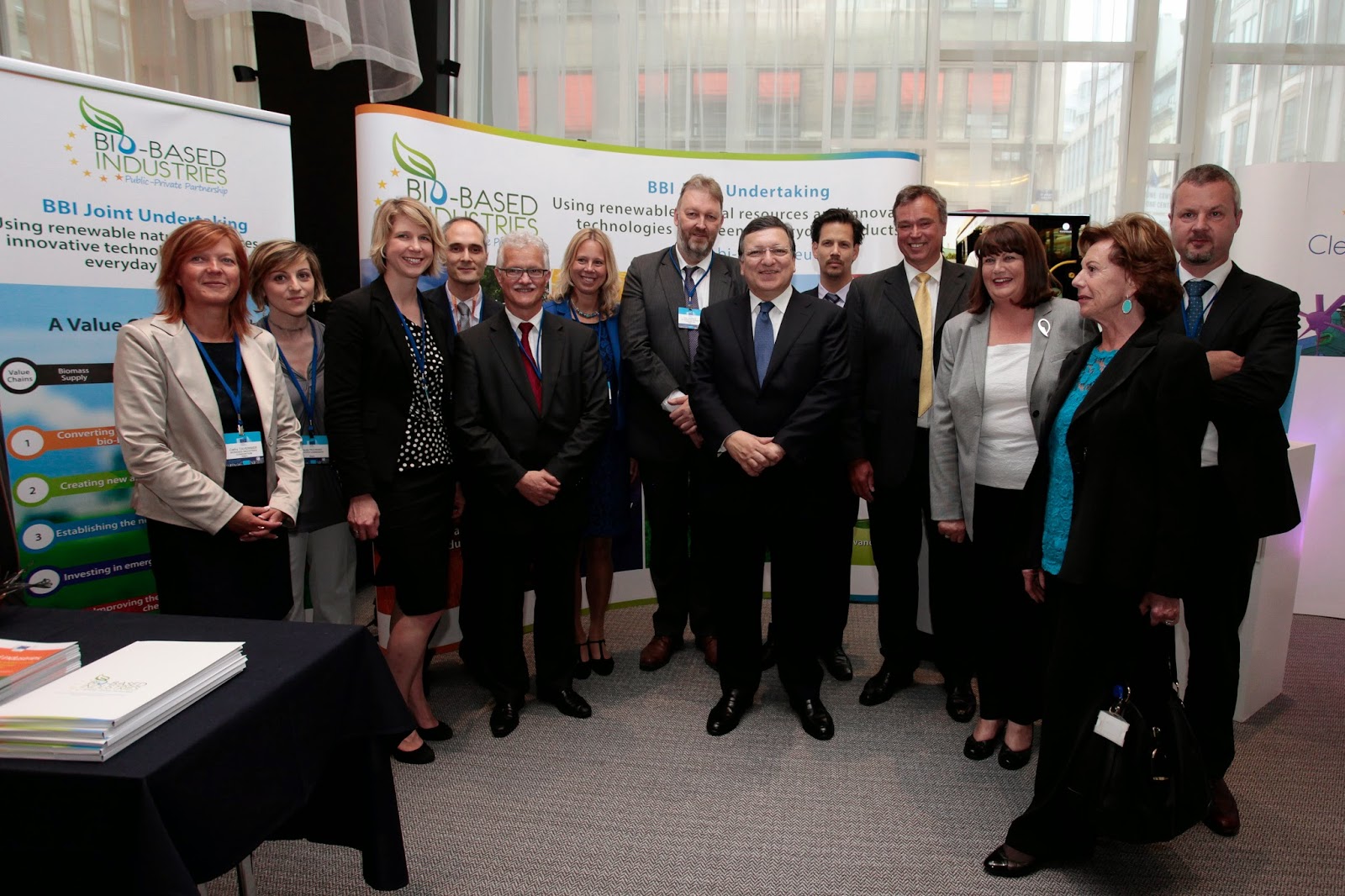
The BBI JTI is being launched with six other JTIs (including JTI on ‘Fuel Cells and Hydrogen’ and ‘Innovative Medicines’) at an event with European Commission President Barroso, Vice Presidents Neelie Kroes and Siim Kallas, and Máire Geoghegan-Quinn, European Commissioner for Research, Innovation and Science (all pictured below at the BBI JTI stand). Together, the JTIs represent a significant joint public-private investment in research and innovation for Europe’s future.


Bio Based Innovation
The BBI JTI will enable a €3.7 billion injection into the European economy between 2014 and 2024, with €975 million provided by the European Commission and €2.7 billion from the Bio-based Industries Consortium (BIC), to develop the emerging bioeconomy. The JTI will finance research and innovation projects and create new and novel partnerships across industry sectors (including agriculture, technology providers, forestry/pulp and paper, chemicals and energy).

The aim of the BBI is to use Europe's untapped biomass and wastes as feedstock to make greener, sustainable everyday products and renewable feedstock.

“At the heart of this initiative are advanced biorefineries and innovative technologies that use sustainable chemistry to convert renewable resources into sustainable chemicals, materials and fuels,” says Dr Gernot Klotz, Executive Director Research at Cefic and SusChem board member.

“The BBI JTI can help develop the building blocks needed to shift from a fossil- and imports-based society to increase the EU’s rate of economic growth, boost jobs – especially in rural areas, rejuvenate industries and reduce greenhouse gas emissions,” he continues. “New bio-based industries can increase the competitiveness of the European economy through re-industrialisation and sustainable growth along with other Key Enabling Technologies.”

Four of the six main Key Enabling Technologies (KETs) identified to be critical to strengthening Europe’s industrial and innovation capacity are from the chemical sector: advanced materials, industrial biotechnology, nanotechnology and advanced manufacturing.

BBI launch


Opening the launch of the JTIs this afternoon José Manuel Barroso (above), President of the European Commission, said: "Only if the best brains from academia, industry, SMEs, research institutes and other organisations come together can we successfully tackle the huge challenges that we are facing. This is what public-private partnerships are about, the joining of forces to make the lives of Europeans better, create jobs and boost our competitiveness. We are committed to prioritising the impact of the European budget on the recovery, and these partnerships are doing just that, with first calls for proposals for € 1.1 billion to be matched by industry, within a package representing an overall € 22 billion boost to growth and jobs creation over seven years. They will continue delivering results that no single country, company or even the European Union as such would achieve alone."

The launch of first calls comes almost exactly one year after the European Commission put forward the Innovation Investment Package, a set of proposals to establish seven public-private and four public-public partnerships (including SPIRE, see below).

Commenting on the BBI launch today Máire Geoghegan-Quinn, European Commissioner for Research, Innovation and Science, said: "The bioeconomy has huge potential that is attracting investments all around the world. With this new partnership, we want to harness innovative technologies to convert Europe’s untapped renewable resources and waste into greener everyday products such as food, feed, chemicals, materials and fuels, all sourced and made in Europe."

Peder Holk Nielsen, CEO of Novozymes, added on behalf of the industry partner, the Bio-based Industries Consortium (BIC): “The BBI is an unprecedented public-private commitment because of its focus on bringing bio-based solutions to the market. It is an opportunity to deliver sustainable growth in European regions and to reverse the investment trend currently going to other regions of the world.”


Concluding the launch event Commissioner Máire Geoghegan-Quinn (above) said: "As we heard earlier today, only through joint investments in developing our research and innovation capacity can we create the new jobs and growth to overcome the current economic crisis. The challenge is, of course, to make sure that such investments deliver tangible impacts: to help accelerate the development of new technologies and innovations, to generate new markets for innovative products and services; and to deliver good jobs and major benefits to society. I am confident that the JTIs presented here will live up to this challenge. The first calls for proposals illustrate the kind of activities that JTIs will support in our goal of accelerating the deployment of great ideas from the lab into the market – for example large scale demonstrators, testing and prototyping."

BBI and SPIRE together
The BBI JTI builds on ‘SusChem inspired’ projects such as EUROBIOREF: one of three large FP7 projects in a joint call on advanced biorefineries that responded to SusChem’s visionary project: ‘The Integrated Biorefinery’. Innovations from other SusChem FP7 projects such as the F3 Factory will also contribute to the integration of bio based processes into the economy.

“The BBI JTI is one of two major PPPs that SusChem is proud to have inspired: the other being the Sustainable Process Industry through Resource and Energy Efficiency (SPIRE) PPP,” says Dr Klotz. “SPIRE and the BBI JTI will work closely together along defined areas of common interest and will use their synergies to help deliver high resource and energy efficiency that can lay the foundation of the circular economy in Europe, alongside the materials programme of SusChem.”

BBI explained 
The BBI JTI is a €3.7 billion Public-Private Partnership (PPP) between the EU and the Bio-based Industries Consortium (BIC). The BBI is dedicated to realising the European bioeconomy potential, turning biological residues and wastes into greener everyday products through innovative technologies and biorefineries, which are at the heart of the bioeconomy. The Bio-based Industries Consortium - the industrial partner in the PPP - is constituted by a unique mix of sectors including agriculture, agro-food, technology providers, forestry/pulp and paper, chemicals and energy. A short video  explaining what the BBI JTI is all ablout has also been published (see below).


A fact sheet on the BBI and its activities is available and more information can be found at the BBI website.

An Info Day on the BBI will take place on 2 September 2014 in Brussels and will be a 'must-attend' event for all stakeholders interested in understanding the BBI rules for participation.

Five value chains
Organised in five value chains – that range from primary production to consumer markets – the BBI will help fill the innovation gap between technology development and commercialisation, sustainably realising the potential of bio-based industries in Europe.

The BBI is a shift from a fossil- and imports-based society to increase Europe’s share of sustainable economic growth, and is expected to create tens of thousands of jobs (80% in rural areas), revitalise industries, diversify farmers’ incomes, and reduce GHG emissions by at least 50% in comparison to fossil-based applications.

The aim of the BBI is to use Europe's untapped biomass and wastes as feedstock to make fossil-free and greener everyday products. At the heart of it are advanced biorefineries and innovative technologies that will convert renewable resources into sustainable bio-based chemicals, materials and fuels.

The BBI will manage the investments in the form of research and innovation projects that are defined in annual Calls for Proposals and implemented across European regions. In line with Horizon 2020 rules, all stakeholders are invited to submit innovative proposals and demonstrate progress beyond state-of-the-art.

The BBI is dedicated to realising the European bioeconomy potential, turning biological residues and wastes into greener everyday products through innovative technologies and biorefineries, which are at the heart of the bioeconomy.

The BBI is about connecting key sectors, creating new value chains and producing a range of innovative bio-based products to ultimately form a new bio-based community and economy.

Bio-based Industries: using renewable natural resources and innovative technologies for greener everyday products developing new value chains for bio-based industries, from primary production to consumer markets;
  • Using innovative technologies to turn biological residues and wastes into greener everyday products;
  • Moving from fossil-based to biobased products: planting the seeds for the European circular economy;
  • Supporting regional development by diversifying the local economy;
  • Promoting the opening of new markets for bio-based products and applications “Made in Europe”.
The BBI JTI will help create new jobs, especially in rural regions, and offer Europeans new and sustainable products sourced and produced locally. New bio-based industries can increase the
competitiveness of the European economy through re-industrialisation and sustainable growth.

The development of new bio-based products and markets based on smart and efficient use of resources will diversify industries’ revenue streams.

The BBI is expected to bridge European research knowledge with commercial scale bio-based products, making full use of European scientific and technological knowledge. The BBI should benefit all Member States where regions can play an important role through their Smart Specialisation Strategies.

Seven JTIs
The BBI was one of seven JTIs launched at a special event in Brussels on 9 July. Fact sheets on all seven JTI are available via the links below:
For more information, please visit the SusChem website or contact Esther Agyeman-Budu, Cefic communication manager for research and innovation.

An extended SusChem 10th Anniversary video describing the platform, its achievements and its contribution to BBI has also been published on YouTube.