The SusChem News Blog is now hosted on the SusChem website in the News Room. You will be redirected there in 10 seconds
.

Showing posts with label competitiveness. Show all posts

Friday, 8 June 2018

Horizon Europe detailed proposal for next EU R&I programme published

On 7 June 2018 the European Commission published the proposed structure of the European Union’s next Framework Research and Innovation Programme: Horizon Europe. The proposal makes it the largest European Union Research and Innovation programme to date with an estimated budget of approximately €100 billion for the period 2021 – 2027.

Horizon Europe is set to be the EU’s biggest ever research and innovation funding programme and is designed for greater impact. 


The proposed budget allocation of €100 billion for 2021-2027 includes €97.6 billion under Horizon Europe (€3.5 billion of which will be allocated under the InvestEU Fund) and €2.4 billion for the Euratom Research and Training Programme. The innovation window of InvestEU will allow the use of loans, guarantees, equity and other market-based instruments to mobilise further public and private investment in research and innovation.

The Commission says, and SusChem agrees, that investing in research and innovation is investing in Europe’s future: helping Europe to compete globally while preserving the region’s unique social model. It improves the daily lives of millions of European and global citizens and helps to solve some of our biggest societal challenges.

Horizon Europe aims to strengthen EU science and technology through increased investment in highly skilled people and cutting-edge research. It will foster the EU’s industrial competitiveness and its innovation performance, notably supporting market-creating innovation via the new European Innovation Council (EIC) and the European Institute of Innovation and Technology (EIT). And it will deliver on the EU’s strategic priorities, such as the Paris Agreement on climate change, and tackle global challenges that affect the quality of our daily lives.

What’s new?
There are several new elements in Horizon Europe. There will be increased support for breakthrough innovation through the EIC funding, mission-orientated research and innovation will deliver more and faster impact from project results and openness will be reinforced – an open science approach will be the norm. The programme will review and shape a new generation of European Partnerships in research and innovation and also look to simplify the rules for participation to reduce the administrative burden.

The structure of Horizon Europe will be based around three ‘pillars’: Open Science, Global Challenges and Industrial Competitiveness and Open Innovation.


The Open Science pillar, with €25.8 billion funding proposed, supports frontier research projects defined and driven by researchers themselves through the European Research Council (ERC) which will receive funding of €16.6 billion, funds fellowships and exchanges for researchers through Marie Skłodowska-Curie Actions.

The Global Challenges and Industrial Competitiveness pillar with funding of €52.7 billion directly supports research relating to societal challenges, reinforces technological and industrial capacities, and sets EU-wide missions with ambitious goals tackling some of our biggest problems.

The Open Innovation pillar with €13.5 billion funding aims to make Europe a front runner
in market-creating innovation via the European Innovation Council (€10 billion of funding). It will help develop the overall European innovation landscape, including through further strengthening the European Institute of Innovation and Technology (EIT) to foster the integration of business, research, higher education and entrepreneurship (€3 billion).

Sustainable Chemistry ready to respond
The European Chemical Industry Council (Cefic) reacted positively to the Horizon Europe announcement commending the level of ambition and commitment for Research & Innovation in the European Commission’s proposal and applauding the anticipated budget allocation for 2021-2027.

Marco Mensink, Cefic Director General said: “When the EU unravels the next financial framework, the Horizon Europe proposal should remain untouched, or even be increased in size. Sharing innovation efforts is one of the true values of Europe. We call upon member states and European Parliament to reflect this in the final negotiations and decisions.”

Cefic praised the European Commission for clearly recognising the innovative and enabling role of the industry by placing the pillar of the Global Challenges & Industrial Competitiveness at the heart of the Horizon Europe programme. The Commission’s ambition of making Europe an unparalleled global innovation hub is essential for global competitiveness.

The chemical industry also welcomed the Digital technologies and Industry cluster in Horizon Europe. A structural combination with industrial processes, materials development and new business model creation is key for investment and growth of the European chemical industry. SusChem will be well placed to contribute to this area (see below).

SusChem and KETs
Cross-disciplinary and cross-sectoral partnerships through open innovation are essential in the new R&D programme to align the entire innovation ecosystem, including start-ups, and to bring innovation faster to market. This reflects the current approach of the SusChem innovation ecosystem.

In preparation for Horizon Europe, SusChem outlined its position on what can be achieved by Key Enabling Technologies (KETs). In a White paper on KETs and Horizon Europe published earlier this year the technology platform outlined the major technology developments and initiatives needed to:

  • create Advanced Materials for use in energy efficiency (e.g., light weight), renewable electricity production and energy storage (e.g., batteries elements), or smart functionalities responding to stimuli (e.g., self-repair),
  • develop Advanced Process Technologies, including Industrial Biotechnology, for more sustainable production including through utilisation of alternative carbon feedstock (waste, biomass, CO2) and alternative energy sources, and
  • leverage Digital Technologies for use in advanced process control and materials modelling, to enable disruptive business models and to create new customer experiences.

You can read the full paper here.

Innovation in these areas is essential for the EU to grow a low carbon, circular and digital economy and to continue generating jobs and attracting investments and will be at the heart of the Horizon Europe programme in the Digital technologies and Industry cluster and other areas.

Help shape the SusChem contribution in these three areas at our Annual Stakeholder event in Brussels on 20 June and celebrate a fruitful future in Horizon Europe!

The European Commission press release announcing the Horizon Europe structure is available here and a detailed annex giving much more information on the proposal is available here.

Wednesday, 4 April 2018

Making EU industry less energy intensive and more competitive

The Strategic Energy Technology Plan (SET Plan) Working Group 6 on Energy Efficiency in Industry is organising a Workshop on “Continuing efforts to make EU industry less energy intensive and more competitive” on 27 and 28 June 2018 in Brussels.

The Implementation Plan of the SET Plan Action 6 on "Continuing efforts to make EU industry less energy intensive and more competitive" was endorsed by the SET Plan Steering Group on 29 September 2017.  It describes the future activities that will contribute to reaching the targets defined earlier in the Declaration of Intent.

The Cooperation Workshop in June aims to contribute to the realisation of the Implementation Plan by enhancing cooperation between national programmes and further developing the activities into concrete projects.

Cooperative model
Country representatives will meet and discuss existing forms of cooperation, not necessarily in the field of energy efficiency in industry, to identify the best cooperation model(s) for the future. The identified cooperation models will then be shared with the full workshop audience in relation to Action 6 priorities.

In addition, parallel brokerage sessions, open to country representatives and stakeholders, will focus on further developing the activities into potential cooperative projects: presenting ideas of projects, looking for possible cross-border cooperation between similar and/or complementary ideas, and identifying specific actors and potential financing sources for collaborative projects.

To ensure effective and efficient workshop, the number of attendees for the workshop will be limited to 150 persons maximum. In particular, stakeholders will be invited to submit "idea(s) for projects" (or draft projects) before the workshop. In the case of over-registration, priority will be given to stakeholders who have submitted a project.

Plan and programme
Details of the Implementation Plan and the Workshop Programme, including its rationale and objectives, who should attend and why, plus practical information on the organisation of the sessions and a preliminary agenda can be found here.

Registration and the call for "Project ideas" is now open, but will close at the end of April. Confirmation of participation will be announced at the end of May.

Tuesday, 20 March 2018

Intellectual Property issues? Help is at hand!

Knowing how to manage and exploit Intellectual Property (IP) is one of the keys to boosting innovation and competitiveness in Europe. The European IPR Helpdesk is funded by the European Commission to increase awareness on IP, and support SMEs involved in transnational partnership agreements and EU-funded project beneficiaries in their IP related issues through a range of free-of-charge services including a Helpline, training events and publications.

The European IPR Helpdesk is a service initiative funded by the European Commission offering information, individual support and training in the field of Intellectual Property (IP). The service is targeted at researchers and European small and medium-sized enterprises (SMEs) participating in EU-funded collaborative research projects. In addition it addresses SMEs involved in international business and technology transfer processes.

Whether you need personal support on a specific IP issue, want to be informed about the latest developments in the world of IP and Innovation in Europe, or are interested in a training session on IP – the European IPR Helpdesk is the right partner to turn to.

IPR Services
At a glance, the European IPR Helpdesk provides the following services – and all of them are offered free of charge:
Want to know more about the EU IPR Helpdesk? Please visit the IPR Helpdesk website and get in touch!

Tuesday, 31 January 2017

Help shape the Future of European Industry

You can help the European Commission shape the industrial agenda of tomorrow at the Industry Day Conference that takes place on 28 February 2017. Some 400 participants, including key industrial players, global trend shapers and high-level policy makers, will inspire a full-day of debate on the future of European industry at the European Commission's Charlemagne Building in Brussels at the end of February.

President of the European Commission Jean-Claude Juncker, Commission Vice-President Jyrki Katainen, and Commissioners Elżbieta Bieńkowska (Internal Market, Industry, SMEs and Entrepreneurship) and Carlos Moedas (Research and Innovation) will all participate in the event.
Representatives of traditional and new, disruptive sectors will present their views on the future of their business. Entrepreneurs, innovators, start-ups and the tech community will share the stage with key EU political leaders.

There will also be speakers from the Committee of Regions, the European Investment Bank, the European Parliament, Business Europe, the European Roundtable of Industrialists and the European Trade Union Confederation.


Industry is changing
The nature of industry is changing, driven by rapid technological change. The evolution of industrial activity is characterised by digitalisation, clean and circular technologies, and a higher reliance on services. SusChem is actively engaged in shaping policy in all these industry-relevant areas – and others such as Key Enabling Technologies.

The Commission supports industry and makes a strong contribution to jobs and growth in Europe. Major policy initiatives for industrial competitiveness range from the Investment Plan and Horizon 2020 to the Single Market Strategy, from circular economy to Digitising European Industry. The Commission’s strategic approach to industrial competitiveness aims to empower businesses, citizens and entire regions to be fit for the future.

The European Industry Day event will take stock of existing actions and stimulate debate on a joint vision for the long-term future of European industry. Questions to debate include:
  • What has been achieved by mainstreaming industrial competitiveness into EU policy?
  • How will people find their place in the new industrial revolution?
  • What is the role of regional ecosystems for industrial transformation?
  • What are the key technologies for the future of industry?

The event will also aim to identify barriers preventing further progress towards  smart, clean and innovative industry that creates employment and high living standards for our citizens.

Registration for the event is via the event webpage. For more information contact the EU Industry Day team.

Thursday, 23 June 2016

SusChem 2016: Sustainable Chemistry – Innovation for Competitiveness

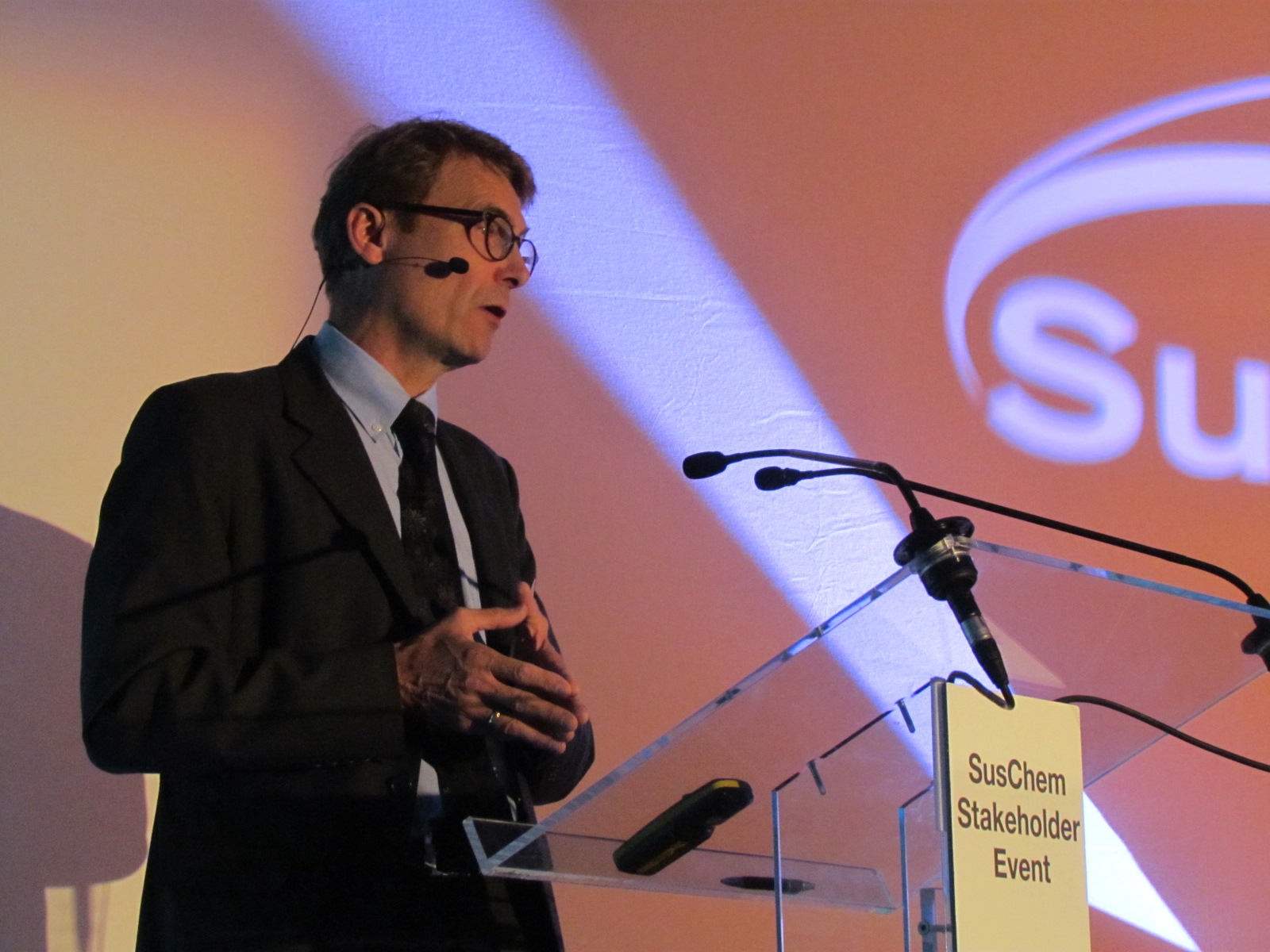
The 2016 SusChem Stakeholder event that took place in Brussels on 16 June once again showed that SusChem is a strong platform supporting a strong industrial sector. The platform acts as an effective bridge between the sustainable research and innovation needs of the chemical industry and European Commission policies. The debate demonstrated the excellent fit between the SusChem Strategic Innovation and Research Agenda (SIRA), its technologies and priorities, including a sustainable bioeconomy, materials for energy management, processes and catalysis, ICT for processes, and water, and European Commission initiatives such as the Energy Union, Digitisation and the Circular Economy. Despite SusChem having no direct funding for R&I activities the influence of the technology platform is huge. At the event two new members of the SusChem community of national technology platforms were introduced: SusChem Austria and SusChem Greece.

With some 230 delegates registered from 18 European Member States the 2016 annual SusChem stakeholder event demonstrated once again the role of the platform in building a sustainable future for the European Chemical Industry. The video below give a quick overview of the whole event.


The event was also a big hit on social media with tweets using the hashtag #suschem2016 reaching over 25 700 users and with over 101 000 tweet views estimated. The three 'top tweets' from the day are republished below. 


In an opening presentation, strategic topics related to the SusChem programme were addressed by Rudolf Strohmeier (above right), former Deputy Director General of DG Research and Innovation, and a good friend and supporter of SusChem since its inception. He highlighted the recent Competitiveness Council of 26 May which for the first time had endorsed the “innovation principle” that the impact of regulation on innovation activities must be taken into account in all EU policy-making. This was a very important positive point for industry moving forward he believed. But he argued that in order to show European decision-makers and investors the value of innovation required sound business cases to be presented.

Implementing the new SIRA: Status and priorities
SusChem Chairman Dr Klaus Sommer (above left) reviewed the progress of the technology platform over the past year. He also noted that the sector had effectively decoupled energy intensity from production growth. He saw an excellent fit between the SusChem Strategic Innovation and Research Agenda (SIRA), its technologies and priorities, and numerous European Commission initiatives such as the Energy Union, Digitisation and the Circular Economy. There were currently 70 open calls across various parts of the Horizon2020 programme that were relevant to the SusChem community. Despite SusChem having no direct funding for R&I activities the influence of the technology platform was massive.

In the coming year Dr Sommer looked to SusChem intensifying its input for future work programmes through thematic workshops and also linking through the Chem21 project into the Innovative Medicines Initiative (IMI) for work on healthcare and well-being issues. In addition work on synergy between the BBI JU and SPIRE cPPP would be pursued, a project brokerage workshop was being organised in Seville on 13 September 2016 within the EuCheMS 6th European Chemistry Congress, and new lighthouse projects needed to be identified.

Priorities and platforms
Updates on the five main SusChem thematic priorities were given by the responsible Cefic Innovation Managers.


Work on the Sustainable Bioeconomy was described by SusChem secretary Flavio Benedito (above left) and Materials for Energy Management was presented by Anne Chloe Devic (above, middle left). Martin Winter (middle right) covered two priority areas: Processes and Catalysis, and ICT for Processes. The final topic presented was Water with Henk Pool (above right).

You can download the presentations made by Dr. Sommer and the Innovation Managers here. You can also download factsheets on the five SusChem Innovation priorities here.

Eric Firtion of SusChem France and the French Chemical Industries Union (UIC) introduced presentations on activities from a selection of SusChem's national technology platforms (NTPs). These included two new NTPs: Andreas Falk described SusChem Austria and Stelios Bikos outlined SusChem Greece’s ambitions (second and first right below respectively).


Other NTP presentations were made by Suzanne Coles (SusChem UK), Cristina Gonzalez (SusChem Spain), Eric Firtion (SusChem France), Alexis Bazanella (SusChem Germany), Tine Schaerlaekens (SusChem Belgium), Ladislav Novak (SusChem Czech Republic), and Nico Versloot (SusChem Netherlands) pictured from left to right above.

Panels debate Circular Economy, Energy Union
After lunch two panel debates took place involving European Commission and industry representatives. The first focused on SusChem and the Circular Economy and was moderated by Pierre Barthélemy, Executive Director of Research and Innovation at Cefic (pictured below, right). The circular economy could boost Europe’s global competitiveness, growth and jobs. SusChem had produced a position paper on the Circular economy calling for a sustainability based approach. Innovation is key to achieving a circular economy but this needed to be accompanied by a clear regulatory framework to ensure deployment stated Barthélemy.


The panel members were Reinhard Buescher, Head of Unit 'Chemicals' at DG GROW (middle right above); Waldemar Kuett, Head of Unit ‘BioBased Products and Processes’ at DG Research and Innovation; Gloria Gaupmann, Public & Regulatory Affairs Manager, Biotechnology and Renewables at Clariant; Reinier Grimbergen, Director Science to Innovate at DSM; Anton Valero, General Manager at Dow Chemical Ibérica (left above); and Greet van Eetvelde, Head of Energy & Innovation Policy at INEOS (middle left above).


The second panel discussion covered two topics – SusChem and the Energy Union and SusChem and Digitisation – and was moderated by Alexis Bazzanella, Head Research & Project Coordination at DECHEMA e.V. with panel members Eva Hoos, Policy Officer at DG Energy (middle above); Helene Chraye Head of Unit 'Advanced Materials and Nanotechnologies' at DG Research and Innovation; Khalil Rouhana, Director for 'Components & Systems' at DG CNECT (left above); Jens Rieger, Senior Vice President at BASF (right above); Henrike Gebhardt, Senior manager Scientific Relations at Evonik Industries AG; and Nicolas Cudré-Mauroux, Research & Innovation Group General Manager (CTO) at Solvay

From the two panel discussions on the ‘Circular Economy’ and on ‘Digitisation’ and the ‘Energy Union’ the role of the chemical industry as an amazing enabler for innovation was clear, but there was a need to ensure enhanced collaboration along and across value chains to maximise the impact of the sector’s innovations on the wider economy. Sustainable chemistry has a key role in maximising use of resources (including water) and energy both within our own sector and across other industrial and manufacturing sectors. 


Concepts such as industrial symbiosis, advanced digital technologies, and recyclable and renewable materials innovation pioneered by the chemical sector would be essential in enabling Industry 4.0, the circular economy and other sustainable development initiatives while maintaining competitiveness, jobs and growth in Europe.

Conclusions
Summing up the day Dr Klaus Sommer said that the clear link between competitiveness and innovation had been demonstrated, but he stressed the need for establishing sound business cases to ensure innovation can gain investment and move to implementation. Future SusChem priorities had been described and he called on all interested stakeholders to get involved with the relevant working groups. He concluded by stating that SusChem was still a strong platform supporting a strong sector and acting as a bridge between our research and innovation needs and European Commission policies.

Monday, 13 June 2016

Commission launches ‘Innovation Deals’

At the end of May the European Commission launched a new pilot scheme called the Innovation Deals. The scheme aims to help innovators with promising solutions to environmental issues to navigate regulatory challenges to bring their ideas to market. The initiative was introduced in the margins of the Competitiveness Council meeting that took place on 26 May 2016 by Frans Timmermans, the Commission's First Vice-President, and Carlos Moedas, European Commissioner for Research, Science and Innovation.

On May 26 an open invitation was published by the Commission for expressions of interest from projects with strong potential to contribute to the EU's Circular Economy Action Plan. The selected projects will benefit from access to a close cooperation framework bringing together national, local and EU regulatory bodies to help navigate regulatory requirements. This pilot scheme is intended to support innovative ideas for maintaining the value of products, materials and resources in the (circular) economy.

What is an Innovation Deal?
Innovation Deals (IDs) will allow innovators to swiftly address legislative obstacles, shortening the time between their moment of inspiration and market uptake. Innovation Deals will take the form of a voluntary cooperation between the EU, innovators, and national, regional and local authorities. No funding for the preparation or implementation of IDs will be made available by the Commission.

The main aim of an Innovation Deal is to establish an in-depth understanding and clarification of how an EU rule or regulation applies. If a rule or regulation is confirmed as an obstacle to innovations that could bring wider societal benefits, the Deal will make the block visible and feed into possible further action.

The Innovation Deals platform will not jeopardise or compromise any environmental, social or competition principles, existing standards, or national legislation. The Deals aim to be an innovation in how the Commission works, helping to form a more modern and responsive administration in line with the Commission's Better Regulation Agenda.


Invitation to innovation
The call for Expressions of Interest (EOI) for the pilot phase of the ‘Innovation Deals for a Circular Economy’ opened on 26 May and will close on 15 September 2016. Up to five Expressions of Interest will be selected between October and December and will become Innovation Deals. Signature of the selected Innovation Deals is envisaged for the beginning of 2017 with an evaluation of the project being made in mid-2018.

In addition, up to ten Innovation Deals may originate through the Horizon 2020 Calls CIRC-01 (Systemic, eco-innovative approaches for the circular economy: large-scale demonstration projects) and CIRC-02 (Water in the context of the circular economy) that have been announced as part of the Work Programme 2016/2017 under the identifier ‘Industry 2020 in the Circular Economy’.

Applicants will be asked to outline their innovations and identify where they think EU regulatory frameworks are causing a block in getting their innovation to market.

The application to submit Expressions of Interest can be found here.

The chemical sector itself is also working with the Commission to identify regulatory barriers that are hindering the deployment of innovative technologies (both technologies developed by chemical companies or that could be implemented in the chemical sector). The scope of these regulatory issues includes those relevant to the Circular Economy and will to contribute to the sector’s discussions on Better Regulation with the European Commission in the future.

Tuesday, 26 April 2016

SusChem Stakeholder event to discuss the Circular Economy

In October 2015 the European Technology Platform for Sustainable Chemistry (SusChem) published a position paper on the Circular Economy. You can download the paper here. Since its inception in 2004 SusChem has inspired numerous research and innovation activities that address major European societal issues. SusChem’s solutions are based on sustainable enabling technologies developed by the chemical industry and its partners in academia, research and technology organisations, and other industrial players from a wide variety of different value-chains and sectors. The paper illustrates how many of these technologies are essential to the implementation of a sustainable circular economy.

The position paper develops SusChem’s vision for a functioning circular economy in Europe (and globally) and provides some concrete examples of the high impact contributions that the platform and its partners can make to achieve this essential objective.

A Circular Economy will be the subject of a dedicated panel discussion at the forthcoming SusChem stakeholder event on 16 June and in preparation for the discussion SusChem is seeking your questions and observations on the role of sustainable chemistry in implementing a circular economy.

The SusChem position
SusChem’s position paper has three main messages.

1/ A sustainability-based approach is needed
The integration of all aspects of sustainability over the whole product life-cycle is essential to the development of a circular economy in order to effectively ensure a positive impact on society while optimising environmental impact and maintaining economic growth.

2/ Technology development is required for a sustainable circular economy
A circular economy cannot be achieved only through implementation of new regulations, services and business models.  Advanced technologies are essential to enable a better use of existing resources along the whole life cycle to develop new production and recycling paths – and the expertise of the chemical industry as a material supplier is highly valuable and important here.
In particular SusChem believes that the principle technology developments should take place in the following three areas:
  • Utilisation of sustainable alternative feedstock including secondary raw materials, ligno-cellulosic biomass, waste or industrial gas effluents (including CO2). 
  • Design of sustainable materials enabling eco design of ‘products’ that are easy to recycle while maintaining or improving performance.
  • Improved efficiency for production processes to maximise the use of all resources entering the system including primary and secondary raw materials, water, and energy.
These technologies are more fully described in the SusChem 2015 Strategic Innovation and Research Agenda (SIRA) and should be supported through the appropriate European funding instruments.

3/ Coherence and stability over time for the policy framework is critical for European leadership
To contribute fully to a sustainable economy, the circular economy policy should be developed in coordination with other related policies such as the Energy Union Package. Policy coherence, as well as policy stability over time, is essential to establish a regulatory framework that enables investment in sustainable, resource efficient and innovative technologies in Europe and ensures European leadership in sustainable/clean technologies.

The position paper concludes with five examples that describe a selection of potential contributions by SusChem technology solutions to the circular economy: the use of CO2 as an alternative carbon resource; new composite materials; new catalysts; industrial symbiosis; and biorefineries.

Stakeholder discussions
The full position paper can be downloaded here. SusChem welcomes your questions and observations about the paper and / or current European policy in this area to inform the discussions at our 2016 Stakeholder Event.

Registration for the 2016 SusChem Stakeholder event is now open. The event will take place on 16 June 2016 at the Hotel Bloom in Brussels, Belgium. A dedicated registration website has been set up for the event that includes links to discounted accommodation at the Hotel Bloom.

You are invited to submit your questions and comments and also your expectations for outcomes as part of the registration process. You can submit your questions and comments when you register and there will also be a link for question submission sent with the registration confirmation email.

You can register here. For more information on registration, please contact the SusChem secretariat.

Wednesday, 13 January 2016

SPiCE3 Energy Efficiency gets Green Light for Phase Two

Today (13 January 2016) the European Chemical Industry Council (Cefic) has announced further support for EU chemical companies to increase their energy efficiency and competitiveness. This fresh investment round supports an innovative project designed to help European chemical companies to improve their energy efficiency: SPiCE3 (Sectoral Platform in Chemicals for Energy Efficiency Excellence). The SPiCE3 initiative provides a wealth of free resources to all chemical companies including workshops, peer-to-peer mentoring, on-site coaching and targeted events promoting best practice.

Europe’s SMEs represent a huge collective potential for driving energy efficiency, but can face challenges such as the lack of tools, expertise or resources. SPiCE3 will continue to provide accessible, hands-on assistance to SMEs, helping them with them to implement concrete measures that boost their energy efficiency.

Over 6 500 European companies have so far been reached through the SPiCE3 programme via:

  • 63 SME on-site trainings
  • 48 workshops at the local level reaching more than 650 participants
  • Three EU-wide events raising awareness of energy management best practices
  • The SPiCE3 web portal - a ‘one-stop shop’ for energy efficiency information and resources, including case studies, best practices, funding guides and newsletters

The continued investment by Cefic consolidates an industry-wide commitment to support increasing energy efficiency and competitiveness. As an energy intensive industry, the chemical sector alone consumes around 12% of the EU’s total energy demand, and one-third of EU industrial energy use. In addition, energy can be up to 25% of the total costs of an SME in the EU chemical sector. Therefore increasing energy efficiency is essential to preserving the industry’s competitiveness and to help meet Europe’s climate action goals.

Learn more about the SPiCE3 project in the video below.


For more information on SPiCE3 visit the web portal your one-stop shop for energy efficiency information including 50 case studies, 20 best practice guides and much, much more.

Monday, 15 June 2015

Relive #SusChem2015!

SusChem's 2015 Stakeholder event was a great success! With new exciting and interactive elements, the SusChem community put some serious work into working up future ideas for SusChem inspired projects across our portfolio of priority research and innovation challenges. The outcomes from the two-day event will move the implementation of SusChem's Strategic Innovation and Research Agenda (SIRA) forward. As well as generating a buzz in the conference itself #SusChem2015 made a big impact in the virtual world too. With tweeted photos and short videos the event was a #trending topic on both 8 and 9 June!  


Proceedings were led by SusChem chairman Klaus Sommer (above) with contributions from academia, industry and European Commission officials. There was also a clear focus on SMEs and facilitating their access to European research and innovation programmes and funding. To coincide with #SusChem2015, the technology platform published a new SME Funding Guide and the event ended with a very stimulating showcase involving 19 of Europe's most innovative SMEs 'pitching' their ideas and expertise to a panel of industry experts.

Breakout sessions
The first day of #SusChem2015 focused on the implementation of priorities from the the new SusChem SIRA in six parallel breakout sessions.


Climate Action, Environment, Resource Efficiency and Raw Materials was led by Philippe Krafft of Solvay (above) examining a wide range of material and process challenges including industrial symbiosis.

The Secure, Clean and Efficient Energy group chaired by Jens Rieger of BASF who looked at how chemistry and materials for energy storage can enable full integration of renewable energy sources.


ICT and the Chemical Industry was led by Thorsten Potter of Bayer discussing how smart processes and smart materials can deliver improved competitiveness for  the chemical industry in Europe.


The Sustainable and inclusive bioeconomy discussion was orchestrated by Joanna Dupont of EuropaBio covering challenges for chemistry along the full value chain from agriculture and forestry to new markets for platform biobased chemicals


Health, Demographic Change and Well-being was led by Rodney Townsend of the Royal Society of Chemistry focusing on modelling pharmokinetic processes to improve targeted delivery of Active Ingredients.


Finally Smart, Green and Integrated Transport chaired by Peter Nagler of Evonik debated the chemical and material challenges of clean and green mobility.

The outcomes of the breakout sessions were discussed on the second day of  #SusChem2015 in an extended panel discussion and audience Q&A.

Commission contributions
The European Commission were active across two days with word of encouragement and insights on future plans for European collaborative research and innovation. The opening plenary of the event was given by Rudolf Strohmeier, Deputy Director General of DG Research and Innovation (below).


He acknowledged SusChem's role in driving forward the research and innovation agenda in Europe and had particular praise for the SusChem-inspired SPIRE PPP. He also stated that the Commission was fully aware that if the regulatory framework conditions in Europe did not improve then industry would not invest and asked the SusChem community to contribute to the ongoing consultation on this topic in the context of the circular economy and more generally. He also highlighted a recent joint workshop on CO2 conversion technology. This could be a first step towards a possible project of Common European Interest and a 'lighthouse example' for circular economy thinking.


On the second day further insights on how the Horizon 2020 programme had proceeded so far in the 2014 and 2015 calls was given by Soren Bowadt from DG R&I (above).


Christos Tokamanis from DG R&I described Commission work in the area of materials technologies and the major societal challenges.


The Open Innovation SME Workshop was prefaced with a presentation by Catherine Eginard from the Commission's DG GROW describing initiatives for SMEs including the work of the Executive Agency for Small and Medium Sized Enterprise (EASME).


Another important contribution was the final plenary presentation on 9 June: a joint presentation on the SusChem-inspired Horizon 2020 PPPs with Dirk Carrez of the Biobased Industries Consortium (above, left) and Loredana Ghinea of SPIRE.

Monday, 2 March 2015

Making it happen for Chemical SMEs

On 24 February the European Chemical Regions Network (ECRN) organised a workshop in Brussels on “Small and Medium- sized enterprises, the engine of the European Industry”. The workshop took place at the Committee of the Regions and SusChem was there to present its activities in support of SMEs in the chemical industry across Europe.

The event was hosted by the Committee of the Regions and was opened by Mr. Hartmut Moellring, ECRN President and Minister of Science and Economic Affairs, Saxony-Anhalt, Germany and Karl-Uwe Buetof, ECRN Vice President and Director, Ministry of Economic Affairs, North Rhine-Westphalia, Germany. Both ECRN spokesmen stressed the importance of SMEs in Europe, which represent more than 95% of the total industry with slightly differences depending on the specific sectors.

SusChem supports SMEs
Cristina Gonzalez (pictured below) from Feique (the Spanish Federation of Chemical Industries) and the Secretariat of SusChem Spain presented on behalf of SusChem and talked about “Chemical SMEs, making it happen”. The percentage of SMEs in the European chemical industry is more than 95%, with a similar figure for Spain itself.


She presented Cefic and Feique, and explained the role of SusChem, the European Technology Platform on Sustainable Chemistry and its network of National Technology Platforms. She highlighted how Feique and SusChem Spain can help Spanish SMEs in addressing regulation and other aspects having an impact in their daily business activities, such as raising awareness and training them in aspects of the REACH legislation; and the open innovation portal (SusChem innova) to facilitate consortia building.

Finally she presented the SusChem project “Skills needed for Innovation”, a survey run among larger chemical companies to identify skill gaps and requirements. The results of this survey had also been validated with SMEs. She described the SusChem programme “Educate to Innovate” that is focused on exploiting innovation results from R&I projects, enhancing innovation skills and engaging industry and higher education institutions. You can download her presentation here.

Regions for SMEs
Earlier Thomas Wobben, Director of Horizontal Networks and Studies, Committee of the Regions talked about the key role of regional authorities in supporting SMEs. He announced the adoption of the Energy package for Europe to be approved in the Spring Council which will have a significant impact on the Chemical Industry as one of Europe’s major energy users.

The Committee of the Regions interact very closely with the EU regions to promote entrepreneurship in SMEs and to develop fitness assessments on how regulations affect the activities of small and medium companies.

The Small Business Act (SBA) adopted by the EU Commission aims to address the needs of Europe SMEs by establishing 10 principles to guide the implementation of EU policies. Skills and innovation, together with public support for their needs and facilitating information provision are amongst the key principles included.

The Committee of the Regions launched the European Entrepreneurial Region (EER) Award label to facilitate the implementation of the “Small Business Act for Europe” at regional and local levels. This project identifies and rewards European regions with excellent entrepreneurial visions with the label of “Entrepreneurial region of the year”. Some recent winners include the regions of County Kerry (Ireland, EER 2011); Murcia (Spain, EER 2011); State of Brandenburg (Germany, EER 2011) and Southern Denmark (Denmark, EER 2013).

Commission view
Joanna Drake, Director of Entrepreneurship and SMEs at the European Commission DG Growth highlighted the importance of SMEs for the European economy with more than 20 Million companies. She argued that complicity is the key to success; complicity with EU Institutions, National and Regional authorities, all working together to facilitate the existence of small companies, through information and helping them overcome barriers.

The burden of regulation has been identified as one of the major problems for SMEs. REACH has been highlighted as the most unfriendly regulation for small and medium enterprises. As a result, ECHA is now revising the process to help SMEs.

To support/encourage SMEs in Europe, some actions need to be taken into account, including cutting the time and cost for setting up a company; cooperation with authorities at all levels; facilitating access to finance; networking; internationalization; and giving SMEs more visibility. A lack of appropriate skills was also mentioned as a weaknesses for SMEs.

To conclude the workshop, some good practice examples from European chemical regions were presented: the Chemi-Cluster in Bayern; the Competitiveness & Innovation Unit in Wallonia; and KV consulting Services BVBA from Flanders.

Thursday, 19 February 2015

ECRN SME Workshop

Small and medium-sized enterprises (SMEs) are of central importance to the European economy. They play a key role as providers of employment opportunities and serve an important function for the well-being and economies of local and regional communities. Moreover, they are often at the core of value networks and the creation of added value.

In this context European Chemical Regions Network (ECRN) is organising a workshop: ‘Small and Medium-Sized Enterprises – The Engine of the European Industry’ on 24 February from 14:00 to 17:00 at the Committee of the Regions in Brussels.

At the ECRN the workshop, the focus will focus on the important role of SMEs not only in the chemical industry but as an integral part of the overall European economic fabric. The event will bring together policy makers and practitioners to discuss how local authorities can design more efficient strategies to encourage the development of innovative SMEs. In particular, the workshop will provide substantive examples of how SMEs can be supported at the regional level and focus on the success factors and potentially transferable elements of such strategies or initiatives.

Cristina Gonzalez of SusChem Spain and Feique will be presenting at the workshop on behalf of SusChem. She will talk about “Chemical SMEs, making it happening” covering examples of innovative SMEs in Spain and how SusChem can help small enterprises to move forward, for example, by giving them support to get involved with European projects through information sessions, networking, etc.

Other presentations will include the ‘Key role of regional authorities in supporting SMEs’ from Thomas Wobben, Director of Horizontal Networks and Studies, Committee of the Regions and the ‘Importance of SME policy at all levels – European, national, regional’ by Joanna Drake, Director of Entrepreneurship and SMEs at the European Commission’s DG Growth.

Examples of good practise will be drawn from the regions of Bavaria, Wallonia, Flanders and North Rhine-Westphalia.

Further information
ECRN is committed to enhancing cooperation and exchange of experiences across regions and wants to draw attention to what can be achieved by leveraging regional competences and bringing concrete examples and experiences into European policy discussions.

You can view the event programme here and an ECRN background briefing on SMEs here. For more information and to register for the workshop contact the ECRN Secretariat by 20 February.

Monday, 4 August 2014

BIO-TIC: Register now for ‘Bio Business’ Workshops

Registration for five 'bio-Business case' workshops organised by SusChem’s FP7 BIO-TIC project is now open. By participating in these workshops you can help shape the strategic agenda to boost the uptake of industrial biotechnology (IB) in Europe. In addition BIO-TIC has just released a series of videos that describe the project’s rationale and objectives and the IB business roadmaps that it is developing.

The BIO-TIC project is organising five 'bio-Business case' workshops during the Autumn of 2014. These events will look into five major product segments and applications of Industrial Biotechnology (IB) in Europe that promise significant potential for Europe’s industry and society by 2030.

The workshops are organised around the following topics:


Registration for all of the workshops is now open and can be accessed here via a dedicated website.

Knowledge exchange
With these workshops, the BIO-TIC project consortium aims to bring together industrial biotechnology end users (downstream) with technology providers (upstream), innovation agencies and decision makers to stimulate interconnected discussion and knowledge exchange platforms and processes.

The objective of the workshops is to:

  • Identify technological, non-technological and market hurdles for the uptake of industrial biotechnology in these sectors
  • Develop recommendations and solutions to overcome the identified hurdles
  • Contribute to the development, testing and fine-tuning of the BIO-TIC roadmaps
  • Bring together industrial biotechnology end users (downstream) with technology providers (upstream), innovation agencies and decision makers to stimulate interconnected discussion and knowledge exchange platforms and processes
  • Collect data to develop draft indicators to measure the socio-economic and environmental impact of IB and the use of renewables-based products in the European Union

BIO-TIC videos
Funded by the European Commission, BIO-TIC was launched in 2012, as an FP7 project, with the aim to establish an overview of the barriers to biotechnology innovation and propose solutions to overcome them.

BIO-TIC has now published a series of videos that explain the rationale and objectives of the project and the three roadmaps that it is developing.

In the first video Antoine Peeters, Manager for Industrial Biotechnology at EuropaBio, gives an overview of the BIO-TIC project; its main activities and current status; the business cases, the project’s anticipated impact and future actions. This video is embedded at the end of this blog

Pádraig Naughton, Cefic innovation manager, features in a video explaining Cefic's role in the BIO-TIC project and outlining how wider use of industrial biotechnology (IB) can help the chemical industry grow.

A major milestone in the BIO-TIC project is the development of three roadmaps: market, technological, and non-technological. The project has recently released the second draft versions of the roadmaps which can be downloaded from the project website.

Anna Saarentaus, Principal at Pöyry, talks about the market drivers related to the various product segments and gives an overview of the projected use of IB in Europe by 2030. This video gives a comprehensive overview of the market potential for industrial biotechnology and of the value chain composition and stakeholders in various product segments and is an excellent introduction to the market roadmap.

The technological roadmap aims to gain insight into the R&D related hurdles that are impeding the full realisation of Europe’s IB market potential in 2030. In addition, the roadmap seeks to set priorities in terms of R&D and other actions to overcome the R&D barriers. In the video introducing the technological roadmap Elsbeth Roelofs, Senior Business Consultant at TNO, gives an overview of the R&D hurdles in Industrial Biotechnology in Europe and explains how the BIO-TIC roadmaps can help to overcome them.

The non-technological roadmap aims to identify regulatory and non-technological hurdles that may inhibit innovation and prevent the realisation of the market and technological potential of IB. Furthermore, the non-technological roadmap seeks to propose solutions to these hurdles by confronting theory and practice. The non-technological roadmap is introduced in a video with Antoine Peeters of EuropaBio who gives an overview of the non-technological hurdles of IB and explains how the BIO-TIC roadmaps will contribute to further develop the non-technological opportunities for IB applications in Europe.

More information
Input from the market and experts in industry and research are critical to build a basis for the roadmaps and to ensure that actions are developed which best fit the needs of this sector.  SusChem, Cefic and the BIO-TIC partners welcome any comments on the current draft documents. You can submit comments via email.

For more information on the BIO-TIC project and the business-case workshops visit the project website or contact Pierre Barthélemy, Innovation Manager at Cefic.

Thursday, 13 February 2014

Save the Date: SusChem's 10th Anniversary Celebration


This year SusChem will be celebrating its 10th anniversary. And to mark a decade of sustainable chemistry research and innovation leadership in Europe the 12th SusChem Stakeholder Event will be extra special! Our 10 year anniversary celebration will take place over two days in Brussels: 11 and 12 June 2014.

The theme of the 10-year celebration is: 'Sustainable Chemistry: Always at the Forefront of Innovation.' At the event we will be looking for SusChem stakeholders to contribute to defining our new Strategic Research Innovation Agenda for the next decade and we will be celebrating SusChem successes stories from the past ten years.

Ten years of success
The SusChem European Technology Platform was officially launched in Brussels on 6 July, 2004 by the European Commission, together with Cefic and EuropaBio, with the aim to "increase the attractiveness of investments in chemical R&D and innovation in Europe."

“Research is the primary source of innovation in the knowledge-intensive chemical industry and is driving the sector forward,” said European Research Commissioner Philippe Busquin at the launch. “The European chemical industry has an impressive track record of developing new products and manufacturing processes, but the challenge is to improve the transformation of laboratory ideas into new sustainable products and services to boost EU competitiveness.”

Save the date
This special SusChem Stakeholder event takes place on 11 -12 June at the Renaissance Hotel in Brussels. Join us in celebrating this important occasion for SusChem and sustainable chemistry in Europe, and help to pave the way forward for future SusChem success!

More details will be available soon and registration for the event will open on Monday 24 March via the SusChem website.

Tuesday, 16 July 2013

F3 Factory Case Study: Active Pharmaceutical Intermediates

As a F3 Factory Case Study Bayer Technology Services (BTS) investigated the transfer of a multi-step synthetic batch process for pharmaceutical intermediates to a fully continuous manufacturing process in a modular, flexible infrastructure including downstream processing. Working with other industrial and academic partners, Ehrfeld, Britest, TU Dortmund, University of Paderborn, Ruhr-University Bochum and RWTH Aachen, this case study successfully validated and demonstrated a major paradigm shift towards modular, continuous processing of active pharmaceutical intermediates.

The BTS project sought to assess the potential to replicate the cost, quality and efficiency benefits of large-scale continuous production in modular, flexible, small-scale container-based production units. In demonstrating a sequence of synthesis stages in a container environment, BTS also integrated a range of innovative, highly efficient process equipment solutions.

Starting from a five stage reaction sequence with intermediate isolation, key stages of the project included:
  • chemical redesign against the paradigm shift of continuous processing
  • simultaneous chemical and continuous process development
  • integration of reaction and separation steps in the container unit  
  • demonstration of the new process in the modular F³ Factory design
Cost and efficiency
Research and development activity in the first phase of the project demonstrated significant savings and efficiency gains with cross-project benefits for the wider F³ Factory programme.

Transfer of the chemical synthesis to an intensified fully continuous process led to a significant reduction in processing steps, reaction time and the amount of solvent used.

BTS operated the process sequence successfully for several days at bench scale, confirming the assumed benefits of the F³ Factory approach in terms of impact on footprint, resource consumption, continuous monitoring and process operability. Key benefits identified to date include:
  • reduction in starting material costs (average 15% depending on transformations involved)
  • increase in space time yield (up by factors >100)
  • significant reduction in both reaction and processing time
  • simplified work up processes due to elimination of intermediate isolation and purification stages
  • unification of solvents and reduction in consumables
  • reduction in equipment size
  • reduction in design and installation costs (up to 30% depending on transformations involved)
  • reduction in apparatus cost (approximately. 30% depending on intensification of the specific modules)


Modular, flexible production
This was the first industrial case study to be demonstrated in the INVITE backbone facility (see above), and therefore the BTS project led the way in establishing standards for process equipment assemblies (PEAs), the Process Equipment Container (PEC) and its integration with the backbone infrastructure services at INVITE.

To achieve maximum flexibility the standardised and scalable equipment used for the development and production phases enabled a fast and robust transfer from research to production in line with the development time line and with minimal effort.

Modular PECs can provide the required production capacity throughout the full product life-cycle. In addition, standardised chemical and physical processing PEA units can allow faster implementation of new manufacturing strategies in the highly regulated environment of pharmaceutical production.

In the latter stages of the project, BTS successfully demonstrated synthesis steps 1 and 2 in the case study’s PEC at the INVITE backbone facility.

The technological and economic benefits demonstrated through this case study provide a platform for the introduction of new technologies, production concepts and process equipment solutions for the European pharmaceutical manufacturing sector.

More information
For more information visit the F3 Factory Project website.

Monday, 24 June 2013

SusChem and Smart Cities at #EUSEW13

SusChem will be actively engaged at the EU’s Sustainable Energy Week 2013 (EUSEW 2013) this week (24 to 28 June). SusChem's chemistry-based key innovation proposals was a big hit at the Smart Cities Stakeholder Platform Annual Conference in Budapest and information on our Smart Cities Innovation initiatives will be available at the Smart Cities desk in the exhibition area on the 5th floor of the Jacques Delors building at the Committee of the Regions venue in Brussels.

EUSEW 2013 is set to be an exciting event that is packed full of activities bringing together energy stakeholders and the general public - and a great opportunity to further promote the message on chemistry and energy efficiency to a wider audience.

Full details can be found on the EUSEW 2013 website. This site contains all you need to know about attending events, submitting projects for the annual Awards or organising Energy Day activities that are taking place across Europe. The core message of this eighth edition of EUSEW is: 'One small step from you, one giant leap for Europe!'

If you haven't yet registered for any events, on-the-day registration is possible for some. But check the website for details.

SusChem will be reporting back from a number of Smart Cities orientated sessions at the high-level policy conference taking place in Brussels in particular:
Look out for our blog report later in the week!

What is EUSEW?
The EUSEW event is organised by the European Commission's Directorate-General for Energy, the Executive Agency for Competitiveness and Innovation (EACI), the European Institutions, major energy actors and private companies. EUSEW 2013 celebrates innovative energy initiatives for a sustainable future – very much a SusChem theme.

You can follow EUSEW 2013 on Twitter by searching for the hashtag #EUSEW2013. For more information on SusChem's Key Innovations in Energy Efficiency in Buildings for Smart Cities access the SusChem report here.