The SusChem News Blog is now hosted on the SusChem website in the News Room. You will be redirected there in 10 seconds
.

Showing posts with label f3 factory. Show all posts

Friday, 10 August 2018

KETs Impact: The SusChem flagship for flexible, continuous chemical production

The recent SusChem White paper ‘Impact: Key Enabling Technologies (KETs) in Horizon Europe’ included a number of success stories highlighting publicly funded innovation involving KETs and the SusChem News blog is featuring a selection of these fruitful 'SusChem inspired' initiatives.


Sustainable chemistry is essential to the technological advance of KETs including advanced materials, advanced manufacturing technologies, industrial biotechnology, micro and nanoelectronics, nanotechnology and photonics. SusChem's key enabling technologies provide the critical building blocks for the solutions needed to achieve a sustainable low carbon circular economy. You can find out more here.

Our fifth success story features one of SusChem’s original Flagship projects from FP7 - the F3 Factory – and one of its seven case studies. F3 stood for fast, flexible, future factory. Launched in 2009, the €30 million EU-funded project was a major public-private sector initiative under FP7 that sought to define and demonstrate a new paradigm in modular sustainable chemical production technology. You can find more information on all seven F3 Factory case studies here.

Modularised solutions enabling solvent-free process
Improve the Competitiveness of the European Chemical Industry – F3 Factory

Public funding creates cross-sectorial collaboration, breakthrough technology advancement and fast-track-to-market of new products

BASF was part of the consortium behind the “F3 Factory” project. This consortium – consisting of 26 partners from academia and industry – aimed to develop an approach for radical modular process design. This concept enabled significant process intensification and at least 25% less energy consumption.

How was the breakthrough innovation achieved? 
The concept of modularised solutions was investigated for different industrial processes. Results from academia were transferred in business case studies and were demonstrated at commercial scale in an open access backbone plant for modular continuous production (INVITE Research Centre). BASF together with Bayer Technology Services have collaborated to demonstrate the concept of multi-product, small-to-medium scale production for high viscous polymers in a solvent-free manufacturing process. This collaboration was supported by Technical University Eindhoven and the University of Paderborn.


Impact

  • In addition to the technological advancement achieved in this project, the transfer from batch to continuous of a new solvent-free polymerisation process has demonstrated both cost (30% reduction of energy demand) and environmental (100% solvent reduction) impact for the production of highly viscous polymers.
  • The modularisation concept investigated in the demonstration plant furthermore allows a reduction of investment cost (up to 40%) compared to conventional processes and reduced time-to-market (up to 50%).

More information
F3 Factory 'Flexible, fast and future production processes' (FP7 GA 228867) 

Read the SusChem White Paper ‘Impact: Key Enabling Technologies (KETs) in Horizon Europe

Thursday, 13 July 2017

SusChem F3 Factory shows synergy of EU Funding

The SusChem flagship F3 Factory project was in the spotlight at the European Commission’s Research and Innovation conference on “Shaping our Future” as an example of how to leverage EU research funding with the use of the Structural Funds. This is one of the key recommendations in the report of the High-Level Group led by Pascal Lamy, released at the conference on 3 July, to launch the debate on the next EU Framework Programme, FP9. Entitled ‘LAB – FAB – APP: investing in the European future we want’, the report delivers a strong message that investing in research and innovation is crucial for the future of Europe in a rapidly globalising world.

To shape our future together, we need to imagine, invent and create. We need research (“Labs”), innovation competitive fabrication (“Fabs”) and applications for the benefit of all (“Apps”). Hence the title of the report: Lab, Fab, App: investing in the future we want.

Launching the report European Commissioner for Research and Innovation Carlos Moedas underlined the crucial role of research and innovation for the future by saying: “Without science and innovation there is no growth. Without science and innovation there are no jobs.”

Reacting to the report on behalf of industry, Jean Pierre Clamadieu, CEO of Solvay and President of the Cefic council, told the conference: “Together with Commissioner Moedas, we can imagine a new FP9 that nurtures a European-based research, innovation and science ecosystem linked to industry".

F3 Factory success
The SusChem visionary project ‘The F3 Factory’ was highlighted at the conference by Marc Lemaitre, Director-General the Commission’s DG REGIO, as a success story showing how research and innovation projects can be combined with EU structural and investment funding and thus achieve rationalisation of EU funding schemes. This is one of the key recommendations of the LAB-FAB-APP report, echoed at the conference.


This F3 Factory FP7 initiative showed how it was possible “to leverage all assets in Europe” said Lemaitre (speaking above). The €30 million F3 Factory project, implemented between 2009 and 2013, was conceived and developed by a SusChem working group and looked to create the future of [chemical] production. The project was hugely successful in developing new modular production processes.

The German region of Nordrhein-Westfalen was then able to use money from the EU Regional Development Fund, and through its smart specialisation strategy has been able to form a new project in order to bring the F3 Factory concept closer to commercialisation for pharmaceutical processes.

The MoBiDik project scaled-up and validated the F3 Factory results showing a potential 40% reduction in capital costs and a 30% reduction in energy consumption. The work is continuing through the MoBiDik Pro project funded by Bayer.

Double R&I budget
The LAB-FAB-APP impact report focuses on proposing guiding principles for designing the post-2020 EU programme for research and innovation; provisionally entitled FP9. The 11 recommendations of the report aim to maximise the impact of future EU research and innovation programmes and each is exemplified by a key action.

Amongst the 11 recommendations in the report are proposals to double the budget of the post-2020 EU research and innovation programme, foster ecosystems that will promote and invest in innovative ideas with rapid scale-up potential through a European Innovation Council, and modernise the education and training of people for a creative and innovative Europe. Other actions look to further simplify EU R&I funding schemes and instruments, stimulate the involvement of citizens, and communicate the results and impact of EU R&I funding better.

The high level group that produced the report was led by Pascal Lamy, former European Commissioner and President Emeritus of the Jacques Delors Institut, and comprised 11 eminent personalities from research, innovation and education including Martin Brudermüller, Chief Technology Officer for BASF.

Thursday, 9 March 2017

Modular White Paper builds on F3 Factory results

A new Dechema paper on ‘MODULAR PLANTS’ summarises results from some recently finished publicly funded research and innovation projects that successfully demonstrated the economic and technical benefits of the flexible and modular plant concept for the production of fine and specialty chemicals as well as pharmaceuticals pioneered by SusChem's flagship F3 Factory project.

Important project examples. including examples from the results of the FP7-funded ‘F3 Factory’ project, clearly demonstrate the advantages of operating modular continuous plant processes that are more economical and sustainable than current operations and are only possible due to new types of equipment design, advanced digital process control and online process analytics (PAT).

The Dechema paper discusses the need for further developments including work on standardised interfaces and standards for modular automation, the reliability of modules, sensors and performance control systems, new continuous downstream processing units, how to enable new business and service models that take advantage of flexible and modular plant concept and other boundary conditions such as the regulations required to build and operate such units.

Modular progress
Building on the ‘F3 Factory’ project concept, the Horizon 2020-funded SPIRE project ‘CONSENS’ as one example that is advancing the continuous production of high-value products that meet high quality demands in flexible intensified continuous plants. It achieves this by introducing novel online sensing equipment and closed-loop control of the key product parameters.

If these concepts were applied in industry, the outcomes of the projects could result in significant cost savings and reduction of CO2 emissions (estimated at 176,000 tonnes per year), less consumption of solvents in pharmaceutical and specialty chemical sectors, and a significant acceleration in the development of new products (estimated at two-times faster additional innovations and halving the time-to-market).

The European chemical industry is facing increasing market competition from outside Europe and challenges with product launches in new and often volatile markets that means a fast response to market requirements and reduced investment risk for new plants is required. In addition, shorter product life cycles and smaller product volumes due to diversification and increasing specialisation of product ranges due to increased customer-orientated products are a feature of the market.

"SusChem has highlighted the modular plant concept enabled by the latest digital technologies as one of its current core priorities," says Martin Winter, Cefic Innovation Manager with responsibility for SusChem activities in this area. "And we are convinced such developments can make a very high impact in modernising Europe's chemicals production capabilities, introduce significantly higher resource efficiency, and would position the European chemical industry in the lead in the race for competitiveness and sustainability."

White paper discussion
This Dechema white paper was produced by the ProcessNet Temporary Working Group on “Modular Plants” and included industry representatives from BASF, Bayer, Clariant, Evonik, Invite and Merck as well as the universities of Ruhr-Universität Bochum and TU Dortmund.

The paper assessed the results of recently completed public funded projects that had demonstrated successfully the technical and economic benefits of modular plants and their applicability especially for small to medium scale (typically 0.1 – 1000 tonnes per year) continuous production.

The experts from across the chemical industries agreed that such modular plant concepts have significant economic potential. General concepts for modular production and the required enabling technologies for process intensification have been jointly  developed in projects such as the F3 Factory and CoPIRIDE projects or the ENPRO initiative for improved energy efficiency and process intensification in the German chemical industry.

Writing in a preface to the white paper Dr. Thomas Weber, Chairman of the VCI Committee of Experts Research and Education policy group highlights that these projects have also shown that multiple challenges exist including a lack of standardisation for modules on equipment level, as well as on the level of a complete production plant. This means that 'off the shelf' modules cannot simply be bought on the market, even though it is broadly accepted in the chemical and pharmaceutical industries that this would result in significant advantages in investment costs, time to market and flexibility of production assets.

Associated with this issue is the unmet market need for process control and automation concepts for modular plants. In addition, the discussion of centralised (classical) process control systems versus distributed (modular) process control systems has only just begun. The supporters of a completely modular design strategy envision the various plant modules acting fully automated and autonomously, with communication existing only via interfaces and communication protocols. This would enable a giant leap forward towards full ex-changeability and re-usability for the modular concept. Having an appropriate concept for modulations of process control and automation could become one of the key enablers for modular production plant concepts, said Dr Weber.

There is also need for further development in the field of equipment and apparatus design, for example in separation and purification that could be quickly and directly scaled-up from laboratory to production scale at an acceptable risk. A simple and safe solution for production scale, is number-up instead of a classical scale-up. However, limitations exist as numbering up in many cases can increase investment costs and complexity.

You can download the Dechema White paper here.

It is hoped that this white paper will inspire new ideas and encourage a spirit of innovation across the a cross chemical industry for modular production plant concepts.

Tuesday, 4 February 2014

SusChem Horizon 2020 Brokerage Success

The SusChem Brokerage event on 31 January was a great success with around 200 participants actively building useful projects and consortia to respond to the first calls in Horizon 2020.

The event was introduced by Jacques Komornicki and Padraig Naughton from Cefic before Soren Bowadt (below) of the European Commission kicked of the presentations with a description of the concepts behind the Industrial Technology calls in Horizon 2020. He called on participants to “use the calls wisely” describing Horizon 2020 as a “once in a lifetime opportunity” and a chance to induce a real “paradigm shift for sectors in Europe like the process industries.”


He praised the results that had come from SusChem inspired ‘lighthouse projects’ during previous research framework programmes (FP7 and FP6) including the F3 factory and COPIRIDE projects.

Soren concluded with some tips for submission of projects including the concept of pre-registering project proposals prior to the submission deadline as this give the project some visibility within the Commission and therefore time for them to find appropriate independent experts to assess the project’s viability and impact. And, of course, not to be late in submitting the proposal – the call deadlines were fixed and not negotiable.

The first full session in the morning saw some eight existing project proposals presented who were looking for one or more additional partners. These ranged from projects on gasification technology for energy intensive users to process analytical concepts and sodium ion battery development.

There then followed nine brand new project idea proposals including biobased automotive adhesives, novel chemical reactor design and an interesting project on biobased aromatic chemicals from sugars or cellulose.

Top proposal tip
Just before a networking lunch Pablo Tello of PNO Consultants (below) gave some entertaining insights of his experience helping many projects to write their proposals. He gave many practical hints and tips, but his single most important tip was: “to ensure you grab the interest of the evaluator in first page of the proposal.”


In a short question and answer session before lunch Soren Bowadt reminded participants that under Horizon 2020 proposals needed to be fully complete. Unlike FP7 there would not be extended negotiation between project evaluation and grant. This meant that “If something is missing [in a proposal] then it is out!” He also underlined that the first page of the proposal was essential

The afternoon saw a great buzz of networking, speed-dating and individual consortia meetings. A poster exposition enabled additional stakeholders to showcase their project proposals to potential partners.

The event also saw the trial of the Evenium ConnexMe system. All registered participants had received a web address to this dynamic tool that aimed to link participants during the day and could enable networking and individual meeting/ speed dating arrangements. The system could also stream of the presentations in real time and allow participants to go back and review slides during a presentation. In addition, of course, the normal human-based meeting facilitation was also in place.

During the meeting 128 users registered with the system, 98 meetings were arranged using the virtual system and 1013 private messages were made in addition to those made through the conventional 'manual ' system.

Wrapping up the event Jacques Komornicki urged participants to make full use of the Grant-it facility (see below) to assist project preparation and to return the feedback survey on the event so that the SusChem secretariat could analyse how things had gone. You can also access the feedback survey here if you didn't have time to fill it in on the day.

Jacques also gave advance notice of the twelfth SusChem Stakeholder Event that will take place on 11 and 12 June at the Brussels Renaissance Hotel. The main topic of the event will be ‘The SusChem Strategic Research and Innovation Agenda Towards 2020 and Beyond’ and will celebrate ten years of SusChem success for sustainable chemistry.

Grant-it
The plenary presentations made by Jacques, Padraig, Soren and Pablo can be accessed via links on their names above. Information on all the projects presented at the brokerage can be accessed via the Grant-it web portal.

Launched in December 2013, the Grant-it portal is your ‘one-stop’ shop for information and project building tools for Horizon 2020 and a range of other financing initiatives for collaborative research and innovation projects in Europe in the field of sustainable chemistry.

Grant-it is a password protected free service offered by Cefic to its members and SusChem stakeholders to further boost industry participation in collaborative research and innovation activities.

Submitting a project idea is easy. Just log in with your SusChem username and password and click on ‘Propose a Project’ from the homepage. From there, you will be able to complete a submission form. Find out more about Grant-it here.

Tuesday, 16 July 2013

F3 Factory Project: The Case Studies

The SusChem-inspired F3 Factory was a FP7 funded collaborative research project on fast, flexible, modular process technology for the future chemical industry. At the heart of the project were seven industrial case studies that covered a range of processes challenges. Details of these case studies have now been published.

Launched in 2009 the €30 million F3 Factory project was a major public-private sector initiative under FP7 that sought to define and demonstrate a new paradigm in modular sustainable chemical production technology.

At the project’s final presentations to the SusChem Stakeholder event on 14 May SusChem Chairman Dr Klaus Sommer said: "It was a privilege and an honour to be involved with this project that has not only produced excellent new scientific knowledge, but also shown how to bridge the innovation gap and with a consortium including many major companies working very effectively together."

The fruits of this ground-breaking project will feed into future major SusChem programmes such as the SPIRE and BRIDGE 2020 public-private initiatives during Horizon 2020.

Case studies
Seven major European Chemical Companies (Arkema, Astra Zeneca, BASF, Bayer, Evonik, Procter and Gamble and Rhodia-Solvay) worked collaboratively in the project demonstrating that large scale, pre-competitive collaborative research is both manageable and potentially highly fruitful.

The case studies spanned a broad range of process industry sectors including pharmaceuticals, chemical intermediates, specialty polymers and consumer products and aimed to:

·                     demonstrate the F3 Factory modular concept at industrial scale for commercial applications 
·                     realise an open access backbone plant for modular continuous production 
·                     validate new intensified and simplified continuous processes 
·                     design and validate new/enhanced reactor technologies 
·                     establish of design guidelines and standards for modular, container-based production units.

The establishment of standardised modular equipment was a significant achievement for the project. The smallest interchangeable unit is the process equipment assembly (PEA) a number of which would be integrated within the standard process equipment container (PEC): a standard EU 20-foot ISO norm container (see example below).


The seven case studies are:
Click on the links to find out more about each case study.

Overall results
For business the F3 Factory project demonstrated increased investment flexibility, potential capital expenditure reduction up to 40%, potential operating expenditure reduction up to 20% and the potential to deliver a much faster 'time to market' for new products - a major competitive advantage.

The potential impact of the project could be very significant. Just looking at capital expenditure, it is estimated that such expenditure in the chemical industry ‘in western Europe’ (EU-15 plus Norway and Switzerland) was ~€ 39 billion in 2011.

If the F3 Factory could save up to 40% on capital expenditure for projects that equates to a maximum annual saving of €15.6 billion. Even at a conservative 10% take-up of the project concepts this still represents a potential annual saving of more than € 1.5 billion in Europe in the chemical industry alone.

From an environmental and resource efficiency point of view the project has demonstrated reduced energy consumption up to 30%, solvent reduction up to 100%, footprint reduction up to 50% and the potential to reduce or eliminate transportation by enabling local or point of use production.

In addition the project has successfully validated new intensified and simplified continuous processes that have demonstrated process intensification up to a factor of 500, increased space-time-yield up to a factor greater than 100, increased capacity greater than 20%, increased production yield greater than 20%, reduced equipment need of more than 60%, reduction of reaction/processing time by a factor of 10 and through these simplified processes achieved reduced reaction and processing steps of up to 30%.

And finally, the project has realised an innovative open access backbone plant (INVITE) facility for modular continuous production – a resource for European process development that will have continuing value for many years to come.

F3 Factory Case Study: Highly Viscous Polymers

BASF and Bayer Technology Services (BTS) collaborated to demonstrate the F³ Factory concept for multi-product, small-to-medium scale production of high viscous polymers in a solvent-free manufacturing process. Supported by academic input from the Technical University of Eindhoven and the University of Paderborn, this case study featured the development and demonstration of a new flexible, reactor technology within a modular, continuous production unit.

The transfer of multi-product batch polymerisation of high temperature thermoplastics in organic solvent to a solvent-free process is a challenging task and has so far prevented producers from developing solvent-free processes.

Without reducing viscosity by applying very large amounts of solvents, “difficult processes” like solvent-free polymerisation cannot be carried out in standard mixers. The focus of this F³ Factory case study therefore concentrated on the development of intensified, high-strength mixing equipment. To succeed this approach needed to guarantee material integrity and enable effective supplementary mixing as well as devolatilisation and solidification. Performance at long residence times in continuous mode also needed to be assured.

New reactor technology
A new twin-shaft, high-torque kneader reactor developed by Buss-SMS-Canzler (pictured below) was shown to meet the key requirements of strength and operational flexibility and led to a step-change improvement in viscosity handling up to 10 000 Pascal seconds.


Modular construction and many standardised parts also allow for flexible adaptation to different products and processes, with the ability to switch rapidly between different mixing rotor assemblies.

Collaboration key to success
To realise the full potential of this intensified kneader reactor, its complex geometry required focus on several key durability issues. Their examination has been a classic model of F³ Factory project partnerships.

The University of Paderborn (UPB) investigated the mechanical integrity; modelling of unit processes; radial and axial mixing; micro/macro mixing and axial dispersion. Investigations confirmed the ecological and economic advantages of the kneader from its fast radial mixing and minor back mixing plus well-developed devolatilisation based on reactor partial-fill operation.

Numerical simulations using CFD analysis were performed by Technical University Eindhoven to calculate the velocity and pressure fields within the kneaded material, leading to rotor strength and fatigue computations by Buss-SMS-Cransler (SMS). Online measurement techniques for the high-torque kneaders were then developed by BASF, with technology transfer to UPB and SMS.

BTS derived a mass-balance for the intensified kneader reactor design, providing the liquid filling level as a function of viscosity, throughput and rotational speed. Following validation of the new reactor technology at lab-scale and successful polymerisation trials, the modular plant concept was designed by BTS and demonstrated successfully at the INVITE facility.

Solvent-free, high viscous polymers
Excellent progress on the integration of process and equipment design enabled illustration of the plant concept and contributed to the design and construction of a pilot facility at BASF’s site in Ludwigshafen. The new solvent-free process was subsequently validated with a continuous lab-scale kneader reactor.

The intensified process was then transferred to the F³ Factory modular, continuous plant concept with design of a demonstrator Process Equipment Container and respective Process Equipment Assemblies.

By eliminating the use of solvents, the process has been intensified significantly. It has reduced complexity, energy consumption and facilitated the successful transfer from batch to continuous polymerisation.

The case study was demonstrated successfully at the INVITE facility in Leverkusen, over an extended processing time, confirming both the strength and integrity of the kneader reactor.

In addition to the technological advancement achieved in this project, the transfer from batch to continuous of a new solvent-free polymerisation process has demonstrated both cost (30% reduction in energy demand) and environmental benefits (100% solvent reduction) for the continuous production of high viscous polymers.

More information
For more information visit the F3 Factory Project website or contact Dr. Achim Stammer at BASF.

F3 Factory Case Study: Intensified Reaction Technology for Surfactants

Achieving step-change process intensification in the production of anionic surfactants was the primary goal of the Procter & Gamble (P&G) industrial case study. Working with project partners the Institute of Chemical Process Fundamentals (ICPF), Britest and Karlsruhe Institute of Technology (KIT), the project focused on the intensification of two key reactions stages (S02 oxidation and sulphonation) using novel reaction technology and modelling of the economic viability of the concepts in the latter stage of the project.

As one of the world’s leading consumer products businesses P&G is one of the largest global manufacturers of surfactants. With no major developments in surfactants production technology for decades, potential gains from the novel F3 Factory approach could be significant.

The current business model is to produce bulk surfactants at large-scale, centralised locations and then ship to finishing sites. A step change in the base technology could lead to differentiated supply chains including more distributed, less transport-intensive scenarios and reduced business risk.

In changing the operating strategy for anionic surfactants, P&G is seeking to unlock the benefits of flexibility, agility and long-term sustainability.

Technological developments
Process intensification is seen as the main lever available to progress the supply chain to a more sustainable and lower cost model. Concentrating on the two unit operations is essential to an overall step change; therefore, the project has focused on SO2 oxidation and sulphonation.

The size and inertia of current SO2 oxidation towers negatively impacts on the whole plant agility. In addition, due to limited use of intensification, sulphonation forces the dilution of SO3 with large amounts of air. This markedly increases the plant’s capital, volumetric and environmental footprint.

Proof-of-concept work focused on:
  • obtaining targeted lab scale information on oxidation of SO2 in micro-channel settings
  • identifying technical intensification strategies for sulphonation
  • development of two new reactor designs
The project team investigated the concept of a microstructured reactor with an adiabatic section at the beginning of the reactor beginning and one cooling section at the rear of the reactor. Based on experimental measurements of kinetics, simulations of the reaction kinetics and heat transfer; a new reactor design with two parallel microstructured reactors was developed (see below).


The project team also investigated the concept of a new intensified device for sulphonation. The experimental study focused on hydrodynamic behaviour of lab scale equipment in a wide range of operating conditions. The pressure drop and heat transfer coefficient were determined and an adequate correlation developed.

The sulphonation process on the lab scale reactor prototypes, that were designed and manufactured at ICPF in Prague, was tested during the demonstration phase of the project in P&G’s pilot plant facility in Brussels. This intensified sulphonation process developed new learning, which may help in further intensifying current reaction systems.

What, when, where
The F³ Factory programme has been a unique collaborative endeavour that could stimulate the transition to a new business model for the whole chemical sector.  In this new model flexible, modular, continuous and intensified technologies are used to meet the challenge of producing “what’s needed, when needed, where needed” therefore minimising the environmental and economic footprint and reducing business risk.

For the P&G case study, intensification of two key reactions stages (S02 oxidation and sulphonation) in the production of anionic surfactants using novel reaction technology was largely proven at the lab scale. The challenge going forward will be to prove the economic viability of modular production technologies on highly optimised, large scale surfactants manufacture.

More information
For more information visit the F3 Factory Project website or contact Diederik Vanhoutte at P&G.

F3 Factory Case Study: Active Pharmaceutical Intermediates

As a F3 Factory Case Study Bayer Technology Services (BTS) investigated the transfer of a multi-step synthetic batch process for pharmaceutical intermediates to a fully continuous manufacturing process in a modular, flexible infrastructure including downstream processing. Working with other industrial and academic partners, Ehrfeld, Britest, TU Dortmund, University of Paderborn, Ruhr-University Bochum and RWTH Aachen, this case study successfully validated and demonstrated a major paradigm shift towards modular, continuous processing of active pharmaceutical intermediates.

The BTS project sought to assess the potential to replicate the cost, quality and efficiency benefits of large-scale continuous production in modular, flexible, small-scale container-based production units. In demonstrating a sequence of synthesis stages in a container environment, BTS also integrated a range of innovative, highly efficient process equipment solutions.

Starting from a five stage reaction sequence with intermediate isolation, key stages of the project included:
  • chemical redesign against the paradigm shift of continuous processing
  • simultaneous chemical and continuous process development
  • integration of reaction and separation steps in the container unit  
  • demonstration of the new process in the modular F³ Factory design
Cost and efficiency
Research and development activity in the first phase of the project demonstrated significant savings and efficiency gains with cross-project benefits for the wider F³ Factory programme.

Transfer of the chemical synthesis to an intensified fully continuous process led to a significant reduction in processing steps, reaction time and the amount of solvent used.

BTS operated the process sequence successfully for several days at bench scale, confirming the assumed benefits of the F³ Factory approach in terms of impact on footprint, resource consumption, continuous monitoring and process operability. Key benefits identified to date include:
  • reduction in starting material costs (average 15% depending on transformations involved)
  • increase in space time yield (up by factors >100)
  • significant reduction in both reaction and processing time
  • simplified work up processes due to elimination of intermediate isolation and purification stages
  • unification of solvents and reduction in consumables
  • reduction in equipment size
  • reduction in design and installation costs (up to 30% depending on transformations involved)
  • reduction in apparatus cost (approximately. 30% depending on intensification of the specific modules)


Modular, flexible production
This was the first industrial case study to be demonstrated in the INVITE backbone facility (see above), and therefore the BTS project led the way in establishing standards for process equipment assemblies (PEAs), the Process Equipment Container (PEC) and its integration with the backbone infrastructure services at INVITE.

To achieve maximum flexibility the standardised and scalable equipment used for the development and production phases enabled a fast and robust transfer from research to production in line with the development time line and with minimal effort.

Modular PECs can provide the required production capacity throughout the full product life-cycle. In addition, standardised chemical and physical processing PEA units can allow faster implementation of new manufacturing strategies in the highly regulated environment of pharmaceutical production.

In the latter stages of the project, BTS successfully demonstrated synthesis steps 1 and 2 in the case study’s PEC at the INVITE backbone facility.

The technological and economic benefits demonstrated through this case study provide a platform for the introduction of new technologies, production concepts and process equipment solutions for the European pharmaceutical manufacturing sector.

More information
For more information visit the F3 Factory Project website.

F3 Factory Case Study: High-Volume, Biomass-based Intermediate Chemicals

In its F3 Factory case study Arkema sought to demonstrate both the technical and economic viability of producing high volume intermediate chemicals in modular, medium scale plants. Working in collaboration with the Process Design Centre, Ehrfeld, Coatex and three academic partners, CNRS Nancy, TU Dortmund and the Institute of Catalysis & Surface Chemistry PA, Poland, this project is exemplified by the production process for acrylic acid and its derivatives from biomass-based glycerol.

Chemical intermediates produced in high volumes (hundreds of thousands to several million tonnes per year) are traditionally manufactured in large, dedicated, continuous world-scale plants. These high-volume, highly optimised plants benefit from economy of scale, for example in terms of capital expenditure per unit of product, the efficient use of raw materials and/ or energy integration.

However, these plants require large upfront investment and significant development time and effort to build. They also lack flexibility in terms of quick adaptation to changing market conditions and the introduction of new or more efficient technologies.

The F3 Factory concept for decentralised, modular, continuous, medium-scale plants is therefore focused on the development of smaller and more flexible production units that can be located, for example, closer to raw material suppliers or downstream users.

The state-of-the-art process for producing acrylic acid and its derivatives starts with fossil-based propylene. The Arkema case study sought to develop a new ‘greener’ and more cost-effective production process (see below) that begins with biobased glycerol: a widely available green by-product of the oleochemical sector and biodiesel production.


Medium-scale plants
To compete with state-of-the-art world-scale processes, the new F3 Factory process needs to be refined and optimised to provide the most economic alternatives. Process Design Centre (PD) developed a methodology for the design of optimised, complex, medium-scale plants by adapting conceptual process designs to fit with the new F3 Factory concept. This systematic approach is an iterative ‘whole process design’ which comprises:
  • black-box modelling to establish an initial idea of the process steps
  • selection of possible function or tasks
  • selection of unit operations capable of providing the required performances (within the F³ Factory approach, unit operations that are more compact or easy to number up, are preferred)
  • integration into a detailed flow-sheet and mass balance
Production challenges to innovative solutions
Replacing fossil fuel feedstock with biobased feedstock leads to several challenges:
  • the impurity profile of the new feedstock needs to be managed
  • any varying quality issues in the raw material
  • faster deactivation of catalyst can occur in some cases and must be addressed, while maintaining high production yields
  • a biobased process is competitive from an economical and environmental point of view but only if the process is not too energy intensive
Whole process design evaluation, focusing on the systematic examination of alternatives allowed Arkema to select processes with low emissions and high energy integration. Parallel laboratory and process work successfully optimised the process, taking into account specific conditions for reaction and purification requirements.

As part of the development work on intensified chemical reactors, Arkema developed and patented innovative solutions to handle faster deactivating catalysts with a very low number of reactors. Process intensification was also implemented by combining reaction and distillation in a single piece of equipment for acrylate ester production.

Looking at downstream processes, the case study focused on optimised purification sequences that combine a set of distillation and crystallisation steps.  As part of this activity, a new process with a reduced number of distillation columns was patented. Intensified crystallisation apparatus for melt crystallisation's using milli/microstructured devices was also developed and patented.  Breaking azeotrope with membrane was also introduced to reduce the amount of equipment required and energy consumption.

Validation
In conducting the validation studies for this case study, Arkema discovered and patented a new process for the selective chemical elimination of propanal in acrolein which simplifies the purification scheme for acrylic acid.

Two pilot plants for validation of the F³ Factory concepts, at a production scale of several kilogrammes per hour have been established at Arkema and TU Dortmund and biobased acrylic acid has been successfully polymerised at Coatex.

Whole process design (optimising the whole process as opposed to individual unit operations) and process intensification were key success factors in establishing a new process for the production of an intermediate chemical from a new biobased feedstock.

Learning from this case study suggests that the development of modular, medium-scale production (row housing) can deliver production flexibility and reduce financial risk when considering production needs for a new or growing market.

More information
For more information visit the F3 Factory Project website or contact Jean-François Devaux at Arkema.

F3 Factory Case Study: Continuous Processing for Pharmaceuticals

This AstraZeneca led case study for in the F3 Factory project focused on the development of a proof of principle concept for the flexible, continuous production of pharmaceutical development materials for toxicological and clinical studies.  Working with academic partners KTH Institute of Technology, Denmark Technical University (DTU), Newcastle University and Karlsruhe Institute of Technology (KIT), as well as industrial partner Britest, the project developed and validated a new generic transformation methodology for the formation of pharmaceutical intermediates.

One of the biggest challenges facing the international pharmaceutical industry is the ability to offer a flexible response to the production of new materials for toxicological studies (both in vivo, in vitro).

The F³ Factory approach to providing a “one size fits most” process synthesis for the production of intermediates for ‘Campaign 2’ material offers an opportunity to build a faster and more flexible response to this requirement by:
  • reducing the cost of process development
  • increasing throughput and improving robustness
  • increasing manufacturing flexibility
Mindset barriers
New transformation methodology
  • development of a novel isolation technology (in conjunction with KIT) to isolate solid material, evaporate solvent and achieve uniform solid beads
  • development of a new continuous, micro-structured reactor (in conjunction with KIT - see image of a microstructured reactor plate below) capable of handling dispersed solid catalyst and a slurry feed, thus removing the need for fixed bed technology
Continuous manufacturing technologies for work-up in final stage active pharmaceutical ingredient synthesis are also of major interest to AstraZeneca.


A key barrier to overcome in this context was a mindset issue of “we’ve always done things this way, so why change” and/or “if it isn’t broke why fix it?” In recent years there has been some progress in this respect across the pharmaceutical industry but there is more progress to be made.

There are also Quality Assurance issues to overcome with regard to continuous processing versus batch manufacture – for example. how to define ‘in specification’ and ‘out of specification’ material.
Nitro reductions were selected to test the F3 Factory concept with transfer / catalytic hydrogenation identified as key options. A generic process and Substrate Adoption Methodology (SAM) were developed with DTU and Britest to enable more effective screening of molecules before they evaluated in the reactor.

A Risk Assessment Methodology (RAM) was also developed by the University of Newcastle to understand the value of the F³ Factory approach, not only in economic terms, but also in terms of reducing business risk in general.  For AstraZeneca, the RAM provided a structured approach and useful visualisation of risk assessment processes undertaken as a matter of routine.

Key technical features of this project included:


Project results
Reactions undertaken in AstraZeneca’s Large Scale Laboratory in the UK fully validated this new transformation methodology. A semi-modular production unit, with the ability to install different PEAs (process equipment assemblies) depending on the chemistry required, were installed successfully. AstraZeneca is now evaluating this new production unit for drug projects and obtaining better yields (mid 70% continuous versus 50% batch).

AstraZeneca recognises the value of collaborating in European Commission Framework projects as an important and practical means of supporting and enhancing its own internal research and development activities. It recognised at an early stage that the aims and objectives of the F³ Factory project aligned closely with its own research objectives and that the collaborative aspects of this large demonstrator project could lead to step-change process innovation in the development of new pharmaceutical compounds.

More information
For more information visit the F3 Factory Project website or contact Anil Mistry at AstraZeneca.

F3 Factory Case Study: Water Soluble Speciality Polymers

The Europoly project case study saw Rhodia-Solvay and BASF collaborate to design and build a continuous, multi-product pilot plant to demonstrate the technical and economical viability of the F³ Factory concept for the production of solution polymers.

Water soluble synthetic polymers are used in a wide range of markets and applications with production of water soluble polymers in Europe estimated to be greater than 750 000 tonnes per annum with a market value of over €2.5 billion.

The project was supported by academic partners, CNRS Nancy and TU Dortmund, where feasibility studies were undertaken on two model polymer systems:
  • acrylic acid-based copolymer (CNRS & Rhodia-Solvay)
  • homo-polymerisation of acrylic acid and copolymerisation of acrylic acid with a second monomer with extremely different copolymerisation parameters (TU Dortmund and BASF)
Polymer challenges
A key challenge in polymer production is to manage the high heat production rate during radical polymerisation reactions. This is particularly difficult to manage in conventional large-volume stirred batch reactors due to heat transfer limitations related to the low surface area-to-volume ratio of the reactor vessel. These batch processes are usually run in fed-batch mode with a long cycle time and semi-continuous addition of reactants, such as monomers and initiators, to control the extent of the exothermic reaction.

The Europoly project evaluated the advantages of a new continuous, intensified process technology that could deliver the required product characteristics with a heat transfer capability more appropriate for the reaction. 

In other words the project looked to adapt the process to the product rather than the traditional approach of adapting the product to the process!

In transferring production from batch to continuous mode, based on process intensification and standardised modules, the project team targeted improved sustainability and competitiveness objectives through:
  • increased productivity for the same investment cost
  • reduced fixed costs through lean processes and productivity enhancements
  • improved process robustness by replacing batch reactors used to manufacture multiple products with continuous, product-optimised processes
  • improved product uniformity resulting from continuous process control in place of batch production (i.e. to eliminate batch-to-batch deviations in product quality)
Radical intensification
A key success of the project was the development of a scalable mixer-heat exchange tubular reactor concept using Fluitec static mixer technology. This reactor is equipped with a novel internal cooling system element that controls heat production during the process.

Intensive use of kinetic data in millifluidic devices and rheokinetic data from lab-scale batch reactors, that were tested during the validation stage, was key to the successful design of the intensified continuous reactor used in the demonstration stage. The continuous polymerisation process was monitored by:
  • in-line spectroscopy with mid-infrared at TU Dortmund
  • Raman spectroscopy at CNRS, Nancy 
Lab-scale evaluation at TU Dortmund and CNRS, Nancy successfully validated the transfer of (co)polymerisation reactions from batch to continuous operation for both products. Process intensification factors from 10 to 100 were achieved with products in specification in relation to:
  • residual monomer content
  • molecular weight

Project achievements
The successful transfer of the copolymerisation reactions to continuous flow was achieved. 

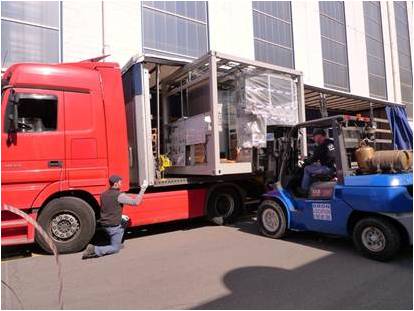
The new process was designed to fit in a half-sized standard process equipment container (PEC) that was initially fabricated at Rhodia-Solvay’s site in France. The completed PEC was transported to (see above) and installed at the INVITE Research Centre in Leverkusen, Germany during quarter two of 2013 and the process was successfully demonstrated.

The Europoly case study highlighted the overall F³ Factory concept of ‘fast, flexible and future’ by achieving:
  • Fast: The continuous operation of an intensified process.
  • Flexible: The use of the same PEC and PEAs (process equipment assemblies) for two different polymers.
  • Future: By using modular technology in a multi-product environment i.e. use of the same PEC and PEAs.
More information

F3 Factory Case Study: Continuous Production of Chemical Intermediates

For its F3 Factory industrial case study Evonik Industries AG focused on demonstration of the flexible, continuous production of intermediate chemicals. Working with academic partners TU Dortmund, TU Eindhoven and Newcastle University the project looked at the development and validation of a generic methodology for modularised production plants of medium scale for example for fence-to-fence applications in emerging markets.

As a global leader in specialty chemicals production Evonik Industries AG’s products are used in a wide variety of high end application areas including pharmaceuticals, agrochemicals, paints and coatings, paper, plastics, personal care and hygiene, adhesives and sealants. Innovative production strategies in these fields are a key focus of Evonik’s research and development projects.

Typical intermediates include those produced in highly exothermic reactions which suffer from limited heat and mass transfer capabilities. Present reactor technologies are complex and unique for each product and plant and are mainly economic only in world-scale capacities: in production facilities producing more than 100 000 tonnes per annum.

The F³ Factory approach can help Evonik become more flexible in production capacities, enable the use of different feed qualities and allow faster scale-up procedures to reduce time-to-market. Depending on the specific reactions investigated, step changes in production are expected including increased production effectiveness, energy savings and lower investment costs amongst many others.

Modular production technology 
Achieving the challenging goals of the F³ Factory project can only be reached through innovative process intensification technologies. For the Evonik case study, two different technologies were investigated:
  • structured catalyst packing
  • jet-loop reactor with integrated “cold” membrane separation
Both technologies focused on the intensification of mass and heat transfer as well as simplification of the specific chemical reactor design.

The first reactor technology required new catalyst structures which could be implemented as “plug-in” technology in existing plants. In the near future these could also be used in modularised new reactor concepts.

Simpler reactor construction will reduce investment costs and enable greater standardisation of reactor technology. Parallelization of this technique offers high potential for more flexibility in production capacity to support future market growth.

The second reactor technology is designed for highly exothermic liquid-gas reactions. Innovation in catalyst development requires an improved reactor concept to enable the heat management and mixing requirements necessary to maximise catalyst efficiency.

For the F3 Factory modular approach a parallel jet-loop set-up was envisioned, which combines high mass transfer performance and efficient heat management through the jet-loop principle with an integrated membrane separation for catalyst retention. The basic set-up is shown below.


This modular approach can easily be adapted to varying production scenarios by adding additional reactors or membrane Process Equipment Assemblies.

The benefits of this approach are:
  • reduced investment costs through standardised and easily scaleable reactor equipment
  • reduced operating costs due to maximised space-time yield and integrated heat management
  • high selectivities due to low heat gradients and ideal mixing
  • improved catalyst lifespan due to separation under process conditions

Following process development the production unit was transferred to the modular, container-based concept developed within the F3 Factory project.  This hydroformylation process in a jet-loop, with an integrated membrane separation, was then successfully demonstrated in the F3 Factory backbone facility at the INVITE Research Centre in Leverkusen, Germany.

With successful demonstration of the intensified technologies in a modular production environment, the basis of a possible new production concept has been realised.  The concept will now be further developed and optimised.

Validation and demonstration
Partial oxidation, epoxidation and hydroformylation were selected as example reaction classes for the case studies.

In cooperation with the University of Newcastle and TU Dortmund, software tools have been developed to evaluate the economic and technological aspects of applying this F3 Factory approach. With the help of the universities, models have been set-up to optimise operation conditions and operation control aspects.

The applied process intensification technologies have been proven to operate successfully at both lab and pilot scale levels. Design and engineering of modularised process equipment assemblies and process equipment containers for the hydroformylation reaction was completed successfully and the modularised hydroformylation process was successfully demonstrated at INVITE.

Project contact information:
For more information visit the F3 FactoryProject website or contact Dr. Frank Stenger at Evonik.