The SusChem News Blog is now hosted on the SusChem website in the News Room. You will be redirected there in 10 seconds
.

Showing posts with label skills. Show all posts

Wednesday, 27 March 2019

SusChem and ISC3 sign MoU to advance Sustainable Chemistry

The European Technology Platform for Sustainable Chemistry (SusChem) and the International Sustainable Chemistry Collaborative Centre (ISC3) signed a new cooperation agreement to foster their common mission of advancing Sustainable Chemistry at a European and global level at the recent SusChem board meeting on 14 March 2019 in Brussels.

The Memorandum of Understanding (MoU) outlines the role of each organisation and proposes long-term collaboration in the following areas: research agenda development, fostering breakthrough Innovation, education & skills development and stakeholder dialogues on Sustainable Chemistry. Through this agreement, both parties aim to maximise the impact of relevant activities, build on synergies and complementarities, and create added value for their members.


Markus Steilemann, Chairman of the SusChem board (pictured above, left), said:
“The memorandum reflects the commitment of both sides to work together towards advancing sustainable chemistry innovation to address EU and global challenges. In the course of 2019, we look forward to collaborating on the new SusChem Strategic Research and Innovation agenda (SIRA), and on the ISC3-led ‘Global understanding of Sustainable Chemistry’ consultation. Here,  SusChem brings in the European perspective sharing the benefits of our SusChem network of National Technology platforms.”
Friedrich Barth, Managing Director of ISC3 (pictured above, right), said:
“We join forces with SusChem to promote sustainable innovation in the chemical sector, leveraging a multi-stakeholder approach that involves Academia, SMEs, start-ups, the large Industry and society. Working with SusChem means having on board such a European forum, building on existing knowledge and advancing Sustainable Chemistry, not only at a European level but at a global scale, which is our main mission.” 
A key 2019 priority of this agreement is the bilateral input on Research Agendas. 

The new SusChem Strategic Research and Innovation agenda (SIRA), is currently being revised and will be structured in line with the next EU research and innovation framework programme: Horizon Europe (HEU). The SusChem SIRA will also address the impact of Sustainable Chemistry on global challenges, as part of HEU, and therefore the Sustainable Development Goals (SDGs). ISC3 will provide input on all relevant technology priorities, and the potential impact of such innovation in Sustainable Chemistry with regards to global challenges. ISC3 will also provide key input on priorities under education and skills, a horizontal topic that will be covered in the new SusChem SIRA.

SusChem will provide input to the ISC3-led ‘Global understanding in Sustainable Chemistry’ consultation with a strong focus on Europe. SusChem will also involve the SusChem NTP network (17 countries) to provide a national perspective.

About SusChem
SusChem ETP, founded in 2004, is a European Technology Platform, with the main objective of contributing to revitalising research & innovation in Sustainable Chemistry and Industrial Biotechnology in Europe. As a multi-stakeholders networking forum and a technology solutions provider, SusChem works towards advising on technology priorities, at a European level, with a long-term strategic research and innovation agenda (SIRA). Connection to National priorities is achieved via its network of  National Technology platforms. SusChem engages, consults and brings together representatives from larger Industry, SMEs, Universities and research technology organisations – being open to the wider society. SusChem technology focus areas include:  Advanced Materials, Advanced Processes, Catalysis, enabling Digital technologies as well as Horizontal topics.

About ISC3
ISC3, founded in 2017, was established by the German Federal Ministry for the Environment, Nature Conservation and Nuclear Safety (BMU) and the German Environment Agency (UBA). ISC3 has a structure supported by a Research & Education Hub (Leuphana University, Lüneburg) and an Innovation Hub (DECHEMA, Frankfurt) with the aim to also establish regional hubs outside of Europe. It is a globally acting institution, a multi-stakeholder platform and think tank that engages with the private sector, civil society and politics to contribute to international chemicals policies and the formation of a global network for collaboration, innovation and education on Sustainable Chemistry. Activities to achieve such objectives are: dialogues amongst stakeholders, building on a global start-up service and funding, developing a Sustainable Chemistry curriculum, and also working towards a research agenda outlining a common understanding on Sustainable Chemistry, sustainability assessment and cross-sectorial topics.

Both platforms share the intent of contributing to a more sustainable world and a circular economy, and to the transformation of the chemical sector towards sustainable chemistry, responding to global challenges.

Monday, 7 July 2014

iTeach: Skills for Chemical Engineers Survey

A frequent issue raised by industrialists across Europe when discussing new chemical engineering graduates is the difficulty in finding candidates with the right skills and competencies as well as knowledge to carry out the job. Universities are trying various approaches to improve this situation, but to date there is no reliable and robust framework that would enable them to measure the relative effectiveness of these approaches. iTeach is an EU funded ERASMUS project bringing together academics, industrialists and professional bodies to develop such a framework. As part of their work they have produced a questionnaire to establish a baseline for required skills and competences – and are asking industrialists to get involved. The deadline for participation in the iTeam survey is 20 July.

The first step in the iTeach programme is to establish what skills, competencies and knowledge industrialists consider important and how they currently measure these in their recruitment processes. The iTeam consortium is seeking views of representatives of as many potential employers of chemical engineering graduates as possible to inform the development of the framework.

Anyone taking part in the project will also have an opportunity to receive the project’s findings and in the longer term to influence the holistic training of chemical engineering graduates and ensure they acquiring the right skills and competencies. Participants will also be able to establish close links with academic institutions across Europe to broaden their pool of high quality candidates for recruitment in the future.

Robust and objective
The iTeach project is working to develop a robust and objective framework for the evaluation of the effectiveness of delivering core chemical engineering knowledge and employability skills to graduates. As a first step, they are gathering information on the current state-of-the-art in measuring effectiveness of teaching and perceptions from academics, employers and recent graduates.

As part of this a short (10 minutes) questionnaire has been developed. The responses received will be invaluable in helping to formulate the framework, which will be disseminated widely and made accessible to all chemical engineering academic institutions.

All responses to the questionnaire will be confidential and only used for the purposes of iTeach project. Within the survey free text boxes allow respondents to expand on any of the issues described. At the start of the questionnaire respondents are asked to provide an e-mail address if they wish to receive the results of this survey and also updates on the development of this very important framework. The email address will be kept separately from any responses to the questionnaires to avoid any breach of anonymity.

The iTeach team will also be happy to share with participants the eventual framework to test in their institution.

Please feel free to pass on news of this survey to other colleagues who may be interested in participating in the questionnaire.

About iTeach
The iTeach consortium is looking to improve the training of the future generations of chemical engineering graduates in Europe. The Improving Teaching Effectiveness in Chemical Engineering Education (iTeach) project brings together six European academic institutions from the UK, France, Former Yugoslav Republic of Macedonia, Portugal, Slovakia and Germany who provide Chemical Engineering degrees with professional or accreditation bodies. Alongside these academic partners the project also involves a number of employer organisation representatives as associate partners of the consortium.

Over three years the project will develop a framework to support the assessment of teaching effectiveness in delivering not only core Chemical Engineering knowledge, but also core employability competencies. The project runs from October 2013 to the end of September 2016.

For more information contact project coordinator Jarka Glassey at Newcastle University.

Friday, 22 March 2013

Advanced Manufacturing goes Public


On 19 March the European Commission’s Advanced Manufacturing Technology task force held its first public hearing in Brussels on how advanced manufacturing technologies for clean production can boost the competitiveness of EU industry. SusChem, the chemical sector and its partners in the SPIRE PPP (Sustainable Process Industry through Resource and Energy Efficiency Public-Private-Partnership) initiative were well represented and fully engaged in this key discussion on Europe’s industrial future.

Opening the hearing, the Director General of DG Enterprise, Mr. Daniel Calleja, identified the manufacturing-related issues which the Europe needs to address to increase its competitiveness: access to finance, the skills mismatch in education, unfilled jobs and investment in innovation.

He noted that manufacturing represents 75% of exports in the EU and 80% of all innovation. “If we neglect manufacturing it will not be possible to emerge from the current crisis,” he concluded.

Peter Marsh of the Financial Times (who also has a first degree in chemistry) provided a keynote address focusing on the new industrial revolution and how to build upon Europe’s existing strengths through supporting good businesses, encouraging technology take-up and promoting science and engineering to tackle the skills-shortage.

SPIRE
The first of three panel discussions addressed the question: How to accelerate the dissemination and commercialisation of advanced manufacturing technologies?

Gernot Klotz, Executive Director Research and Innovation at Cefic (below left), represented the SPIRE PPP in this session and emphasised that successful innovation was not just about technology but also often requires a change of mindset. He also underlined European strengths.


“We have an excellent research basis, a highly evolved ecosystem of big and small companies that work together, the proximity of value chains is a major advantage, and we have the skills to deal with complex (high added value) products and a very demanding market,” he stated.

The SPIRE PPP can yield dramatic improvements in resource and energy efficiency for the process sectors but can also provide improvements beyond these areas to associated manufacturing sectors and along the majority of European value chains.

After lunch the discussion moved onto a second question: How to boost the market uptake of advanced manufacturing technologies?

Skills needed
The final panel discussion looked at initiatives to reduce skills shortages and competence deficits. Here Sue Fleet of Britest Ltd represented SusChem and described its Educate to Innovate programme that is working to develop education materials from current FP7 research projects – specifically the SusChem inspired F3 factory project.

“The aim is to develop attractive context-based learning materials and to act as a promotional platform showing that engineering and science are exciting,” said Sue (below). A small group of innovative university educators will meet in April at the F3 factory demonstrator facility to start the practical development.


“There is a need to raise expectations,” commented Sue. “And we should use the opportunities of the forthcoming PPP initiatives – such as SPIRE - to do this. Skills and educational activities must be part of their agenda.”

The hearing was summed up by Carlo Pettinelli, European Commission, Director, Sustainable Growth and EU2020. He believes that the task force is a cornerstone in the implementation of industrial policy and rediscovering growth and he noted a number of promising ideas already. These included the need for improved dissemination and analysis of output from Commission research projects, the essential role of cross sector collaboration (highlighting the success of Factories of the Future and SPIRE programmes in this area), and the need to produce engineers for industry with entrepreneurial skills via initiatives such as SusChem’s Educate to Innovate.

Your input
The public hearing is the start of the process of consultation on how to increase the industrial competitiveness of Europe following the publication of the updated communication on Industrial Policy issued in October 2012. A series of workshops will be held in Brussels on 27 and 28 May workshops and a second public hearing is currently scheduled for 19 September.

In addition a structured questionnaire can be found on theDG Enterprise Industrial Policy website, where stakeholders are encouraged to make a formal input to the proceedings. All input will be considered in formulating a final report.

You can find more information on European Industrial policy and the consultation here.


Tuesday, 24 April 2012

2012 SusChem Event builds Innovation Momentum

SusChem 2012 was a resounding success. Well over 200 participants enjoyed two days of discussions and debate on future SusChem strategy and heard about progress in priority innovation activities including resource efficiency, water, critical raw materials, smart cities and education. New initiatives were launched and delegates left with a clear understanding of SusChem’s commitement to Europe’s priorities and renewed enthusiasm for the challenges ahead. A summary video of the stakeholder event can be viewed on YouTube.

The next year will be important for SusChem, sustainable chemistry and Europe as the scope and direction of Horizon 2020 and our portfolio of innovation initiatives are discussed and decided.

Summing up the two-day event Klaus Sommer, chairman of the SusChem board, stated: “SusChem has achieved excellent recognition with European institutions. We have good momentum in all our activities and a fantastic opportunity to shape our own and Europe’s future.”

The main conference session on day one had been opened with a supportive message from Prof Jerzy Buzek, MEP who conveyed his strong belief that the “real remedy [to the current economic crisis] will be found through research, development, and applied innovation and the chemical sector will play here a leading role.” He thought SusChem and other technology platforms held a key role in identifying the right ideas and ensuring that EU funds are allocated in the most appropriate manner. The full text of Prof. Buzek's message can be read here.

New initiatives

At the start of the event the 11th full SusChem National Technology Platform (NTP) was formally initiated with the launch of SusChem Belgium.

The 10th Stakeholder also saw the launch of a significant new Education initiative – ‘Educate to Innovate’ - that seeks to exploit innovation outputs from SusChem’s research and innovation projects to help enhance the innovation skills of future generations of scientists and engineers.

Sommer described the education initiative in his summary as: “an opportunity to introduce concepts of sustainability, social skills and entrepreneurship as a mind set and new paradigm into higher education.”

Workshops and plenary sessions throughout the meeting covered the four main innovation initiatives that SusChem is involved with. The road ahead and main issues were discussed. In particular for the proposed SPIRE Resource Efficiency Public-Private-Partnership had been the subject of a Dinner Debate on the evening of the first day with supportive messages from industry, public authorities and the Commission.

Strategy

On day one SusChem board member Rodney Townsend had had presented the new SusChem strategy initiative to move SusChem towards a European Technology and Innovation Platform (ETIP). On the second day he summed up initial feedback from stakeholders on proposals.

This was generally positive, but there were calls for greater clarity on economic considerations and a clearer definition of innovation. Also there were queries about how to set criteria to define sustainability and suggestion to include regional networks and standardisation into SusChem thinking. Issues such as how collaborative activities can be continued beyond the pre-competitive stage, relationships between large and small companies, and investment, merger and acquisition will all feed into the developing strategy.

Communication

Concluding the conference Sommer discussed increased stakeholder involvement in SusChem activities. He saw a need to improve communications with our National Platform network and ensure their alignment with activities on the European level. Discussion and debate between stakeholders was important in shaping policies and more time for this needed to be included in stakeholder meetings.

Sommer also promised a regular email newsletter to SusChem stakeholders to ensure everyone was up-to-date on the status of our initiatives in what was likely to be a dynamic year ahead. And he stressed that stakeholders should not hold back from sending their feedback and input to SusChem at any time – multiple channels were available (twitter, email, this blog etc) – and all input was appreciated.

Next SusChem events

SusChem will be participating strongly in the European Commission’s Industrial Technologies 2012 conference and exhibition in Aarhus, Denmark from 19 – 21 June.

The next SusChem event will be the FP7 Brokerage event on 18 September in Brussels. We look forward to seeing you there!


Photos from #SusChem2012

The 10th SusChem Stakeholder event on 17 and 18 April was filled with interesting and inspiring sessions. Here we present a small selection of photos from the event. Lots more images can be found on the SusChem website and we aim to upload all presentations in the near future.

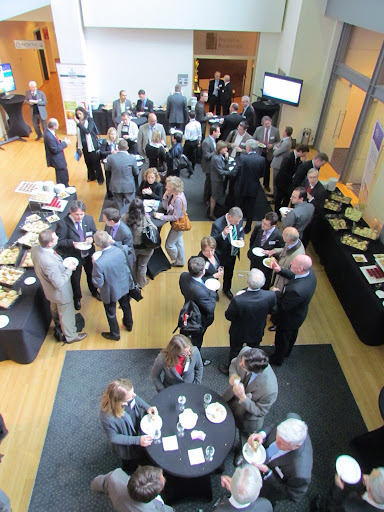
#suschem2012 delgates
Delegates started with a coffee before an official launch of SusChem Belgium NTP and a welcome message from Prof Jerzy Buzek, MEP.

Ger Spork, #suschem2012
Ger Spork (above) of the SusChem secretariat at Cefic was the master of ceremonies for the day.

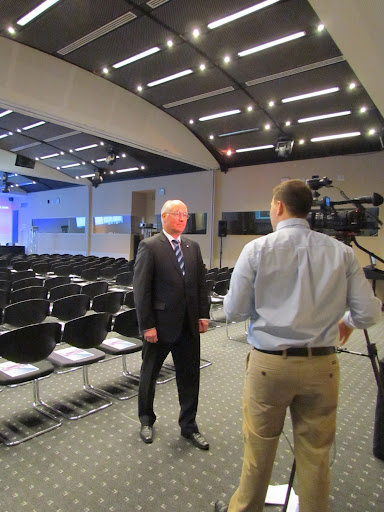
#suschem2012 Klaus Sommer
The chairman of the SusChem board Klaus Sommer of Bayer TS told the stakeholder audience that 'the future is based on chemistry'. He is pictured (above) being interviewed by Euractiv. Euractiv has produced a series of videos from the event that are available on the Euractiv website and across SusChem communication platforms in the near future.


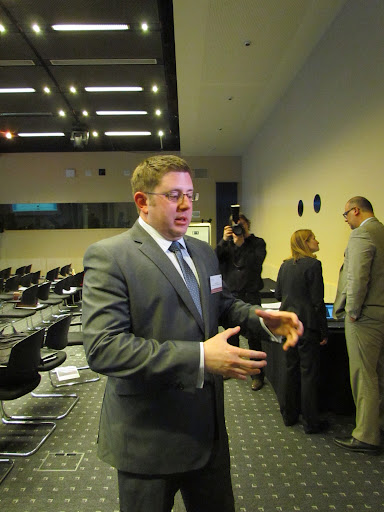
"That's about the size of it" says Mike Pitts of the UK's CIKTN gave an entertaining and informative presentation on Critical Raw Materials on Day 1 of the stakeholder seminar. He will also feature in one of the Euractiv video interviews. Mike has already blogged his presentation here.

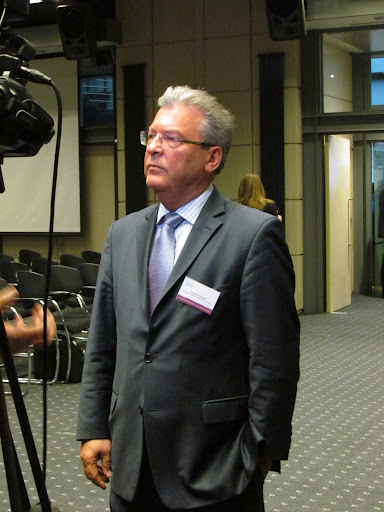
Rudolf Strohmeier is Deputy Director General of the European Commission's DG Research & Innovation. He made a number of interventions and presentations during the stakeholder meeting calling for a clear private commitement to the forthcoming innovation initiatives.


Friday, 20 April 2012

SusChem launches Educate to Innovate

A new SusChem programme to build innovation skills capacity was launched at the 10th SusChem Stakeholder meeting in Brussels. The Educate to Innovate programme seeks to exploit innovation outputs from SusChem’s Research and Innovation (R&I) projects in order to enhance the innovation skills of future generations of European scientists and engineers through the effective engagement of industry and higher education institutions (HEIs).

Building on SusChem related research and innovation projects and informed by reports such as the Cefic ‘Skills for Innovation’ survey the programme aims to establish a collaborative framework to enhance innovation skills capacity by:
  • capturing innovations emerging from SusChem R&I projects that could be used as case studies for the development of educational resources
  • facilitating constructive dialogue and exchange of ideas between stakeholders in industry and HEIs
  • designing appropriate educational resources that can be used at undergraduate and Masters level to develop the skills needed to enhance innovation in the chemical and industrial biotechnology sectors.
Speaking at the SusChem Stakeholder meeting Neville Reed from the Royal Society of Chemistry and SusChem board member with special responsibility for education issues said: “Scientific interdisciplinarity is the key for innovation and the future chemical industry. Successful research and innovation activities will need people with a broad scientific skill set and also abilities such as good communication skills and sound understanding of business.”

New approach
The Educate to Innovate programme is a new approach and part of SusChem’s strategy to facilitate a continuing, constructive dialogue and create synergies between the chemical industry and higher education with the goal of systematically introducing key skills for innovation into HE curricula.

The ‘Educate to Innovate’ framework


In addition SusChem will be developing a good practise innovation skills database. This online resource will compile case studies of EU industry-university collaborations on course work, internships and industrial placements. It will help to show the value of context- and problem-based learning and help ensure that courses are relevant and up-to-date. Academia and industry will be invited to share details of successful collaborative innovation skills development projects.

Pilot Project
F3 Factory is a major EU FP7 project that emerged from SusChem’s Strategic Research Agenda and will be used as the pilot project for the Educate to Innovate programme. Launched in June 2009, F3 Factory is a 4-year, €30 million collaborative project involving 25 partners from nine EU member states.

How can you get involved?
If you are working in European industry SusChem is seeking input from industrial organisations that:

  • have a track record of constructive engagement with academia
  • are committed to addressing future industrial challenges through open innovation
  • believe there are opportunities to enrich academic teaching of innovation
For further information on industrial input contact Andrew Smalley at Britest Limited.

If you are working in European Higher Education Institutions SusChem is seeking input from higher educational institutions that:
  • have a proven track record of innovative teaching methods
  • see opportunities to enrich academic course materials by including case studies from leading European research and innovation programmes
  • are interested in developing new ideas for teaching course material at undergraduate and Masters level
For further information on HEI input contact Nicolas Dupuy at Université de Lorraine.

Further information
For more information on the new SusChem Educate to Innovate pilot programme download the ‘Educate to Innovate’ flyer or to find out more about SusChem Education activities and the online skills database contact Sophie Wilmet in the SusChem Secretariat at Cefic.