The SusChem News Blog is now hosted on the SusChem website in the News Room. You will be redirected there in 10 seconds
.

Showing posts with label nanotechnology. Show all posts

Monday, 1 February 2016

Save the date: Industrial Technologies - Creating a Smart Europe June 22-24

The Netherlands Presidency of the European Union will be hosting the European Conference Industrial Technologies 2016 to be held from 22 to 24 June 2016 at the RAI Conference Centre in Amsterdam.

Industrial Technologies 2016 will be the largest networking conference in the field of new production technologies, materials, nanotechnology, biotechnology and digital technologies in Europe with more than 1 250 high level delegates expected.

The conference's advisory board includes a number of SusChem stakeholders - not least SusChem's Chairman of the Board Dr Klaus Sommer.

"Innovation is the basis of Europe’s competitiveness. In particular piloting and demonstration facilities are important to bridge the gap between research and competitive business," says Dr Sommer. "New technologies play a key role in this effort, signified by e.g. the focus on Key Enabling Technologies."

"Europe would benefit from a stronger sense of community between innovation and technology players. The conference is a great opportunity to network but also to emphasize the importance together with the European Commission," concludes Dr. Sommer.

Creating a Smart Europe
The three day conference will bring together personalities involved in research, industry, education, finance and policy activities from  manufacturing and process industry and technology domains from all over Europe to identify priorities that are crucial to strengthen the European industrial innovation ecosystem and deliver ‘A Smart Europe’.

Reasons to attend include:
  • Inspiring keynotes and eye-opening site visits
  • Interaction to identify priorities for the policy agenda
  • Networking with European players in research, industry, finance and policy
Registration is now open and 'early bird' fees will apply until 15 April.

A provisional schedule for the conference is available. To keep up to date with developments for the conference visit the conference website and subscribe to the conference newsletter. You can also follow the conference on Twitter via @IndTech16.

Friday, 13 February 2015

EuroNanoForum 2015 in Riga!


The Latvian capital of Riga will host the European Commission's bi-annual EuroNanoForum Conference from 10 to 12 June. Organised under the Latvian EU Presidency EuroNanoForum 2015 is expected to attract more than 1200 visitors from over 50 countries during its three-day programme. And Sus Chem will be there of course.

The main focus for EuroNanoForum 2015 (ENF2015) is European re-industrialisation including demonstrations of how European SMEs can profit from applying advanced nanotechnologies and materials. The programme includes presentations from a range of exciting European SMEs, such as WaterSprint, with CEO Anders Ruland talking about nanotechnology based water purification systems, Graphenano's Professor Jose-Luis Valverde, discussing pilot lines for the construction industry, and Wendelin Stark of Turbobeads GmbH & Nanograde AG showcasing how to successfully commercialise nanomaterial-based solutions for industrial and medical markets.

Clara de la Torre, the European Commission's Director for the Key enabling Technologies Programme in DG Research & Innovation, describes the EuroNanoForum event as: "the most significant European forum in the field of nanotechnologies and advanced materials. The 2015 edition will focus on Europe's competitiveness and the renewal of its manufacturing industries."

ENF2015 will be the seventh EuroNanoForum. Organised biannually since 2003 it is a meeting point for industry, science and policy and has grown into the most significant European networking conference focusing on innovations across the full spectrum of nanotechnology fields and associated industrial sectors. SusChem's coordinator Jacques Komornicki is on the event's steering committee.

Programme, prizes, exhibition and more
The conference will feature industrial nanotechnologies and advanced materials in support of European re-industrialisation, look at socio-economic trends and innovation demands on nanotechnologies and advanced materials, and the infrastructures and framework conditions required for rapid deployment of nanotechnologies.

Three main conference tracks are envisaged:

  • Nanotechnology in industrial applications
  • Advances in enabling nanotechnologies, nanomaterials and nanomanufacturing
  • Collaborations and policies for accelerating innovation and uptake of nanotechnologies and advanced materials based solutions

In addition there will be an extensive Nanotech Europe 2015 exhibition area, poster session and on June 12 a full day for project brokerage.

Two prizes are on offer at ENF2015 for Best Poster and FutureFlash! the Best Project Competition. But if you want to enter for these two competitions the deadlines for the Poster abstracts and FutureFlash! Best Project are very soon.

The best of the research posters submitted will be presented throughout the event and at the specific poster sessions, and one will be rewarded as the Best Poster 2015. But you need to submit your abstract by 20 February 2015!

Entries to The FutureFlash! Best Project competition will also be assessed and ten will be selected and provided with a mini stand to showcase their innovation at the Nanotech Europe 2015 exhibition. The most successful of the submitted projects launched under the EU Framework Programmes in the field of nanotechnologies and materials will receive the FutureFlash! Best Project award. But you need to apply by 27 February 2015.

More information
You will find full information about the conference, exhibition and much more at the dedicated ENF2015 website. You can also follow the event on twitter via @ENF2015 

Friday, 8 November 2013

Value4Nano Survey Needs Your Input

The recently started Value4Nano project is looking for your input to help foster the responsible development of nanotechnologies, products and services in the European Union. To help guide the project it has just launched a survey covering issues, uses and technical and market development in the sector. 

The Value4Nano project is a Coordinated Support Action funded by the European Commission under FP7 with the aim of delivering recommendations for future programme topics in the area of nanotechnologies. The full name of the project is “Industrial valorization of strategic value chains for nano-enabled products.” The project is funded for two years from September 2013 to August 2015.

The survey consists of a short questionnaire and should take no more than 15 minutes to complete and share your experience of the sector. The closing date for the survey is 20 December 2013.

What is Value4Nano?
The Value4Nano project aims to develop an Implementation Roadmap for four value chains and their target products. The Roadmap will include business modelling and planning for a set of pilot lines and it will involve strategic industrial and other stakeholders.

The four target value chains and their target products are:

  • Nano and micro printing for industrial manufacturing
  • Nano-enabled, depollutant and self-cleaning surfaces
  • Manufacturing of powders made from functional alloys, ceramics and intermetallics
  • Lightweight multifunctional materials and composites for transportation

To keep up to date with Value4Nano project developments, events and Calls for Experts visit the project website where you can download a short flyer on the project. Alternatively contact the project coordinator Margherita Cioffi.

Tuesday, 25 June 2013

Dialogue on Nano

The English language publication of the findings from the Dialogforum on Nano organised by BASF was celebrated at a public event yesterday (24 June) in Brussels. This important communication examined how we can effectively communicate in a transparent way on nanomaterials from manufacturers to consumers. Its findings reflect other recent industry communications in the area of nanotech.

What do consumers want to know about nanotech-enabled products? And how should manufacturers and retailers communicate? Does a definition of nano help, what is the role of labelling and would a mandatory register help?

These questions and more were on the agenda of the Dialogforum Nano organised by BASF. This initiative brought together representatives of German environmental and consumer organisations, churches, industry, retailers, research organisations and trade unions to develop shared recommendations for increasing transparency and information on nano-materials along the value chain from manufacturer to the consumer.

To achieve this involved a process that included analysis of  consumer enquiries to companies and consumer organisations, expert hearings the availability of relevant scientific information and safety testing of nanomaterials.

You can access the final report of the Dialogforum here and see a summary of the 24 June event including contributions from panelists and the audience can be accessed here.

Seven questions
The essence of the recommendations of the Dialogforum is summarised in seven questions for the supply chain:
  1. Information on the nanomaterial used: How can the material be characterised?
  2. Does the EU definition recommendation for nanomaterials apply to the material in question?
  3. A/ How can the effect and the new functionality generated through the nanomaterial be explained? B/ How can the effect and the new functionality be explained if the material in question is not a nanomaterial?
  4. How can the added value of the nanomaterial be described compared to other products?
  5. How is the risk assessment of the used materials carried out? With what results?
  6. How is the material / product in question to be recycled / disposed of / handled at the end-of-pipe?
  7. Where can further information be found?
During the discussion on 24 June a key element for the success of the Dialogforum was the establishment of a common language / vocabulary to remove ambiguity and allow common understanding between the various stakeholder. It is hoped to develop the dialogue at a pan-European level.

Mindset change
Gernot Klotz, Executive Director for Research and Innovation at Cefic and SusChem board member addressed the recent EuroNanoForum in Dublin on June 18 with a similar message.

He called for a mindset change in Europe. In the face of the many pressing societal challenges—such as renewable energy and an ageing population —that we face it is essential that we develop key enabling technologies (KETs) such as nanotechnology.

However successful development of KETs requires that both public and political perceptions of the technologies are able to comprehend the relative and differentiated balance of risk and benefit for their wide range of applications.

He argued that “to achieve global leadership in nano and maximise its benefits to society, the benefits and risks research in new technology areas should be tackled together.  The innovation and safety community must work together to ensure that we master these technologies and push forward applications where the use of nano is regarded as safe.”

That means an integrated strategy on KETs is needed that will simultaneously:
  • Link technologies to their specific uses for solutions for priority European challenges
  • Open a structured dialogue between the innovation and safety stakeholder communities
  • Promote more research that integrates risks and benefits within its design to provide us robust data on the benefits from innovation that society wants and the related risks society is willing to take to get the benefits
  • Explore existing regulations and voluntary approaches for responsible risk management of KETs
  • Initiate broad and structured public dialogue about benefits and risks of KETs in specific application areas
“Innovation is about change. And change requires a mindset change in order for us to accept and adapt to change. The proposed approaches must be part of the discussion on societal challenges. We cannot achieve the EU 20-20-20 objectives and enjoy a better life quality if we do not invest in technology,” he concluded.

You can read the full text of Gernot Klotz’s speech here.

Safe and innovative
These themes were also reflected in a joint document published by a range of European industry associations, including the chemical industry, on 14 June. The document, Europe needs safe and innovative nanotechnologies, demonstrates these sectors backing for the European Commission's Second Regulatory Review on Nanomaterials and ‘its conclusion that the current European regulatory framework adequately covers nanomaterials, is science-based and proportionate’.

The paper also states that ‘[…] the REACH (Registration, Evaluation, Authorisation and Restriction of Chemicals) Regulation provides the [most] appropriate framework to address nanomaterials […]’ and that openness and transparency are vital for the growth of the nanotechnology industries.


Wednesday, 13 July 2011

Get ready for SusChem Brokerage event 2011!


SusChem is committed to helping you succeed in participating in EU Research and Innovation projects. With this in mind SusChem is organising its Annual Brokerage Event on September 14 2011 in Brussels. The event will give you the opportunity to present your project ideas and engage with possible collaborations in consortia.

The EU Seventh Framework Programme for Research and Technological Development (FP7) is a key tool to enhance European research and innovation. The 2012 work programme and calls for proposals will be officially published on July 20 with Commissioner Máire Geoghegan-Quinn announcing the details at a press conference at midday on 19 July.

The July call for FP7 will be the largest R&I funding exercise launched by the Commission with calls for proposals to fund European research and innovation, totalling around € 7 billion. The Commissioner plans to boost innovation through research with the announcement of the first calls for proposals since the adoption of the Innovation Union flagship and will give details of the main fields of research and innovation to be covered. The main focus of these work programmes is the integration of research and innovation. Particular emphasis has been placed on SMEs.

In it to win it
SusChem's Annual Brokerage Event will focus on this call and will be held on Monday, September 14 between 10:00 and 16:00 at the Hotel Silken Berlaymont, 11-19, Boulevard Charlemagne, 1000 Brussels.

Don’t miss this opportunity! First project ideas will be presented, and speed-dating sessions will be organised in order to discuss possible collaboration in consortia.

To be best prepared for the brokerage event, SusChem has already compiled an overview of the expected chemistry, industrial biotechnology and materials SusChem relevant calls of the following 2012 work programmes:
  • Nanosciences, Nanotechnologies, Materials and new Production Technologies (NMP)

  • Knowledge Based Bio-Economy (KBBE)

  • Energy

  • Environment
For more information visit the SusChem website and for an impression of last year's brokerage event see our report on the blog. The SusChem Brokerage Database is also available online to facilitate consortium building.

For more information on EU funding opportunities and partners searches, please contact either Ron Weerdmeester or Judith Spaltman at PNO Consultants.

Friday, 17 June 2011

Draft 2012 FP7 Industrial Technologies Call Available


The European Commission has published a draft working paper on the likely calls for the 21012 FP7 programme in Industrial Technologes (aka NMP or Nanotechnology and nanosciences, knowledge-based multifunctional Materials and new Production processes and devices).

The current orientation document outlines proposed priorities for the 2012 NMP programme. It is expected that the publication date for all call documents including the final work programme will be on 20 July.

Wednesday, 8 June 2011

International regulation key to nanotech growth

SusChem board member Gernot Klotz of Cefic R&I highlighted the need for a coherent approach to international regulation for nanotechnologies at the EU-US High Level Regulatory Cooperation Forum in Brussels today (8 June).

The event, co-organised by BusinessEurope and the US Chamber of Commerce, also involved the EU Commission and the Transatlantic Business Dialogue - the main business voice with the U.S .Government and the European Union on the transatlantic economic relationship.

Dr. Klotz made the opening statement and outlined the business perspective in a panel discussion on nanotechnologies to which US and EU regulators then responded. He is the coordinator for High Level Group on Key Enabling Technologies working group on nanotechnology.

Tuesday, 31 May 2011

ENF2011 - a Snapshot on EU nano innovation

EuroNanoForum 2011 (ENF2011) saw some 1200 members of the nanotechnology community from over 50 countries gather in Budapest at the end of May. Presentations over three days (including various satellite events) showed how nanotechnology is already addressing the grand challenges that face Europe and the whole world. Numerous examples of cross-disciplinary, cross-sector, and of course cross-border research and collaboration were shown. In European nanotechnology - cooperation and collaboration is the order of the day.

It is clear that nanotechnology is the key enabling technology that underpins a wide range of other enabling technologies and processes. In fact the term nanotechnology covers a wide and diverse family of technologies and processes that will and are already making an impact on industry and society at large.

This family of technologies continues to grow. For example the opportunities that are emerging from research into applications for graphene are quite remarkable – and could usher in the end of the silicon age and open a new age of carbon-based electronics.

In fact it is easy to be carried away at a conference like ENF2011. Presentations at this conference have shown that nanotechnology can enable the blind to see, the deaf to hear, and bring cheap, sustainable power amongst many other miraculous possibilities in fields from medicine to the environment.

Innovative, safe
However to ensure that this European investment in research yields a European dividend in terms of growth and competitiveness requires successfully transfer to industrial level – selling nano-enabled products to the mass market. This is the real challenge and a vital challenge for our continuing prosperity.

I could worry about the fact that many presentations showed excellent examples of EU research outcomes but – for example – Japanese examples of near – or in the market products. Europe must do better on commercialisation and retention of IPR. This is our most important challenge going forward. Hopefully the instruments being developed for the Common Strategic Framework, and other policy initiatives, will assist this process.

We also need to ensure that nano is safe and seen to be safe. The meetings of the Nanosafety cluster projects at Budapest showed how important this is and that all aspects are being addressed.

The number of nanotech products that are in - or about to enter the market – increase almost daily and this means that conclusions on international regulatory and standardisation issues are becoming increasingly urgent.

And of course effective communication of the benefits and risks of nanotechnology is necessary. Fortunately the numerous Nanotechnology communication initiatives at ENF2011 show that this area is also being fully addressed and making an effective impact. Of particular interst was the OpenLabs concept pioneered in the NanoToTouch project. This brought working nano scientists and their laboratories into a public space in three science museums across Europe and allowed direct interaction with interested citizen 'on the job'.

Monday, 30 May 2011

Pictures from Budapest

The EuroNanoForum 2011 event is in full swing. The weather in Budapest is glorious but with four parallel conference sessions plus other workshops and events delegates have not had any much time to appreciate the weather.


The event is taking place at the Budapest Congress and World Trade Centre.


In parallel with the conference there is an extensive exhibition area.


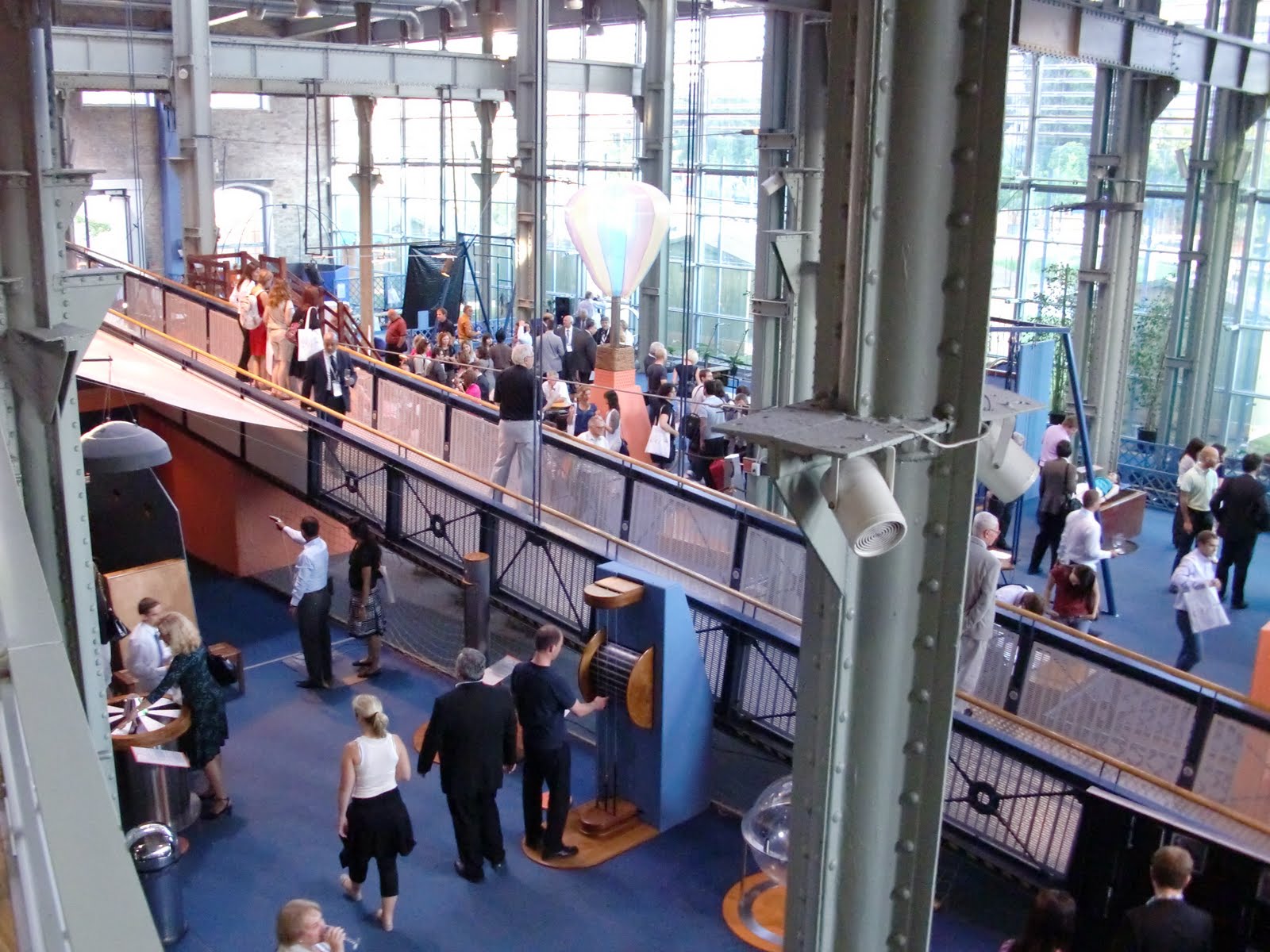
After a hard day at the conference on Monday delegates were able to relax at the Budapest Palace of Miracles - a major new science centre in the centre of town - in the evening.

Sunday, 29 May 2011

SusChem at EuroNanoForum 2011

SusChem will be reporting from the EuroNanoForum 2011 taking place in Budapest 30-31 May and also take a look at the NanoFutures session on Wednesday morning (June 1).

Over 1000 participants are expected at this biannual event. The 2011 event promises to be the biggest so far and the European nanotechnology event this year. It will reveal how nanotechnology can contribute to addressing the grand societal challenges of our time. The event covers research breakthroughs, industrial innovations and societal aspects of nanotechnology.

In addition to plenary sessions, four parallel conference sessions will cover the impact of nanotechnology on energy, health, electronics, the evironment and biotechnology amongst very many more sessions in an extensive programme. A large exhibition is also part of ENF2011.

The NanoFutures initiative brings together an number of technology platforms (including SusChem) to assess how nanotechnologies can support sustainable development.

You can follow SusChem reports from ENF2011 via the SusChem twitter stream http://twitter.com/suschem and we will also post blogs from Budapest.