The SusChem News Blog is now hosted on the SusChem website in the News Room. You will be redirected there in 10 seconds
.

Showing posts with label comprehensive strategic framework. Show all posts

Friday, 5 October 2012

SusChem: Some Future Perspectives

Jacques Komornicki is taking over the reins of the SusChem secretariat now that Ger Spork is returning to Dow after a successful four year secondment as the ‘face’ of SusChem. SusChem News caught up with Ger and Jacques, pictured below with SusChem chairman Klaus Sommer (left), to review the recent achievements of the platform and discuss what the future may hold.

Dr. Jacques Komornicki has a chemical and materials research background and is joining Cefic from French company Arkema where he was recently R&D Director for oxygenated products. His career to date has been very much in research areas working with various materials development initiatives including high performance polymers. He describes himself as a “Research and Innovation fan”, which is why he was attracted to the secondment to Cefic and SusChem.
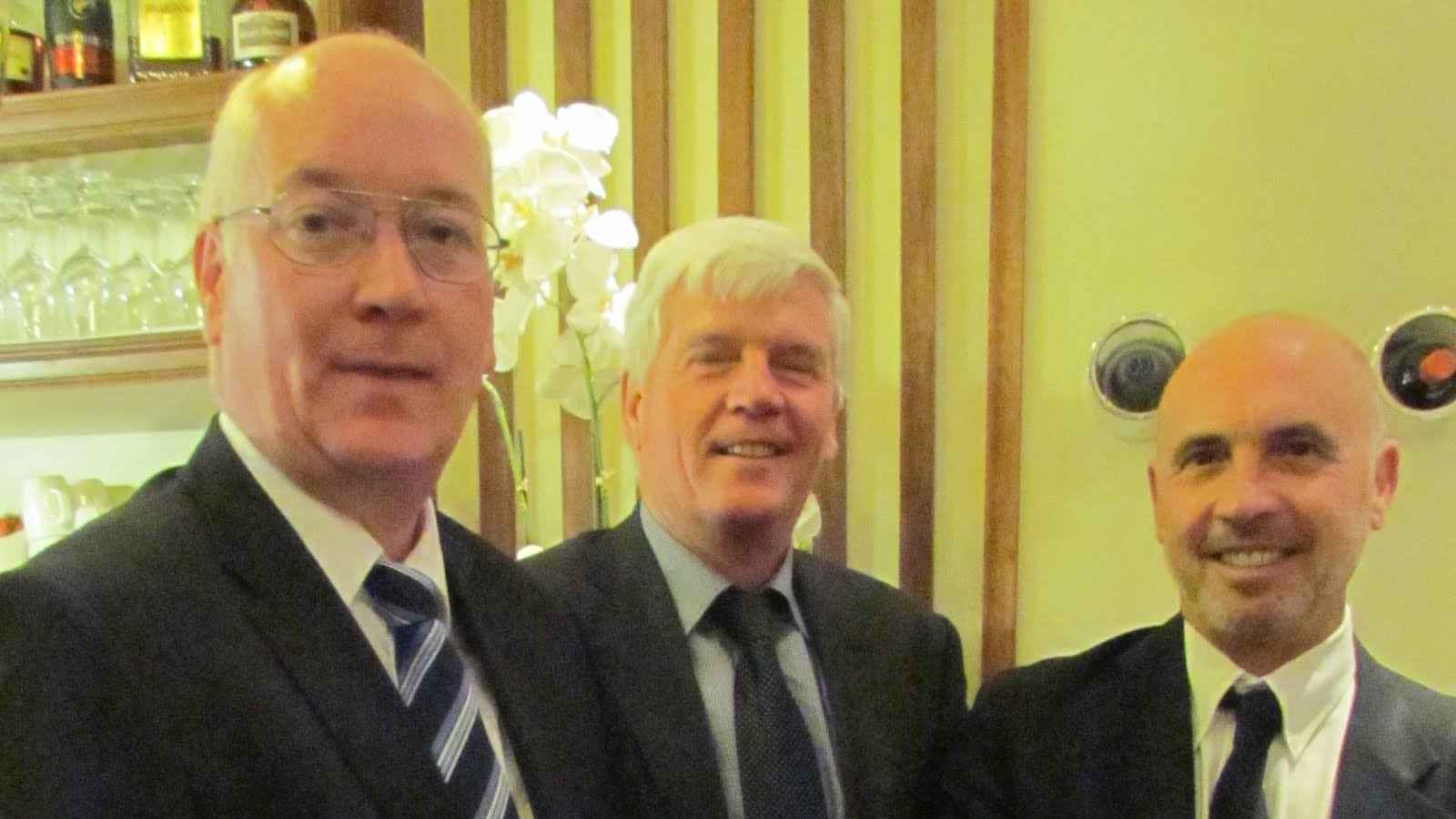
“It is a very different job, with a steep learning curve,” he admits. “I will need to understand the context and environment in which SusChem works in Brussels – understand the acronyms and language used in the European Commission and Parliament. I need to get to know who the key people are - who does what. My understanding, which corresponds to my personal philosophy and gives me a high motivation, is that we are working in a highly collaborative mode whether we are talking about industry partners or European Institutions.”

Fortunately he and Ger have had some time for a handover period that has helped introduce Jacques to the world of SusChem.

Value chain
Jacques comes from an area of the Chemical industry, Performance Products, where working along the value chain is natural. “To be successful the chemical industry you cannot work in isolation,” says Jacques. “You really have to collaborate with partners – both downstream and upstream – to get the best solutions. In general within the chemical industry to get the best out of R&D you need to embrace open innovation.” He also has good experience of working in EU projects and has experienced first hand the value of pan European collaborative research.

Improving the public’s perception of chemistry and the chemical industry is also very important to Jacques. “Generally in France the chemical industry is still seen by many people as polluters - the bad guys,” says Jacques. “The image does not match reality and people do not value the industry enough. I hope that working in Cefic I can help to put chemical industry back in its right place as a genuine solution provider for societal needs.”

Ger agrees and his experience indicates things are moving in the right direction. “SusChem has made a great evolution in the last years, bringing it in much better position for public and private partners,” he says. “The industry has got a stronger profile and the current environment gives a better position for our solution provider role: and a great opportunity for SusChem.”

Platform for sustainability
Looking back Ger sees many changes during his time with SusChem. “Suschem was well established as a research platform and we could build from that,” he says. “I was impressed with how things were run but had one question: what is our impact?”

Finding out what the impact was a revelation and allowed SusChem to step up a gear and consider a wider ambition. “When the early impact analysis was done in 2009 the numbers were fantastic: €600 million worth of granted projects that were SusChem inspired in the first 18 months of FP7,” boasts Ger. “And on average we are still looking at around €300 million per year. These sorts of figures made the industry take notice of the value position of our Industry platform.”

And chemistry and the chemical industry can still do better than this. “If you look at relative contribution to GDP then our sector should get nearer one billion Euros,” claims Ger. "This level of funding would be in line with our fundamental contributions to society and help to bring the support together to create full programme proposals like in a Public Private Partnerships (PPPs) with large-scale collaborative research and elements of demonstration. Now that is real impact to my mind.”

These concepts will be important in the new framework programme (Horizon 2020) to ensure that innovation gives Europe a real competitive edge.

SusChem has moved from a pure research platform to become a research and innovation platform targeting societal needs. The chemical sector has a lot to do as the solution provider for societal challenges such as producing novel lightweight materials, improving resource and energy efficiency. Challenges such as using CO2 as a feedstock for useful products are areas where the chemical industry will be the key solution provider.

Leading collaboration
Ger is keen to highlight another change in SusChem's approach. "Previously we always stepped away from the content of projects," he says. "SusChem acted as a catalyst enabling others to build projects. Now SusChem is also involved in the process of contributing to projects and driving initiatives where necessary."

This trend is highlighted over the past four years by the willingness of Cefic and other SusChem partner organisations to make a greater content contribution to projects and programme. “This is very positive,” says Ger. “The willingness to do more than just run the technology platforms is a big plus. Cefic is now willing to become a concrete partner in projects, for example E4Water, which adds great value.”

“So change is very important," continues Ger. "It is important to regularly get a new perspective."

Jacques recognises the value of these initiatives. “SusChem is now involved with a lot of other platforms and projects: for example A4M, E4Water and of course SPIRE. The industry is an actor in all value chains: an important actor, but not the only one. This means that collaboration is essential,” he says. “And it goes beyond research. To do good research, get good results, to set up a pilot line is useful but how does this translate into jobs in the EU? That is the essential question today.”

Ger agrees. “Public engagement to cross the so-called innovation ‘valley of death’ is key to address societal challenges, which are excellent growth creation opportunities and what we are doing is important here,” he believes. “This will ensure we achieve something truly sustainable and again this means that we need to know what is the impact. We need to be able to demonstrate that we are creating a sustainable future. We must be able to demonstrate the capability to generate jobs by 2020.”

Both Jacques and Ger are enthusiastic about the role of the platform leading open innovation in the chemical industry. “This is an area of great future interest for the industry,” concludes Ger. “At present a lot of people talk about open innovation, but not many actually do it. SusChem has a huge potential role to promote open innovation.”

You can contact Jacques Komornicki at the SusChem secretariat.

Tuesday, 8 November 2011

Chemistry for a Better Life at European Parliament

Chemistry takes centre stage at the European Parliament in Brussels tomorrow (November 9) where the European Parliament's Science and Technology Options Assessment Panel (STOA) is holding a workshop on 'Chemistry for a Better Life'.

The workshop will be chaired by Teresa Riera Madurell, MEP and starts at 3pm. The event has been organised by STOA, in cooperation with the European Association for Chemical and Molecular Sciences (EuCheMS) and the European Chemical Industry Council (Cefic) and aims to highlight the crucial contribution of chemistry to achieving a better quality of life and welfare for humanity. The event takes place within the framework of the IUPAC/ UNESCO International Year of Chemistry 2011.

The workshop will be televised 'live' via a web video link. The main workshop session will be preceeded by a poster exhibition between 12:30 and 14:00.

Speakers at the workshop include:
  • Prof. Avelino Corma, Instituto de Technología Química, Valencia
  • Prof. Ulrich Schubert, EuCheMS
  • Prof. Dr. Dieter Jahn, BASF
  • Prof. Dr. Nicola Armaroli, CNR Bologna
  • Richard Allan, Scottish Water Horizons
  • Prof. Luis A. Oro, EuCheMS
Chemistry for solutions
Chemistry is fully committed to developing sustainable solutions to Europe’s pressing problems, including fostering resource efficiency (such as the proposed SPIRE PPP), developing alternative energy portfolios, redressing the consequences of climate change, improving our health conditions and assuring an adequate food supply for a growing population.

Chemistry is central to progress in many scientific and technological fields. Working with a wide range of experts EuCheMS has published a Roadmap where a number of key areas have been identified in which advances in chemistry can tackle some of the ‘Grand Challenges’ underlined by the Lund Declaration of 2009.

Chemistry, both as an industry and a science, will play a pivotal role in ensuring that the European Union is able to realise its vision of an ‘Innovation Union'. A strong partnership between academic, research and industry will ensure that research is transferred to sustainable economic solutions that contribute to the improved welfare of our society.

The workshop will be opened by a key note speech from Prof. Avelino Corma, Instituto de Technología Química, Valencia, followed by three Panel Sessions. Discussions between the panel members, MEPs and participants will provide an open discussion on the role of and expectations for chemistry in the forthcoming European Commission Common Strategic Framework for Research & Innovation - aka Horizon 2020.

Sunday, 18 September 2011

Warsaw to showcase SusChem FP7 success

When the European Commission’s FP7 Programme was launched in 2007 its aim was to increase productivity and economic growth through innovation. SusChem had already developed its Strategic Research Agenda to promote collaborative Research, Development and Innovation between European industry and academia in the fields of Industrial Biotechnology, Materials Technology and Reaction and Process Design and many of its ideas and concepts were incorporated into the initial calls for FP7. Now these initial FP7 projects are being competed.

To celebrate the successful conclusion of these initial ‘SusChem inspired’ projects, SusChem is organising an event in collaboration with SusChem Poland under the patronage of the Polish Presidency of the EU to share the outcomes of three successful SusChem FP7 projects that all included Polish participants.

The event, which takes place at Warsaw University on 18 October is entitled ‘SusChem’s FP7 Success Stories: Creating economic value through effective collaboration’ and will feature FP7 projects: EUMET, EFECTS and INTENANT.

The projects
EUMET (Design, Development, Utilization and Commercialization Of Olefin Metathesis Catalysts). Led by St Andrews University in the UK, EUMET has developed a range of novel olefin metathesis catalysts which exceed the state of the art. The first example has already been scaled-up by industrial partner Umicore and is available from chemical research catalogues. Improved olefin metathesis catalysts have also been discovered and approved for the synthesis of a Janssen Pharmaceuticals drug currently in Phase III clinical trials.

INTENANT (Integrated synthesis and purification of single enantiomers). Coorodinated by Max Planck Institute, Magdeburg in Germany the project has looked to simplify the synthesis, purification and yields of enantiomeric substances for the pharmaceutical industry. In partnership with AstraZeneca, Bayer Technical Services and Molisa improved process technologies have been developed and applied to the development each of the company’s development pipelines. Training in the application of the methodologies is being rolled-out across the companies and is changing how they perform their candidate drug pipeline development. A spin-out company FGEN has also been formed which uses the technology developed in INTENANT to develop optimized biocatalysts.

EFECTS (Efficient Environmental-Friendly Electro-Ceramics Coating Technology and Synthesis) was coordinated by the University of Ghent in Belgium and has advanced the use of ink-jet printing technology to develop functional electro-ceramic coatings which have been incorporated into commercial products as diverse as high-temperature superconductors for Zenergy Power’s wind turbines and Nanophos’s self-cleaning ceramic tiles.

The SusChem Newsblog will be featuring case studies from further ‘SusChem inspired’ collaborative projects over the next few months.

SusChem – key to chemistry
This event will bring together European policy-makers, politicians, industry and academia to discuss to share the benefits and impacts that have resulted though collaboration in these and other FP7 projects and discuss best practice for maximising commercial impact from collaboration.

In addition speakers from the European Commission will outline the FP7’s successor programme: Horizon 2020. And SusChem representatives, including Prof Rodney Townsend, will describe the vision and strategy that the technology platform will be taking to maximise the benefits of sustainable chemistry for the chemical community, the European Union and its citizens.

More information
For more information on the Warsaw SusChem Success event take a look at the SusChem website. In particular you can find the agenda for the event here and can register directly for the event here.

For further information and specific queries please contact the SusChem secretariat.

Friday, 1 July 2011

Major funding boost for Horizon 2020 welcome

Proposals for the European Union’s Multiannual Financial Framework (MFF) 2014-2020 published this week include a significant boost in funding for research and innovation activities. The Horizon 2020 Framework Programme could be worth €80.2 billion if the European Commission submission gets through negotiations with other European Institutions intact.

This level of funding represents a 46% increase for Horizon 2020 compared to the budget for FP7 which is worth some € 56 billion for 2007 to 2013. In addition Horizon 2020 will be complemented by significant support from the EC Structural Funds.

Commenting on the budget proposals Ger Spork, SusChem coordinator at Cefic said: “SusChem and its stakeholders support the closer integration of research, development and innovation activities proposed for the new Horizon2020 programme. The boost to funding for the programme suggested in the draft EU budget for 2014-2020 is vital to ensure smart inclusive growth and maintain competitiveness.”

In a statement announcing the budget proposal, the Commission confirmed that the increase is meant to boost Europe’s economy and demonstrates continuing commitment to research, science and innovation.

"This is an anti-crisis budget, a pro-jobs budget and a budget for tackling our biggest challenges—things like climate change, energy and food security, health and our ageing population,” said Máire Geoghegan-Quinn, European Commissioner for Research and Innovation. “It's a pro-growth budget and more growth means less austerity for less long.”

What is new for Research?
The Horizon 2020 programme will cover three existing research and innovation instruments: FP7, the Competitiveness and Innovation Framework Programme and the European Institute for Innovation and Technology. It will be closely linked to key sectoral policy priorities such as health, food security and the bio-economy, energy and climate change.

On the financing side, innovative financial instruments will help leveraging private investments. Public Private Partnerships, as well as Public to Public Partnerships, will be promoted. Funding schemes will be standardised and simplified. Likewise, there will be one single set of rules for participation, audit, support structures, dissemination of results and reimbursement schemes, across all funding schemes.

Budget negotiations
The budget proposal will now be passed on to the European Parliament and the European Council, which will have to approve or amend it. Negotiations between the Commission, Parliament will continue through 2012.

The MFF translates into financial terms the EU's political priorities for at least 5 years. It sets annual maximum amounts (ceilings) for EU expenditure as a whole and for the main categories of expenditure (headings). By specifying the spending limits for each category of expenditure, the MFF imposes budgetary discipline and ensures that the Union's expenditure develops in an orderly manner within the limits of its own resources and in line with Union's policy objectives. In addition, this system ensures a predictable inflow of resources for the Union's long-term priorities and gives greater certainty to beneficiaries of EU funds.

Tuesday, 21 June 2011

FP7 PPP Info Days announced

A two-day information event on FP7 Public Private Partnerships (PPPs) calls on the Energy-efficient Buildings, Factories of the Future and Green Cars initiatives will be held in Brussels on 11-12 July 2011.

The event to be held at the Charlemagne Building will support the preparation of proposals for the third tranche of cross-thematic coordinated calls by these research PPPs. Delegates will hear about the proposed research areas, conditions for participation and future priorities of the PPPs.

The event will also host formal and informal brokerage and networking opportunities.

Details of the event programme can be found here and online registration can be accessed here. Registration will close on 5 July.

SusChem News hopes to be reporting from the conference.

Horizon 2020

"Horizon 2020" has topped the poll of the short-listed names for the future EU-funding programme for research and innovation.

Horizon 2020 received 3055 votes, with runner-up Imagine 2020 getting 2785 and Discover 2020 coming in third with 2478.

The full name that will be part of the legislative proposal at the end of 2011 for the new programme will therefore be: "Horizon 2020 - the Framework Programme for Research and Innovation".

Two nominators of the winning name Marcela Endlova, a teacher from the Czech Republic, and Beata Zyngier, also a teacher, from Poland will get to meet Commissioner Máire Geoghegan-Quinn at the European Innovation Convention in Brussels in December.

Announcing the winning name Commissioner Geoghegan-Quinn said: "The new name is an important symbol of a new departure and a new adventure. Horizon 2020 is not just a new name for the same Framework Programme. This will be a smarter way to support researchers and innovators in Europe – so as to further boost excellence and to help ensure that good ideas reach the market and generate sustainable economic growth and new jobs. Research and innovation funding will focus more clearly on addressing global challenges. Needless red tape will be cut out and participation made simpler."

Tuesday, 14 June 2011

Voting time for FP successor

You have until 17:30 Brussels time on Friday 17 June to register your vote for the three short-listed names for the next European Commission programme on research, development and innovation.

The three names were announced by research commissioner Maire Geoghegan-Quinn (below) at the end of the Common Strategic Framework (CSF) conference on Friday (June 10). The conference was held to discuss the public consultation on the Green Paper on future research and innovation programmes, to which more than 2,000 responses were submitted.


Out of the 1600 suggestions received, the European Commission chose the following trio as candidate titles for its next research funding programme, due to start in 2014.

  • Discover 2020

  • Horizon 2020

  • Imagine 2020

The final public choice will be announced around June 20. You can vote here now.

Resounding support
The conference and consultation showed a resounding public backing for the Commission's Green Paper proposal to bring research, development and innovation under one unified framework. The Commission will work to design the future research and innovation programme in the light of the consultation responses between now and the autumn.

Some main messages from the public consultation were:

  • Strong support for bringing research and innovation closer together to enhance the impact of EU funding

  • Simplification of processes should be a top priority

  • EU funding for research and innovation should be directed towards major societal challenges

  • Successful elements of the Framework Programmes (European Research Council, Marie Curie programmes, themed collaborative research) should remain as core elements

  • Funding calls should be less prescriptive and allow room for smaller projects and consortia

  • Support should be available for all stages in the innovation/ value chain using appropriate instruments

  • Enabling easier access by SMEs to EU research and innovation funding is important

  • Basic and applied research should work (and be funded) together

You can read the European Commission analysis of public consultation here.

Wednesday, 8 June 2011

Follow the CSF Conference via the Web

This Friday’s (June 10) conference on the Common Strategic Framework (CSF) for EU Research and Innovation is taking place in the Charlemagne building in Brussels. The all-day meeting hosted by Commissioner Máire Geoghegan-Quinn (below) will present the first results of the public consultation on the Green Paper on the CSF. The Commissioner will also announce the winner of the competition to propose a catchy name for the future CSF that will bring together all EU research and innovation funding.


Registration for the meeting closed awhile ago due to oversubscription, however the conference will be webstreamed live and the final programme can be found here.

The soon-to-be-renamed Common Strategic Framework will, from 2014, cover the successor to the Framework Programme for Research (FP7), the Competitiveness and Innovation Framework Programme (CIP) and the European Institute of Innovation and Technology (EIT) with a set of coherent goals and shared strategic objectives. This will create a coherent set of instruments along the whole innovation chain from basic research to the market. The CSF will also feature far-reaching simplification of procedures and rules.

The conference will feature high-level speakers from the European Commission, science organisations, universities, entrepreneurs and governments from across Europe and beyond and will wrap up the public consultation on the Green Paper, present the results of the consultation and focus on how best to support research and innovation in Europe going forward. Leading industrialists, researchers and politicians will highlight the critical importance for research and innovation as a major component of the next EU budget round.

The meeting opens at 9h15 on Friday. Edited video highlights are likely to be available sometime after the meeting.

Monday, 28 March 2011

What is in a name?

The competition to find a new name for the next EU Research and Innovation Programme was launched today (28 March). You have until 10 May to suggest a relevant, appealing and catchy name for the new EU research and innovation programme which will be introduced after 2013.

The competition is linked to the ongoing stakeholder consultation on the Commission's Green Paper on the programme that was launched on 9 February.

The programme currently labours under the working title of the 'Common Strategic Framework' (CSF) and aims to be at the core of the Innovation Union initiative and the Europe 2020 Strategy.

The Commission's Green Paper also provides the basis for far-reaching
simplification of procedures and rules. Stakeholders have until 20 May 2011 to respond to this main consultation.

Competition
Introducing the competition European Commissioner for Research and Innovation, Máire Geoghegan-Quinn (below),said: "The Framework Programmes for Research and Technological Development have served Europe well and are still creating growth and jobs and improving quality of life. But our new programme for research and innovation will be a new departure and a new adventure, so we need a new name. We need to connect with stakeholders and the public and to raise the political and media profile of our work, which in turn can boost participation and improve results."

This new "identity" must be easily associated with research and innovation, while also being original, memorable, easy to pronounce and spell and be meaningful in a wide range of European languages.

You name it!
Your proposal for the name of the new programme should be submitted via http://ec.europa.eu/research/csfri/index_en.cfm where rules and conditions can also be found. The competition is open until 10 May to everyone except employees of the European institutions and their direct family members.

An international jury will select three proposals to be put to a public online vote in the late spring/ early summer. The jury members will include academics, entrepreneurs, and branding and communication experts.

The winning name will be announced by Commissioner Geoghegan-Quinn at the conference concluding the current consultation on the CSF that is taking place on 10 June in Brussels. The winner will get an expenses paid trip to the European Innovation Convention in Brussels at the end of this year, and he or she will meet the Commissioner and other leading political, scientific and business figures.

Please feel free to share you suggestions for the new programmes name with SusChem News. We will publish our favourites before the 10 June conference!

Friday, 11 March 2011

SusChem France Roadmap

SusChem France has just published its national roadmap in English. The aim of the “SusChem France Roadmap” is to provide an overview of France’s situation with respect to sustainable chemistry needs and to outline the main lines of action followed by SusChem players to meet these needs as effectively as possible.

The document is addressed mainly to research teams in the public or private sector and to innovation managers and resource agencies that can help to build the chemical industry and produce the sustainable products of tomorrow.

Collective thinking
In the introduction to the report SusChem Europe Chairman Dr. Paul-Joel Derian says: "The SusChem France roadmap, a product of high-quality collective thinking, comes at the right time to contribute to the updating of SusChem Europe’s strategic agenda and [to] plan for its implementation over the next few years."

"[We must] actively propose solutions to the European Commission to guide the structuring of the 8th framework programme which will begin in 2013 and ensure that the innovation needs of the chemical industry are taken into account," he continues. "[We must] switch from a research culture to an innovation culture, using the whole value chain of our industry by heading at least one of the new Public-Private Partnership (PPP) programmes to be launched by Europe between now and the end of 2011."

"SusChem has announced its ambition to head a PPP on the theme of chemistry, industry and technology as a source of more resource-efficient industrial processes.
To achieve these ambitious objectives, we will have to bring together our customers and suppliers, continue to develop cooperation between public and private research, and pool our forces with other European platforms."

"This requires stronger involvement of SusChem’s national platforms and a strong effort from French manufacturers and academics to bring new human resources into SusChem."

Eight themes
The 40-page report describes eight themes that summarise the French position on sustainable chemistry. The themes are:
  • Renewable raw materials and biosourced economy
  • Chemistry and recycling
  • Advanced materials
  • Chemistry for energy
  • Eco-efficient processes
  • Analysis, methods and performance
  • Eco-design
  • Innovation network

The Roadmap was launched in France at the 2ème Rencontres de SusChem France (Second stakeholder meeting for the French national platform) that took place at the end of November 2010.

The original French version of the roadmap (Feuille de route de SusChem France (Ed. 2010)) is available to download here. For more information on SusChem France activities visit the website or contact SusChem France coordinator Valerie Lucas at UIC.

Friday, 4 March 2011

Webcast of CSF Workshop available

The key presentations and discussions at the important stakeholder meeting on the consultation on the proposed Common Strategic Framework (CSF) for EU Research and Innovation held on 1 March is now available as a webcast.

The meeting in Brussels was organised to outline to stakeholders the reasoning behind the CSF approach, answer questions on the recent Green Paper "From Challenges to Opportunities:
Towards a Common Strategic Framework for EU Research and Innovation funding"

and to explain fully the consultation process and the subsequent calendar for developing legislative proposals for EU funding of integrated research and innovation from 2014.

The aim of the CSF, as set out in the Green Paper, is to make participation in post FP7 programmes easier, increase scientific and economic impact and improve value for money. The overarching aim is to effectively support the EU 2020 Agenda. The consultation process is open until 20 May and all SusChem stakeholders are urged to participate.

Coupling R & I
Opening the conference Robert-Jan Smits (below), Director-General, Research & Innovation DG at the Commission said that the aim of a CSF was to “better couple research to innovation” and to do this required a comprehensive review of all the existing funding instruments including the FP programme, CIP, EIT, Cohesion Policy and others, to bring them together into a single Comprehensive Strategic Framework covering both research and innovation.


The concept had been presented in the Commission Budget Review paper and endorsed by the European Council meeting on 4 February. “The Heads of State adopted conclusions calling for adoption of a Comprehensive Strategic Framework to bring the community instruments for research and innovation together in an integrated way,” stated Smits.

But how to develop the CSF? “There is an enormous amount of questions to be answered before the Commission can start to draft the proposals,” continued Smits. “These include, for example, what is the balance between basic research and more top-down research based on the grand challenges? How should be deal with infrastructures – is there a role for the EU here – and what about addressing SMEs?”

Motivation for CSF
Brendan Hawdon, Head of Unit at DG Research and Innovation, expanded on the rationale behind the development of the CSF in his presentation. He talked about the “Innovation Gap” that was growing between the EU and innovation leaders such as the US and Japan – and the accelerating rate of innovation capability in countries such as China that threatened to overtake Europe in the near future.

Hawdon highlighted the three most important aspects of the EU 2020 Agenda from a research and development objective: the Innovation Union, the Digital Agenda, and the Resource Efficient Europe initiatives.

In terms of the Innovation Union two key messages were that “innovation is an overarching policy that must support other policy priorities” and there was a need to prioritise resources around the identified major societal challenges.

He also highlighted key messages for European Innovation Partnerships: they must tackle major societal challenges whilst creating new business opportunities for EU industry while joining up the key players along the value chain from research to end-users – removing bottlenecks that stop good ideas getting to be innovative products or services.

This is where the CSF can add value by providing a coherent set of funding instruments that works along the whole innovation cycle “from research to retail”.

Consultation process
Keith Sequeria of DG Research and Innovation completed the formal presentations by summarising the questions posed in the Green paper and outlining the consultation process. His presentation is available here.

Stakeholders have until 20 May 2011 to express their opinions. Sequeria described the various methods through which responses could be made. He emphasized that analysis of the responses would involve a collaborative approach with nine Commission DGs with an interest in the outcome. The analysis would be helped if stakeholder responses were related to the questions in the Green Paper.

A conference in Brussels on 10 June 2011 will wrap up the consultation. The input will be used for the development of the formal proposal for the Common Strategic Framework to be tabled by the Commission by the end of 2011.

The recorded webcast of the 1 March conference is available here together with copies of the presentations made and two Q&A sessions.