The SusChem News Blog is now hosted on the SusChem website in the News Room. You will be redirected there in 10 seconds
.

Showing posts with label chemistry. Show all posts

Friday, 7 October 2016

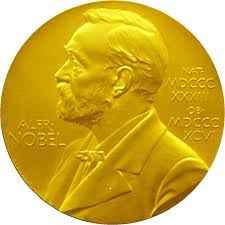
Mini Chemical Machines win 2016 Nobel Prize for Chemistry

A tiny lift, artificial muscles and miniscule motors. The Royal Swedish Academy of Sciences has decided to award the Nobel Prize inChemistry 2016 to Jean-Pierre Sauvage of the University of Strasbourg in, France, Sir Fraser Stoddart at the Northwestern University in the USA, and Ben Feringa of the University of Groningen, the Netherlands "for the design and synthesis of molecular machines”; molecules with controllable movements, which can perform a task when energy is added. The development of computing demonstrates how the miniaturisation of technology can lead to a revolution. 

The three 2016 Nobel Laureates in Chemistry have miniaturised machines and taken sustainable chemistry to a new dimension.


The first step towards a molecular machine was taken by Jean-Pierre Sauvage in 1983, when he succeeded in linking two ring-shaped molecules together to form a chain, called a catenane. Normally, molecules are joined by strong covalent bonds in which the atoms share electrons, but in the chain they were instead linked by a freer mechanical bond. For a machine to be able to perform a task it must consist of parts that can move relative to each other. The two interlocked rings fulfilled exactly this requirement.

The second step was taken by Fraser Stoddart in 1991, when he developed arotaxane. He threaded a molecular ring onto a thin molecular axle and demonstrated that the ring was able to move along the axle. Among his developments based on rotaxanes are a molecular lift, a molecular muscle and a molecule-based computer chip.

Ben Feringa was the first person to develop a molecular motor. In 1999 he got a molecular rotor blade to spin continually in the same direction. Using molecular motors, he has rotated a glass cylinder that is 10 000 times bigger than the motor and also designed a nanocar (below).


The 2016 Nobel Laureates in Chemistry have taken molecular systems out of equilibrium's stalemate and into energy-filled states in which their movements can be controlled. In terms of development, the molecular motor is at the same stage as the electric motor was in the 1830s, when scientists displayed various spinning cranks and wheels, unaware that they would lead to washing machines, fans and food processors.

Molecular machines are part of the sustainable chemistry tool kit that will be used to develop future new materials, sensors and energy storage systems. To learn more about their collective achievement a collection of their research papers, drawn from Nature Research journals, can be found here.

Feringa in Brussels
2016 Nobel laureate Prof Ben Feringa will feature at the International Solvay Institutes’ annual public event on Sunday 23 October 2016 at the Flagey Studios in Brussels. He will be one of the main speakers on the theme of ‘‘Chemistry for the World of Tomorrow’’ and will highlight research at the frontiers of sustainable chemistry.

The event will feature three Nobel Chemistry laureates – two as its main speakers

The lectures will be followed by a panel discussion of distinguished scientists led by Professor Kurt Wüthrich (ETH and Scripps Institute), 2002 Nobel Laureate in Chemistry. The audience will also have the opportunity to ask questions to the panel on the most pressing issues facing today’s chemistry.

The lectures and debate will be delivered in English with simultaneous translations to Dutch and French. The event is free, but participants must register in advance here.

Tuesday, 5 July 2016

Chemistry for the World of Tomorrow - 23 October 2016

The International Solvay Institutes are pleased to announce the organisation of their annual public event on Sunday 23 October 2016 afternoon at the Flagey Studios in Brussels. The theme of the 2016 event is ‘‘Chemistry for the World of Tomorrow’’. The lectures are intended for the general public and will be given on fascinating subjects at the frontiers of sustainable chemistry.

The two featured lectures will be:


The lectures will be followed by a panel discussion of distinguished scientists led by Professor Kurt Wüthrich (ETH and Scripps Institute), 2002 Nobel Laureate in Chemistry. The audience will have the opportunity to ask questions to the panel on the most pressing issues facing today’s chemistry.

The lectures and debate will be delivered in English with simultaneous translations to Dutch and French provided.

The event is free but participants are requested to register. Registration will be open at the beginning of September on the Solvay Institutes web site.

The International Solvay Institutes owe their existence to the vision of Ernest Solvay, who founded the International Institute for Physics in 1912 and the International Institute for Chemistry in 1913.

About the Solvay Institutes 
In 1970 the Solvay family in association with the Université Libre de Bruxelles (ULB), and the Vrije Universiteit Brussel (VUB), founded an independent body, the International Institutes for Physics and Chemistry, founded by Ernest Solvay, to continue that important quest for the advancement of scientific knowledge established by the Solvay Institutes.

Over the years, the International Solvay Institutes have become a symbol of scientific excellence, and one of the best known Belgian research institutions, consistently supported by the Solvay family (for more than 100 years now, spanning five generations).

Monday, 15 February 2016

RSC Emerging Technolgies Competition 2016

The Emerging Technologies Competition is the Royal Society of Chemistry’s (RSC) annual innovation initiative that aims to turn promising ideas from the chemical sciences into commercial reality. Now in its fourth year, the 2016 competition brings cutting edge science to the real world for the benefit of society. The competition is currently open and applications can be made through the on-line application system. The entry deadline for applications is 14 March 2016.

The RSC Emerging Technologies Competition in 2016 aims to accelerate the commercialisation of innovative technologies in the following areas:
  • Health & well-being
  • Energy & environment
  • Food & water
  • Materials
The competition is free to enter and open to small companies, universities, and research institutions. Entered ideas can be at any stage of development and from anywhere in Europe.

Short-listed entrants will be invited to present their ideas to a panel of expert judges at the competition final, which takes place at the RSC’s Chemistry Means Business 2016. This high-profile two-day event brings together professionals from across the chemistry-using community and will take place on 15 and 16 June.

Prizes
The Competition prizes are designed to help take the ideas to the next level. There are three for each category, and benefits for short-listed entrants, too.

All 40 short-listed entrants will receive business training and a free exhibition stand at Chemistry Means Business 2016. This is a chance to showcase your technology to more than 300 delegates – including potential investors – and get insights from opinion leaders in industry.

The first-, second- and third-place winners in each competition category will receive tailored business support from one of the competition’s partner companies including access to networks, strategy review, potential commercial partnerships, idea evaluation with consumers and more. The winners also receive exposure for the winning technologies including support with media coverage, including a feature in the RSC’s Chemistry World magazine. And there are also cash prizes of up to £20,000 (First prize £20,000, second prize £3,000 and third prize £2,000).

The video below includes highlights of the 2015 Emerging Technologies competition including interviews with some of the winners and partner organisations.

Monday, 30 November 2015

Sixth EuCheMS Congress in Seville

The countdown has started for the Sixth EuCheMS Congress that will take place in Seville, Spain from 11 - 15 September, 2016. The Congress is a valuable and unique opportunity for the community of world-leading chemistry professionals to meet, exchange ideas, explore progress in the state of the art and debate the key issues underlying chemical science and practice. It is also where the European chemical community congregates and EuCheMS Divisions and sections showcase their research developments and plan future activities.

The scientific programme for the EuCheMS congress will includes eight plenary lectures from world-leading scientists, including a handful of Nobel Laureates, plus around 120 keynote and invited lecturers, over 200 oral and poster sessions totalling over 2 000 peer to peer communications.

Plenary Speakers confirmed
Amongst the many outstanding speakers that have already confirmed their attendance are six Nobel Laureates. The participating speakers in Seville include Ada Yonah, Richard Schrock, Aaron Ciechanover, Harold Kroto and Jean-Marie Lehn.

Avelino Corma, Spain’s most awarded chemist and the recipient of the 2014 Prince of Asturias Award for Technical and Scientific Research, Spain’s most prestigious science prize, has also confirmed his attendance.

The Scientific programme is structured in horizontal major themes that include significant contributions to research at the forefront of chemical sciences in all areas related to chemistry; analytical, engineering, inorganic, physical, theoretical, biological, materials and technology.

The main themes of EuCheMS 2016 are outlined below.


Topic Conveners have been recently appointed for all themes. Every subject topic is assigned to a European convener who is specialised in the area. You can review their background and experience here.

Abstracts, registration open
The Call for abstracts process is already now open. Guidelines, information for authors, submissions and important dates as well as the online submission form are available on the congress website. The online abstract submission deadline is April 1st, 2016.

Registration is now open for Sixth EuCheMS Congress. Early bird discounts are available if you register now – and you can be connected to all the news and updates with the Congress newsletter, see all services available and view the various registration possibilities.

The venue
EuCheMS 2016 congress take place in FIBES 2 a new state-of-the-art building exhibition and conference facility. The Congress Palace has 7 200 m2 of open space, as well as a luminous, spacious central building (The Dome), which houses the Conference Centre and is the main access to the exhibition pavilions and other facilities.

The new complex includes more than 50 meeting rooms, auditoria (with capacities ranging from 3 200 to 340 people), indoor and outdoor exhibition areas, as well as catering areas, press, TV, and testing room , VIP rooms and dressing rooms, and other spaces.

For more information visit the EuCheMS congress website.

Tuesday, 20 October 2015

2015 Nobel Prize in Chemistry: A breakthrough for DNA Repair research and cancer treatment

This year, the Nobel Prize in Chemistry 2015 has been awarded jointly to Tomas Lindahl, Paul Modrich and Aziz Sancar "for mechanistic studies of DNA repair" – they mapped, at a molecular level, how cells repair damaged DNA and safeguard the genetic information. The work has provided fundamental knowledge of how a living cell functions and is, for instance, used for the development of new cancer treatments. Nature Magazine is calling “The Nobel Prize 2015: The year of DNA repair”. The Nobel Prize in Chemistry is awarded annually by the Royal Swedish Academy of Sciences to scientists in the various fields of chemistry. To date, the prize has been awarded 107 times to 172 Nobel Laureates between 1901 and 2015.

About the study - The cells’ toolbox for DNA repair
Each day our DNA is damaged by UV radiation, free radicals and other carcinogenic substances, but even without such external attacks, a DNA molecule is inherently unstable. Thousands of spontaneous changes to a cell’s genome occur on a daily basis. Furthermore, defects can also arise when DNA is copied during cell division, a process that occurs several million times every day in the human body.

The reason our genetic material does not disintegrate into complete chemical chaos is that a host of molecular systems continuously monitor and repair DNA. The Nobel Prize in Chemistry 2015 awards three pioneering scientists who have mapped how several of these repair systems function at a detailed molecular level.

In the early 1970s, scientists believed that DNA was an extremely stable molecule, but Tomas Lindahl demonstrated that DNA decays at a rate that ought to have made the development of life on Earth impossible. This insight led him to discover a molecular machinery, base excision repair, which constantly counteracts the collapse of our DNA.

Aziz Sancar has mapped nucleotide excision repair, the mechanism that cells use to repair UV damage to DNA. People born with defects in this repair system will develop skin cancer if they are exposed to sunlight. The cell also utilises nucleotide excision repair to correct defects caused by mutagenic substances, among other things.

Paul Modrich has demonstrated how the cell corrects errors that occur when DNA is replicated during cell division. This mechanism, mismatch repair, reduces the error frequency during DNA replication by about a thousand fold. Congenital defects in mismatch repair are known, for example, to cause a hereditary variant of colon cancer.

The Nobel Laureates in Chemistry 2015 have provided fundamental insights into how cells function, knowledge that can be used, for instance, in the development of new cancer treatments.

Interesting fact
Frederick Sanger is the only Nobel Laureate who has been awarded the Nobel Prize in Chemistry twice, in 1958 and 1980. This means that a total of 171 individuals have received the Nobel Prize in Chemistry.

For more information about this year’s prize (including scientific background and some illustrations), click here.

The Nobel Prizes in Chemistry won during the last decade by:

  • 2014 Eric Betzig, Stefan W. Hell and William E. Moerner for the development of super-resolved fluorescence microscopy
  • 2013 Martin Karplus, Michael Levitt and Arieh Warshel for the development of multiscale models for complex chemical systems
  • 2012 Robert J. Lefkowitz and Brian K. Kobilka for studies of G-protein-coupled receptors
  • 2011 Dan Shechtman for the discovery of quasicrystals
  • 2010 Richard F. Heck, Ei-ichi Negishi and Akira Suzuki for palladium-catalyzed cross couplings in organic synthesis
  • 2009 Venkatraman Ramakrishnan, Thomas A. Steitz and Ada E. Yonath for studies of the structure and function of the ribosome
  • 2008 Osamu Shimomura, Martin Chalfie and Roger Y. Tsien for the discovery and development of the green fluorescent protein, GFP
  • 2007 Gerhard Ertl for his studies of chemical processes on solid surfaces
  • 2006 Roger D. Kornberg for his studies of the molecular basis of eukaryotic transcription
  • 2005 Yves Chauvin, Robert H. Grubbs and Richard R. Schrock for the development of the metathesis method in organic synthesis

More information
You can find more information about each study here.

Thursday, 21 May 2015

Chemistry for the Future: Solvay Prize 2015

Solvay has announced the start of the search for its Chemistry of the Future prize for 2015. The prize is intended to endorse basic research and underline the essential role of chemistry, both as a science and an industry, in helping solve some of the most pressing issues the world is facing today. The Chemistry for the Future Solvay Prize rewards a major scientific discovery that could shape tomorrow’s chemistry and help human progress and celebrates the strong support for scientific research given by the founder of the Solvay Group, Ernest Solvay.

The €300,000 prize is awarded every two years. In 2013, the inaugural Chemistry for the Future Solvay Prize was presented to Professor Peter G. Schultz. The next Chemistry for the Future Solvay Prize will be awarded on 18 November, 2015 at Le Palais des Académies in Brussels, Belgium.

Professor Peter G. Schultz (left), a professor at the Scripps Research Institute in California, and director of the California Institute for Biomedical Research, was awarded the first Chemistry for the Future Solvay Prize in 2013 for his multiple scientific contributions at the interface between chemistry and biology. In particular the exploitation of molecular diversity and the rational expansion of the genetic code of living organisms.


His ground-breaking work has made an impact in many scientific fields, including biotechnology and medicine. It also has important implications for regenerative medicine, and the treatment of infectious disease, autoimmune disease and cancer.

Selection process
The selection process for the 2015 prize is two-stage process. First, independent nominators propose candidates whose achievements in the field of chemistry, including biochemistry, material sciences, soft matter, biophysics and chemical engineering, will shape the chemistry of the future. Then the international jury selects the winner of the Chemistry for the Future Solvay Prize from amongst the list of candidates.

The jury for 2015 will be led by Håkan Wennerström, Professor of theoretical and physical chemistry at the University of Lund, Sweden. He is a former chairman of the jury for the Nobel Prize in Chemistry. He is joined by the first winner Professor Peter Schultz, Paul Chaikin, Professor of Physics at the New York University, USA, specializing in solid state physics, in particular soft matter, and Christopher Dobson, John Humphrey Plummer Professor of Chemical and Structural Biology at the University of Cambridge.

Also on the jury is Gerhard Ertl, Professor emeritus at the Department of Physical Chemistry, Fritz-Haber-Institut der Max-PlanckGesellschaft in Berlin, Germany, who won the Nobel Prize in Chemistry for his studies of chemical processes on solid surface, together with Jean-Marie Lehn, Professor at the Institut d’Etudes Avancées de l’Université de Strasbourg and Professor emeritus at the Collège de France in Paris. Lehn was an early innovator in the field of supramolecular chemistry and is a fellow winner of the Nobel Prize in Chemistry. Completing the jury are Patrick Maestro, member of the Académie des Technologies in France, Scientific Director of Solvay, and Paul Baekelmans, Science Adviser to the Solvay Group and Professor emeritus at the Université Libre de Bruxelles. He chairs the Conseil National de Chimie of the Académie des Sciences de Belgique.

Find out more at the Solvay website and a flyer for the prize can be downloaded here.

Monday, 16 March 2015

SusChem SIRA published: 2015 Stakeholder event registration opens soon

Today (16 March) the European Technology Platform (ETP) for Sustainable Chemistry (SusChem) has published its Strategic Innovation and Research Agenda (SIRA) and confirmed the dates for the next SusChem Stakeholder event as 8 and 9 June 2015. The new SIRA sets out SusChem’s research and innovation priorities for the short and medium term and the next steps and implementation for this ambitious agenda will be a major theme of the stakeholder event in June.

The SIRA document highlights the role the chemical industry in boosting innovation in Europe and the potential for sustainable chemistry technologies to tackle societal challenges, as outlined in the European Commission’s Research Framework programme Horizon 2020.


The document introduces major changes from the past SusChem Strategic Research Agendas (SRA) by addressing new topics such as ICT and Manufacturing, the value chain impact, mobility and health. It also outlines the crucial links between SusChem's priorities and the Key Enabling Technologies (KETs) that Europe has been pushing forward.

Sustainable chemical value
Some 20% of the annual Gross Domestic Product (GDP) of the European Union (EU) is due to the direct and indirect contributions of the chemical industry to EU Gross Value Added (GVA). The industry works along nearly all value chains and across industrial sectors ranging from pharmaceuticals and crop protection to the automotive sector, defence, construction, textiles and consumer goods.

The European chemical industry plays a pivotal role in supporting Europe 2020: the EU’s growth strategy that aims to transform the EU into a smart, sustainable and inclusive economy. The SIRA explains the strategy and role of SusChem in this context. It highlights a portfolio of sustainable chemistry research and innovation actions that the platform believes can make a significant contribution to improving competitiveness and sustainability in the EU, address societal challenges and contribute to achieving jobs and inclusive growth.

“Everything we do should be focused on ultimately improving societal conditions, in particular, with respect to sustainability – working for ‘People, Planet and Profit’”, says Dr Klaus Sommer, Chairman of the SusChem board. “Our work will be fully justified if we can simultaneously create jobs, improve the environment and generate greater economic success and wellbeing.”

“In this spirit, the new SIRA is a great opportunity for SusChem and sustainable chemistry research and innovation across Europe,” continues Dr Sommer. “The SIRA will add value to the societal, scientific and industrial debate and help us to focus on the real challenges we face.”

Societal challenges
The SIRA is organised around five of the seven key societal challenges described in Horizon 2020 and highlights a portfolio of potential sustainable chemistry solutions. Each challenge is covered in a dedicated SIRA chapter:
  • Climate action, resource efficiency and raw materials 
  • Food security, sustainable agriculture and the bioeconomy
  • Secure, clean and efficient energy
  • Health, demographic change and wellbeing
  • Smart, green and integrated transport
Two further SIRA chapters cover Information and Communication Technologies (ICT) and Horizontal Issues. A SusChem press release on the SIRA launch can be accessed here giving more details on the document.

Stakeholder event 2015
Next steps and the implementation of the SIRA will be discussed at the SusChem Stakeholder event to be held in Brussels on 8 and 9 June 2015. The title of the event will be ‘Propelling Sustainable Chemistry to Exciting New Frontiers: Implementing the Strategic Innovation and Research Agenda’.

Registration for the 2015 Stakeholder event is scheduled to open on 24 March. Mark the dates in your agenda now!

The SIRA is the result of widespread consultation and input from SusChem's stakeholder community - not least discussions at SusChem's 10-year Stakeholder event in June 2014. SusChem now looks forward to working with its partners to implement these ideas over the next few years.

The SIRA has already been presented to European Commission officials and will form part of the input to future calls under Horizon 2020. You can download the full SIRA document here.

For more information on SusChem activities, the new SusChem SIRA and opportunities at the SusChem event contact Jacques Komornicki, SusChem Coordinator at Cefic.

Wednesday, 31 December 2014

SusChem wishes you all the very best for 2015!


Best wishes for a prosperous and sustainable 2015 from the SusChem team! 2014 was a great year for SusChem and we are looking forward to even more success in 2015.

A date for your 2015 agenda is the SusChem Stakeholder event that will take place on 8 and 9 June in Brussels.

And early in the New Year will see the official publication of the new SusChem Strategic Innovation and Research Agenda (SIRA). This will set out SusChem’s research and innovation priorities for the medium term under Horizon 2020 and other funding European, national and regional programmes. We expect the document to add value to the societal, scientific and industrial debate in Europe and help all SusChem stakeholders to concentrate on the significant challenges that we all face.

Keep in touch in 2015
There are plenty of ways to keep in touch with SusChem activities. As well as this news blog you can follow SusChem on Twitter (we already have almost 1500 followers - it would be great to pass this target early in 2015) and don’t forget to ‘like’ the platform on Facebook. You can find the SusChem Facebook page here.

And, of course, the SusChem website is full of information on our activities.

We look forward to a great 2015 for sustainable chemistry in Europe – and hope to see you at one of our events during the year!

Monday, 22 December 2014

Season’s Greetings from SusChem

This year in June we celebrated the 10th anniversary of the European Technology Platform for Sustainable Chemistry “SusChem”. When we established SusChem in 2004 we knew that we had set the sustainable chemistry community in Europe a difficult task, but together over the past decade we have shaped a lively, creative organisation, open for all interested stakeholders: an organisation that has made a huge impact. 

Over the past 10 years SusChem has inspired research and innovation projects worth well over one billion euros: the vast majority funded via the European Commission’s FP7 programme. And with the launch of Horizon 2020 this year SusChem is proud to have inspired two major new public-private-partnerships (PPPs) that are already delivering real competitive advantage for Europe: the Sustainable Process Industry through Resource and Energy Efficiency (SPIRE) PPP and the Bio-based Industries (BBI) Joint Technology Initiative (JTI).

But there is more to do. At the June stakeholder meeting the new SusChem Strategic Innovation and Research Agenda (SIRA) was discussed. The SIRA sets SusChem’s research and innovation priorities for the medium term helping to bridge the “innovation valley of death” and address societal challenges. It will be published early in 2015.

Everything we do  is focused on ultimately improving societal conditions, in particular, with respect to sustainability for “People, Planet and Profit”. Our work will be fully justified if we can simultaneously create jobs, improve the environment and generate greater economic success and wellbeing.

SusChem’s momentum and success is based on the personal commitment of all SusChem members and stakeholders We are confident that our new SIRA will help and inspire us all to take SusChem to the next level.

To conclude, on behalf of the SusChem board and the SusChem secretariat, We  wish you all a very happy and relaxing holidays, and a happy, healthy and sustainable New Year. 2015 will be another great year for SusChem with the publication of the SIRA, the launch of some fantastic new SusChem-inspired projects and, a date for your diary, our next stakeholder event that will take place on 8 and 9 June.

Kind Regards,

Dr Klaus H. Sommer
Chairman of the SusChem Board
Head Consumer & Product Management Bayer Technology Services

Dr Jacques Komornicki
SusChem co-ordinator and secretary
Innovation Manager, Cefic

Friday, 29 August 2014

Fifth EuCheMS Chemistry Congress in Istanbul


The Fifth EuCheMS Chemistry Congress kicks off in Istanbul at the WOW Convention Centre on 31 August and will present leading research in chemistry as well as the infinite number of applications of chemistry in our everyday lives. The Congress, which runs from 31 August to 4 September and is hosted by the Turkish Chemical Society, will feature more than 1100 contributions and gather together more than 1500 chemists from almost 70 countries, not only from Europe but from all over the world.

The immense possibilities of chemistry being presented at the Congress are of great relevance not only for the research community but also for wider society.

Hot topics 
Topics that will grab scientific attention at the Congress include nanometre-scale structures and their possible applications in electronics, in sensing and in biomedical applications that will be presented by EuCheMS 2013 Lecturer, Prof. Maurizio Prato. New carbon nanomaterials, such as carbon nanotubes and graphene, might open new doors for gas storage, pharmaceuticals, inter-neuron communication, spinal cord repairs and production of hydrogen from splitting water: creating new possibilities for a greener society.

The congress will also host a session with the European Commission's Joint Research Centre (JRC) on nanomaterials safety and training and education regarding quality assurance for analytical measurements as well as a session on the European Research Council's (ERC) activities, presented by its President, Prof. Bourguignon.

With their eyes set on the future of chemistry, the European Young Chemists´ Network (EYCN) are presenting a wide range of activities over the course of the Congress focussing on chemical careers  and employability of young chemists including several workshops, talks and meetings with possible employers.

SusChem board member and Cefic's Executive Director of Research and Innovation Gernot Klotz will talk about sustainable chemistry and innovation during the EYCN career sesson on Monday (1 September).

You can access and download the full programme for the Congress here. To follow the Congress on twitter search on the hashtag #5ECC.

Awards
The Congress will also be the place for acknowledging excellence in research and in promoting chemistry. Some of the awards delivered will be the Young European Chemist Award; the European Sustainable Chemistry Award, which will be given to Prof. Walter Leitner and Prof. Jürgen Klankermeyer; and the EuCheMS Award for Service, which will honour EuCheMS past president Prof. Luis Oro.

EuCheMS
EuCheMS aims to promote co-operation in Europe between non-profit-making scientific and technical societies in the field of chemistry and molecular sciences. EuCheMS has 42 member societies across 32 European countries and represents more than 150,000 chemists. EuCheMS brings together world class expertise to provide a single voice on key science and policy issues, based on expert scientific knowledge.

The EuCheMS Chemistry Congress is a biannual event that was first organised in 2006 in Budapest. Since then it continued to promote European Chemistry all around Europe. Previous venues include Turin, Nuremberg and Prague. Future venues include Seville and Liverpool.

For more information on EuCheMS activities, please contact EuCheMS Secretary General Dr. Nineta H. Majcen.

Monday, 2 December 2013

EU Chemistry Employment Survey

Update February 2014. The deadline for input for the EU Employment Survey has been extended to 28 February. To access the questionnaire (now available only in English) click here.

For more details on the the survey see below.

In which European country do chemists and chemical engineers enjoy the highest salary? Where are the best prospects for employment? And which of the various chemical sub-disciplines offer the most jobs? Getting answers to these questions is the aim of the first European employment survey for chemists and chemical engineers. The deadline for contributing to the confidential survey is 31 December 2013.

The employment survey has been commissioned by the European Commission’s Joint Research Centre (JRC) to provide details about the current employment situation for chemists and chemical engineers across Europe and to understand future needs for post-secondary education in Europe.

The survey is open to all chemists and chemical engineers in Europe and is supported by Cefic, EuCheMS, the European Chemistry and Chemical Engineering Network (EC2E2N). The project is being coordinated and managed by the European Chemistry Thematic Network Association (ECTNA). And all chemist and chemical engineers in Europe are encouraged to take part in the survey. Chemists who are members of national societies affiliated to EuCheMS should have already received notification of the survey.

However, chemists and engineers from industry are often under represented in national chemical societies so it is important that the survey is accessible to them as well.

24 languages
The questionnaire was available in 24 European languages and all responses are saved anonymously. A valid email address is requested at the start of survey, but this is just a check to prevent misuse. The email is only stored (independently from your responses to the survey) if you want to receive the results of the survey directly when they are published in 2014.

The survey has six general pages (on Personal data, Education, Employment, on Job Training and Salary) all of which provide fields for free-text responses.

You can find the survey at www.chemsurvey.eu. National coordinators for the survey have been nominated and if you have any questions about the survey they should be your first port of call. They can be contacted via the Survey site.

The original deadline for completing the survey was 31 December 2013.

Thursday, 7 November 2013

EIP Raw Materials Annual Conference Taking Place in Brussels in December

The European Innovation Partnership on Raw Materials (EIP RM) has announced its Annual Conference, the first one since its creation in September 2013, which will be held at the SQUARE Meeting Centre (Room Copper Hall) in Rue Ravensteinstraat 2 in Brussels on 5 December 2013.

The aim of this annual conference is to present the Strategic Implementation Plan (SIP) of the Partnerships while discussing financial instruments to support the "Raw Materials Commitments" and fostering networking in the Raw Materials community.

The EIP on Raw Materials aims to provide Europe with enough flexibility and alternatives in the supply of important raw materials, whilst taking into account the importance of mitigating the negative environmental impacts of some materials during their life cycle. Its objective will be to make Europe the world leader in the capabilities related to exploration, extraction, processing, recycling and substitution by 2020.

The EIP is now moving to its implementation phase: the first goal is to involve a very large number of partners across the European Union and the entire raw materials value chain that will carry out actions contributing to the objectives of the EIP. This is why the European Commission will soon launch an open call for commitments by stakeholders in the private, public and non-governmental sectors including academia. It is anticipated that the call will trigger a number of individual raw materials commitments, where the partners jointly commit to co-operate and take actions that will contribute to achieving the objectives of the SIP, in the different action areas.

Raw materials are one of SusChem's priorities and the chemical sector has contributed to the Europe’s Raw Materials strategy with its input and expertise. SusChem and Cefic share the aims of the EIP and have contributed to the development of both the SIP and of the EIP. 

The Annual Conference will be the best occasion to form strong links with the many actors working with raw materials while ensuring that the common goal of strengthening Europe’s global position in raw materials. 

The Conference will include a poster session where the stakeholders will be able to present their priorities relevant to the EIP or to search for partners who could be interested in similar projects within the EIP priorities.

The draft agenda can be downloaded here. 

Registration for the conference is available here