The SusChem News Blog is now hosted on the SusChem website in the News Room. You will be redirected there in 10 seconds
.

Showing posts with label SPIRE. Show all posts

Tuesday, 14 May 2019

A New Circular Economy Concept for Textiles and Chemicals

The RESYNTEX conference in Brussels on 24 April 2019 marked the final phase of this exciting project. RESYNTEX was funded by the European Commission’s HORIZON 2020 Programme via a SPIRE Public Private Partnership call and started in June 2015 to create a new circular economy concept for the textile and chemical industries. Cefic is one of 20 partners involved in the project, which represented 10 different EU member states.

Major technological advances were achieved, one being the construction of a pilot installation in Slovenia. This site will demonstrate the whole symbiosis concept of RESYNTEX in an industrial environment with full integration of the sorting, pre-treatment, chemical and enzymatic processes, as well as liquid and solid waste treatment and water recycling.

With this installation, the RESYNTEX project moved into the real-world testing of its technology for chemical and biotechnological recycling of textile waste. To achieve large-scale industrial application, significant further technology development work is necessary and must be accompanied by smart regulatory and economic incentives.
 
The project may be coming to an end, but the project partners see plenty of opportunities to work towards a circular and low carbon economy with a key role for innovative chemical and biotechnological recycling technologies. Although fundamentally understood, such technologies are currently under-deployed for plastics circularity.  Further innovation, scale-up to demonstration, adoption of policies, and establishment of recycling-chains are needed to establish clear pathways for full-scale implementation to valorise post-use waste currently shipped, burnt or disposed of in landfill.

More information at www.resyntex.eu.

Monday, 18 February 2019

The SusChem News Interview: Joanna Dupont-Inglis

SusChem was created with a mission to revitalise and inspire European chemistry and industrial biotechnology research, development and innovation in a sustainable way to respond to pressing societal challenges. Industrial biotechnology has always been a significant key enabling technology for SusChem and the Bioeconomy a priority policy area. And this continues as the platform works towards a new strategic innovation and research agenda for Horizon Europe.

EuropaBio was one of the founding partners of the platform. SusChem News recently caught up with Joanna Dupont-Inglis, Secretary-General of EuropaBio to get her views on SusChem’s achievements and what the future may hold for the platform.

Joanna has been a tremendous supporter of SusChem and its initiatives for many years and has recently stepped down from the SusChem board. Agnes Borg, EuropaBio's Director of Industrial Biotechnology, is now the organisation's representative on the SusChem management board.

Joanna has worked in Brussels for almost 20 years for a variety of industry groups, including CEFIC sector groups. A UK/Irish national with a background in Environmental Science and European Studies, she became directly involved with SusChem when she was appointed as Communications Manager with EuropaBio in 2009. Her role increased when she became Director of Industrial Biotech in April 2011. In 2016 Joanna was appointed as chair of the EU Bioeconomy Stakeholders Panel and since September 2018 Joanna has been EuropaBio’s Secretary General.

SN: How has SusChem been for you?
JDI: Being part of SusChem over the last ten years has been a great privilege, having given me the opportunity to work with experts, sometimes from quite different perspectives, who share a collective passion for the potential of chemistry and biotech.

The platform has grown and integrated a wider European community of industry, technology platforms and academia that is working to provide sustainable solutions to European challenges. SusChem successfully expanded the breadth and range of people involved in its work through its stakeholder engagement events encouraging cross-disciplinary work, helping to form consortia and reaching out along value chains to other organisations and initiatives. The network of SusChem National Technology Platforms, incorporating 17 countries across Europe, has been really significant  here too.

A big success for SusChem has also been its role to capture and articulate the benefits that sustainable chemistry and biotech to many of the major challenges facing our society and to global targets such as the UN’s Sustainable Development Goals. It has done this by boosting awareness and visibility of research and innovation initiatives in sustainable biotech and chemistry.

SN: What do you see as the main ‘concrete’ achievements of the ETP?
JDI: The establishment of the SPIRE Public Private Partnership (SPIRE) and the BioBased Industries Joint Undertaking (BBI JU) are major achievements which SusChem helped work towards establishing. Many members of the SusChem board and the wider SusChem community were active and effective in advocating for the solutions and advantages that could be delivered via these two PPPs.

It’s really rewarding to see the hundreds of projects, focused on renewability, resource efficiency and climate change mitigation, that are now being delivered through these two initiatives and the valuable role of SusChem in helping to contribute to these two strategic research and innovation frameworks. The research and innovation outcomes from SPIRE and BBI are also demonstrating huge value-added potential for sustainable chemistry and industrial biotechnology by boosting jobs and growth in Europe while also ensuring environmental benefits.

The PPPs are helping Europe to remain at the cutting edge of technologies in these and other areas. They are bringing people together in new and novel partnerships and establishing links that continue beyond the projects themselves.

SN: How has SusChem influenced research and innovation activities in the EU working towards a functioning bioeconomy?
JDI: The impact and influence of SusChem’s research and innovation agendas are reflected throughout the European Commission’s Framework programmes FP7 and Horizon 2020.

SusChem’s research and innovation agendas have also been a major help here in laying the foundations of the bioeconomy by highlighting relevant technology priorities . SusChem has had a direct input through its own ‘SusChem inspired’ projects in FP7 and Horizon 2020 and also in its influence in supporting the agenda for the BBI’s work programme.

It’s work on sustainable chemistry applications, in topics such as renewable feedstock, holds great potential for benefiting rural and coastal communities through the development of their local and regional bioeconomy in terms of jobs and growth.

SusChem has also been impactful in advocating the link between resource efficiency and the bioeconomy, providing the basis for synergies with the circular economy.

SN: How do you see the platform’s role developing in Horizon Europe?
JDI: The new SusChem’s SIRA, to be published in light of Horizon Europe, will be really important here.  On a personal level, I’m excited to see how in the future SusChem will change the perception of CO2 and CH4 from being ‘’problem GHGs’’ to valuable feedstocks. Although the exact nature and functioning of Horizon Europe’s missions are still to be clarified, their raison d’etre is to use research and innovation to deliver tangible benefits that citizens are looking for to provide a healthier, more sustainable future for them and generations to come. Consumers are becoming more and more engaged in sustainability issues and, therefore, in what they buy and use. SusChem could have a role here through engaging with the public to showcase what can be achieved; demonstrating the options and impact that sustainable chemistry and industrial biotechnology can deliver.

The platform also has a role in encouraging academia to provide the courses and resources to ensure we are giving people the right skills and knowledge to enable a more sustainable society.

SusChem is very well placed, thanks to its collective expertise, to contribute to these missions. Indeed, it is hard to imagine how many of the proposed missions could succeed without input from biotech and sustainable chemistry. SusChem can deliver on these urgent needs and will continue to play a key role in the movement to ensure society uses our natural resources as sustainability as possible going forward for the benefit of everyone.

Monday, 11 February 2019

Data in Materials and Manufacturing

The impact and opportunities associated with digital technologies in the chemical and other process industries is an area of increasing importance for both SusChem and SPIRE. SusChem has already put the spotlight on digital technologies. Sustainable chemistry acts as an enabler for the continuous development of smarter and more sustainable electronic devices and equipment in other industries, while also being transformed and disrupted through digitalisation. This later topic was a major theme at the 2019 EU Industry Day event on 5 and 6 February where SusChem participated.

The European Commission’s EU Industry Days 2019 focused on key industrial challenges such as sustainability, digitalisation, investment and globalisation. The event demonstrated how EU industrial policy benefits European citizens and provided input for future policy making.

Martin Winter, Innovation Manager at Cefic and the lead contact for digital technologies for both SusChem and SPIRE was part of a panel discussion on ‘Data in Materials and Manufacturing’ on the second day of the event. 

There is a real opportunity to leverage the immense capabilities of information and communication technologies (ICT) to optimise processes and improve production efficiency within the chemical and process industries. Martin initially explained how data technologies including blockchain and artificial intelligence will become important for recycling and reuse of materials within the process industries to enable a more circular economy. 

3D-printed catalytic reactors
As an example of the potential impact of digital technologies in the chemical sector he described the SPIRE Horizon 2020 project ‘PRINTCR3DIT’. “This is the first EU-funded initiative on modelling the effect of 3D-printing technologies for both reactor and catalyst design in the chemical industries,” said Martin Winter. The project is part of a significant portfolio of digital technology projects managed by the SPIRE cPPP. 


He also emphasised the essential role of Public-Private-Partnerships (cPPPs) like SPIRE or Big Data Value PPP in bringing the relevant data-related innovation ecosystems together and accelerating the uptake of technologies from research into use in industry. Martin Winter presented the substantial portfolio of digital projects within SPIRE and emphasised the need for new digital skills for chemists and engineers working in the new digital era. 

Other speakers in the session highlighted the enormous opportunities that integrated data management could yield together with the barriers that are currently inhibiting their full exploitation. Interoperability was a major issue and much of the discussion centred around ontology – the formal naming and categorisation of data sets – as a key area of work to enable data transfer.

Martin Winter noted some issues in terms of value creation through advanced data analytics. In process industries better data availability, data storage, cybersecurity and advanced data analytics are becoming very important. He also called for a co-creation process to accelerate progress.

There is a need to fully leverage synergies between cPPPs. “SPIRE, Big Data Value and Cybersecurity PPPs must work together here,” he said. “If Europe is lagging behind in this area, it is very important that we avoid any possibility of duplication of work.”

Thursday, 7 February 2019

SPIRE moves to build new R&I road map with new structure

On Monday 4 February the SPIRE PPP celebrated five years of hard work in which it has seen the launch of 89 projects with a combined budget of some EUR 900 million. The A.SPIRE General Assembly meeting elected Pierre Joris, a board member of a number of international process and chemical companies and previously a senior manager at Solvay, as the new Chairman of the SPIRE Board. Pierre takes over from Daniel Gauthier who had completed his two-year term as Chair. Pierre (right) and Daniel (left) are pictured below with SPIRE Executive Director Angels Orduña at the SPIRE celebration.

At the General Assembly SPIRE announced a range of changes required to translate its SPIRE 2050 Vision, released towards the end of 2018, into concrete research and innovation proposals through the development and publication of a SPIRE 2050 research and innovation road map.


The SPIRE 2050 Vision has been strongly endorsed by SPIRE members, stakeholders and the PPP’s partners at the European Commission and SPIRE now aims to have a solid plan to achieve the implementation of this ambitious vision through the forthcoming Horizon Europe programme and beyond.

The process of building the road map is now beginning and will kick-off officially in March with the aim of achieving a first draft during the Summer and finalising the document by November 2019.

SusChem will contribute to the formulation of the road map through work on its own new Strategic Innovation and Research Agenda, in particular in areas such as process technologies, industrial symbiosis and digitalisation, where SPIRE calls could be a channel to the realisation of projects.

New working groups
In order to facilitate the development of the new road map the A.SPIRE Board of Directors and its Industrial Research and Innovation Advisory Group (IRIAG) has initiated the setting up of seven new SPIRE Working Groups (WGs).

The seven working groups are:

  • G1 - Energy Mix
  • G2 - Electrification of Industrial Processes
  • G3 - Use of Hydrogen
  • G4 - Capture and Use of CO2
  • G5 - Resource and Process Efficiency (and Flexibility)
  • G6 - Industrial and Urban Symbiosis
  • G7 – Digital (This WG was already established in autumn 2018)

The current SPIRE WGs (FEED, WASTE, PROCESS and APPLICATIONS.) will no longer be active, however the Advocacy group (aka the Outreach group) will be (re)activated.

A Steering Group will provide strategic guidance and manage the structure of the road map to ensure coherence with SPIRE 2050 Vision. In addition, a consulting company will be selected by A.SPIRE in early 2019 to support the WGs in the formulation of the road map.


WG members required
To populate the new Working Groups, SPIRE is calling for experts from its member organisations to get involved! Two types of expert input are required:

  • Technical Experts to provide expertise in the topics addressed by the WGs. In addition, expertise in supply-chain structures and in the upstream and/or downstream related sectors is needed, in order to ensure an integrated approach and consider the wider trends and developments on related EU policies (e.g. Industry, Climate Change and Circular Economy).
  • Specialists to provide strategic guidance and input, e.g. experts from companies or research organisations that hold positions to lead implementation strategies in the WG topic.

The new road map will provide an outlook up to 2050, divided into two parts: firstly, a more detailed part that will look into the investments required to reach market deployment within the time line of Horizon Europe, and then up to 2030; and secondly, a less detailed part that presents the plans of the process industries up to 2050.

After the road map exercise, the SPIRE WGs will remain active for the development of the Work Programmes under Horizon Europe.

Five year perspective
At the SPIRE celebration, the former Chair of A.SPIRE, Dr Klaus Sommer, delivered a video presentation outlining the origins of SPIRE, what the PPP has been achieved so far and what the future holds.

Thursday, 31 January 2019

HARMONI fosters European innovation

As stakeholders from the European process industry continue their search for measures to facilitate the transfer of innovation to the market, the Horizon 2020 funded SPIRE project HARMONI (Harmonised assessment of regulatory bottlenecks and standardisation needs for the process industry) has acted as a catalyst, bringing together over 150 experts to foster innovation activities.

On 16 and 17 January, the 2019 HARMONI Summit took place with the objective to encourage dialogue on an effective framework to facilitate and foster innovation. More than 150 experts from all sectors of the process industry, the European Commission and European standardisation bodies engaged in the exchange of ideas.

Summit solutions
The summit addressed solutions for non-technological challenges that hinder innovation and the transfer of solutions, such as regulation, standardisation needs and the lack of innovative business models. Based on the themes within the HARMONI project, the summit selected priority discussion areas that included innovation transfer and the harmonisation of EU regulation and EU standardisation.


Six sessions took place during the two-day workshop, dealing with context specific priority areas, such as the circular economy, CO2 valorisation and waste management. Each session included experts, and opportunity for Q&A’s, as well as working groups and discussion panels. This allowed for a hands-on evaluation of possible solutions for industry needs while, in parallel, giving a voice for representatives from the European Commission in an open and transparent dialogue.
HARMONI, in the words of the DG Research and Innovation, “can play a very interesting role in the future of the Horizon Europe Programme”, especially due to its good practise of integrating regulation and standardisation.

What’s next?
The HARMONI project continues until October 2019. The results of the project mainly address industry, regulatory and standardisation bodies. Identified priorities and results from the working groups will serve to provide recommendations to the responsible authorities.


The HARMONI team welcomes your input and looks forward to engaging with you in order to move towards a sustainable and competitive European process industry. Why not subscribe to the HARMONI newsletter to keep up to date with upcoming events and results?

More information on Harmoni
HARMONI aims to bring together all the relevant stakeholders in the process industry to jointly identify, analyse and propose solutions to the regulatory bottlenecks and standardisation needs that hamper their innovation processes and the market uptake of their results.

To do this, the project is developing and applying a methodology that ensures effective collaboration between the eight sectors involved in the SPIRE contractual Public Private Partnership to elaborate the solutions to the common challenges they face due to non-technological barriers including regulatory issues and lack of appropriate European Standards relevant to improving resource efficiency. In addition, HARMONI is analysing, comparing and proposing recommendations to trigger the transferability of technical solutions among and beyond the SPIRE sectors.

The project activities should enable an optimised EU regulatory and standardisation framework that facilitates and supports innovation in the process industry; improved participation of the SPIRE community in EU regulatory and procedures; earlier and more active involvement of the SPIRE community in the EU standardisation process; and an overall better environment that maximises transferability rates for technologies across SPIRE sectors.

Tuesday, 11 December 2018

REE4EU Pilot Plant success

The SusChem-supported Horizon 2020 project REE4EU has successfully demonstrated at a pilot scale a closed-loop permanent magnet recycling process for the first time in Europe. The REE4EU pilot has successfully treated several tons of in-process wastes and end-of-life magnetic products containing rare earth elements, resulting in the recovery of almost hundred kilos of rare earth alloys. The alloy will be reused in the manufacturing of permanent magnet products, thereby closing the materials loop!

The successful recycling of permanent magnet waste is a major result for the REE4EU SPIRE project whose full title is: Integrated High Temperature Electrolysis (HTE) and Ion Liquid Extraction (ILE) for a Strong and Independent European Rare Earth Elements Supply Chain.

Rare earth elements (REEs) are the seventeen chemical elements including the lanthanides, Scandium and Yttrium that are key-enablers of sustainable technologies. They are used in hybrid electric vehicles, wind turbines, and highly efficient electric motors. Currently European industries are highly reliant on imports of these valuable and rare materials. Recycling the elements from REE-containing waste streams could constitute an important secondary source of the materials for Europe.

A recent study estimated the global trade in REE-containing products in 2010 is around EUR 1.5 trillion, or 13% of global trade. However, only 1% of REE waste is being recovered as no adequate process is currently available. REE4EU’s success could open-up a brand-new route to recover process wastes from permanent magnet production.

Pilot demo
During the third year of this four-year project that started in October 2015, work has focused on constructing and running the REE4EU's pilot units: the high temperature electrolysis (HTE) and ionic liquid extraction (ILE) units. The technology has now been demonstrated at pre-industrial scale using permanent magnet wastes.

Enough waste material (in-process waste and end-of-life magnets) has been treated to obtain enough rare earth alloy (REA) to run a 600 kg batch of strip cast rare earth master alloy (REMA) and output material from the HTE pilot cell has been used to manufacture permanent magnets in a laboratory line.

The quality of both the REMA input and the permanent magnet output obtained in terms of magnetic properties and chemical composition show that the magnets prepared have the same properties as magnets from mass production using virgin materials. This validates the REE4EU technology to obtain REA for permanent magnet production using magnet waste materials.


The two-step process (ILE then HTE) has been optimised for direct REA production, suitable for REMA to be used in permanent magnet manufacturing. In this way, a complete closed-loop permanent magnet recycling has been demonstrated at a pre-industrial scale using less steps than conventional methods currently carried out in China.

The process and its advantages are explained in this REE4EU video.


Next steps
In the next few months, the REA obtained in the HTE unit will be used to manufacture REMA for permanent magnets in a real magnet production line and benchmarked against magnets produced using virgin materials.

Data collection and modelling activities on permanent magnet waste recycling routes have been carried out and these results will be used to eco-design the recycling chain and to compare it to the conventional supply route of REA currently used for permanent magnet production.

For more information on the REE4EU processes visit their website.

What is the value of Industrial Water?

At the end of November SusChem and the European Water Technology Platform (WssTP) joined forces to present ‘The Value of Industry Water’ at Dechema’s Industrial Water 2018 conference in Frankfurt. The conference was attended by around 150 participants, mostly from Europe but with international representations from China, India, South America and the US, all active and interested in Industry Water Innovation. The conference was supported by SusChem, WssTP and SPIRE.

Water is essential for life. As the world’s population grows and the effects of climate change become apparent the demand for water will increase. And too many people around the world still do not have access to clean water or adequate sanitation. The Industrial Water 2018 conference on 27-29 November sought to highlight today's challenges in industrial water management and discuss the new strategies, developments and technologies that can make industrial water use more efficient.

The Industrial Water conference and exhibition is a biennial platform that addresses all relevant topics along the industrial water value chains: from raw water to waste water treatment; from sensors to digitisation in industrial water management; from alternative water resources to zero liquid discharge and integrated management.

The contribution from SusChem and WssTP was presented by Henk Pool from Cefic during the Digitalisation in Industrial Water Management session of the conference on the morning of 28 November.

Multiple waters
The paper, jointly authored with Durk Krol and Andrea Rubini from WssTP, was entitled ‘The Value of Industry Water: Integrated multiple waters, Digitally Connected and Smartly Managed’ and focused on the new ‘Multiple Waters’ Governance model and how Digital Waters enable a totally different, bottom-up and multi-stakeholder approach.

The basis for the paper stems from joint workshops organised by SusChem and WssTP to identify critical innovations in the context of an Industry Water transition from Single Use to Integrated Management.


The concept of Multiple Waters entails the employment of different water sources and qualities (such as fresh ground and surface water, rainwater, brackish water, saline water, brines, grey water, black water, recycled water) for various purposes by multiple users. The Multiple Waters concept targets the right water for the right purpose to the right users in a synergetic combination of centralised and decentralised water treatment. Water use can then be optimised based on the circularity principle for water such as cascading, reuse or recycling, while enacting new economic mechanisms and models based on the true value of water.

Value drives innovation
Considering Industrial Water management and the true Value of Water leads to the identification of industry innovation needs, which are driven by four factors:

1. Sensor Networks: Sensor development provides a unique opportunity for enhancing the Value of Water. Advanced sensor development is required to ensure continuous understanding and control of water quality. Handling of dynamic water systems requires advanced sensors. Full implementation, reliable operation costs and maintenance are important considerations.

2. Big Data: Identifying the Value of Water system in terms of the data that it generates and creates is central to its economic value. The creation of a resilient basis for cyber security and privacy legislation is necessary, as no holistic overview currently exists in the sector. Links between data silos and pockets of data should be established and prioritised.

3. Modelling and Analysis: Many models for enhancing water management exist in academia or within other research organisations. However, these methodologies need to be brought into context before moving to the next (pilot) phase. It is necessary to identify models and tailor them to the requirements of users in order to develop more efficient water systems while observing the interactions and implications.

4. Smart Governance: Smart governance models vary from region to region. The selection process for an appropriate governance design requires extensive consideration. Education and communication are crucial for its successful understanding and implementation.

The presentation addressed the above factors in detail and built connections between them.

“A balanced combination of innovation across all the factors will enhance the true Value of Water and therefore drive the industry water transition from single use to integrated management,” Henk Pool concluded.

Water efficiency
On 30 November an additional workshop on increasing water and energy efficiency in process industry took place looking at relevant tools, technologies and concepts. The workshop was jointly organised by the EU-funded Horizon 2020 projects WaterWatt and INSPIREWATER – a SPIRE project. The workshop included a number of case studies from the steel and the chemical industry regarding water and energy efficiency measures. Participants were also introduced to the recently developed online tool for evaluating energy efficiency (E3 Platform) and got the opportunity to test the tool during the workshop.

Friday, 30 November 2018

BOOST INNOVATION - Establish the right framework for your industry

The 2019 HARMONI Summit is a multi-stakeholder-platform including relevant participants from regulation, standardisation and industry. On 16 and 17 January 2019 at the Assuralia Meeting Centre on Square de Meeûs in Brussels, the summit will deal with non-technological challenges in your innovation agenda such as regulation, standardisation and innovation transfer. Registration is open until 7 January 2019.

The summit will open from 14h00 on 16 January with an introduction to HARMONI and its mission to assess non-technical barriers to innovation, followed by a word from the European Commission. The new 2050 Vision recently launched by the SPIRE PPP will then be described by Daniel Gauthier, President of A.SPIRE and the role of standardisation in facilitating an innovation framework outlined by CEN-CENELEC.

After coffee, a session will focus on how to utilise the funding schemes under the forthcoming Horizon Europe programme including how to benefit from the new “Missions” concept, assessing the programme from a national perspective, and how it aligns with the EU’s Low Carbon Strategy. The last formal session on the first day is entitled ‘Enabling innovation during the fuzzy front end as well as beyond’ and will feature contributions from the European Investment Bank, BNP Paribas, and industry representatives.

The formal sessions will end by around 17h40 but an evening event kicks off at 19h00 with a buffet, drinks, discussion and speeches at The Office; Rue d'Arlon 80; 1040 Brussels.

Break-outs
The second day features a couple of break-out sessions. The morning session tackles the issue of ‘Overcoming innovation barriers’. Three parallel workshops will work on Learning from success - tools and standardisation to grow and transfer innovations, Non-technological issues regarding CO2 valorisation (Part 1), and innovation barriers to Circular Economy (the example of plastics). The later session will see discussion of SusChem’s soon-to-be-published Plastics Strategic Innovation and Research Agenda (SIRA).

After lunch, a second break-out session will address themes under the general title ‘Enabling Circular Economy and industrial innovation’. Three parallel workshops will consider Standards and innovation transfer in the area of Circular Economy, Non-technological issues regarding CO2 valorisation (Part 2), and Waste management: Innovations in industrial symbiosis. The later session will include feedback from SPIRE projects working in this area.
Registration for the event is open until 7 January 2019 via this registration page and participation is free of charge. Please feel free to forward details of this event to other interested parties and colleagues.

For more information on the event, please contact Christian Grunewald or Sönke Nissen.

Friday, 2 November 2018

SPIRE projects debate the utilisation of CO2 and CO on 12 November

As part of the EU’s Raw Materials Week, the SPIRE Horizon 2020 project Carbon4PUR is organising a stakeholder event to bring together SPIRE projects, industrial, political and NGO stakeholders working in the area of CO2 and CO utilisation. The goal is to create synergies between the projects, create a closer cooperation between the projects and stakeholders, and get a holistic view on the field of CO2 and CO as raw materials. The event takes place on 12 November at the European Commission’s Covent Garden building in Brussels. The meeting is free to participate, but prior compulsory registration must be made by 6 November in order to access the building.

The following SPIRE and EU funded projects will present their take on the subject and the advances they are making in the area:

  • Carbon4PUR - Turning industrial waste gases into valuable polyurethanes - European research collaboration between the steel and chemical industries
  • FReSMe & MefCO2 - Methanol production from flue and residual steel gases
  • ICO2CHEM - From industrial CO2 streams to added value Fischer-Tropsch chemicals
  • RECO2DE & ENGICOIN - Recycling CO2 in the cement industry for the production of added-value additives
  • EPOS - Enhanced energy and resource Efficiency and Performance in process industry operations via onsite and cross-sectorial symbiosis
  • Steelanol - Transforming carbon-rich industrial waste gases into advanced bio-ethanol

A panel discussion will allow for interaction between all projects and participating stakeholders.

Geographical questions
A special focus of the event will be on geographical aspects of CO2 and CO as chemical feedstocks. Answers will be sought for the following questions:

  • Where do we have CO2 and CO sources, where renewable energy and chemical transformation facilities are available? 
  • Do we need pipelines for the gases and is there space for the new utilisation plants? 

The event will also discuss value chains and potential cooperation between the different actors represented. 

All participating projects are looking for feedback from the various stakeholders about their projects, depending on the progress of the individual project including: 

  • Did the project consider all important aspects?
  • Do you have suggestions for the implementation?
  • Do you see problems? 

Participating stakeholder will get a thorough understanding of the research going on in Europe to use carbon rich gases as resources. You can also make your voice heard and influence these projects with your feedback. Lastly, this is a great opportunity for networking and to get into contact with researchers and companies working in the field of CO2 and CO utilisation. 

Participation is free, but you need to register by November 6th to get access to the building. A preliminary agenda for the meeting can be accessed here and you can register via this link.

Friday, 26 October 2018

SusChem Brokerage 2018: Horizon 2020 update and Project Pitching

The SusChem Brokerage Event 2018 took place at the distinguished Hotel Le Plaza in Brussels on 23 October and was attended by some 180 participants. The audience was updated on Commission proposals for the 2019 and 2020 Horizon 2020 work programme and forthcoming calls in areas relevant to sustainable chemistry. In addition, a wide range of project ideas and consortia were presented in some 39 presentations across three project pitching sessions and inspiring talks on disruptive innovation were given. Information booths presenting the programmes of the SPIRE cPPP, the Biobased Industries Joint Undertaking (BBI JU), and SusChem National Technology Platforms (NTPs) were open throughout the day and, of course, speed dating and informal networking was facilitated.

Delegates to #SusChemBrokerage2018 were welcomed by Vivi Filippousi, SusChem Secretary and Innovation Manager at Cefic, who introduced a video message Markus Steilemann, CEO of Covestro and Chair of the SusChem board Chairman (pictured below). He welcomed the wide range of SusChem stakeholders at the event and urged them to continue the collaborative style that SusChem has initiated and to be “curious, colourful and make the world a brighter place through sustainable chemistry.”


Commission programme
Overviews of the forthcoming Horizon 2020 work programme and 2019 and 2020 calls were presented by Commission officials, although it was stressed that the topics presented were currently tentative and official texts would be published later in the year.

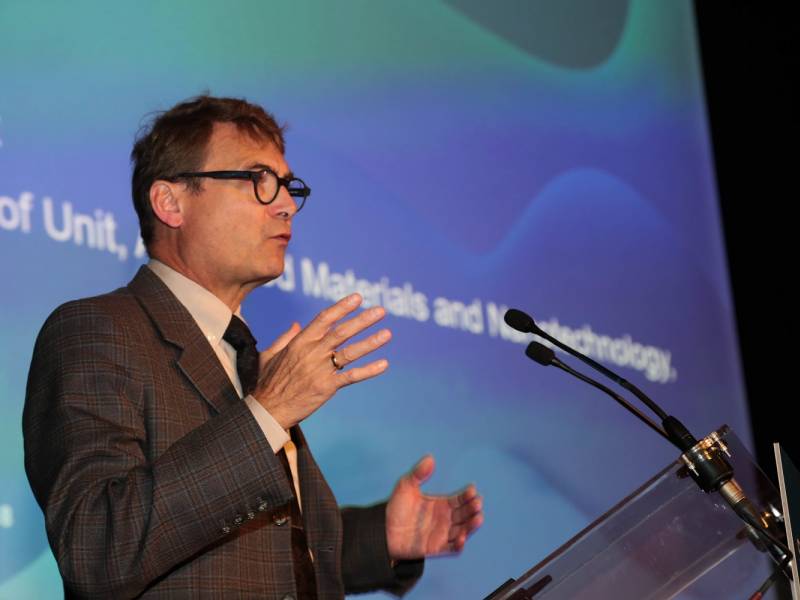
Potential topics in the materials (NMBP) area were presented by Søren Bowadt, Deputy Head of Unit; Advanced Materials and Nanotechnology at the Commission’s DG Research (pictured below). This was followed by Carmine Marzano, Programme officer for Advanced Manufacturing Systems and Biotechnologies who focused on process technologies – in particular the forthcoming SPIRE calls – and Panos Balabanis, Deputy Head of Unit for Eco-Innovation who concentrated on calls that offered direct support for the EU’s recent circular economy package and that connected economic and environmental gains.


In a second session call presentations from two further Commission speakers were presented. First, Arian Zwegers, Programme Officer for Technologies and Systems for Digitising Industry at DG-Connect described some of the calls in the digital with an emphasis on security, the concept of digital manufacturing platforms and big data applications.

Topics on Energy were described by Silvia Vivarelli, Senior Project Adviser on Horizon 2020 Energy Efficiency at the Executive Agency for Small and Medium-sized Enterprises (EASME) Goals in particular those putting energy efficiency first and providing the technical basis for the Clean Energy for all Europeans Package.  Reducing final energy intensity in industry was a key goal.

Power pitching, disruptive innovation
After the morning coffee break, seven of SusChem’s NTPS (Spain, Finland, Czech Republic, the UK, Belgium, Slovenia and Greece) were introduced by Anne Chloe Devic from Cefic and presented a range of project ideas on behalf of national stakeholders including SMEs, larger companies, RTOs and universities.

An intense second Project Pitching session after lunch saw 22 speakers from large and small companies, RTOs and universities presenting their project ideas. This was followed by two presentations on disruptive innovation in Europe.

Nicholas Zylberglajt, President and Co-Founder of the European Young Innovators Forum (EYIF) looked at trends and challenges in the European start-up ecosystem. To succeed start-ups needed access to talent and skills, funds and the ability to make effective and useful connections. He said that Europe had made huge progress over the last decade – the last five years especially – in terms of its start-up ecosystem with leading hubs in London, Berlin, Amsterdam and Barcelona.

Eric Pol, Senior Advisor at venture capital organisation Ventures4Growth described the sort of initiatives that he looks to invest in: companies doing good, relevant, and credible science with high quality, close-knit teams who were able to react to crisis. Overall, he thought that Europe was doing very well thanks to EU programmes and the existence of the single market.

A final, third pitch session saw presentations on behalf of nine sustainable chemistry start-up companies.


The day was completed with a networking cocktails and throughout the day a dedicated meeting room allowed individuals to meet and exchange ideas, speed date and build consortia. Information booths representing SusChem NTPs and the two SusChem inspired Horizon 2020 programme initiatives – the SPIRE cPPP (above) and the BBI JU (below) – were also open providing information on their forthcoming work programmes.


All in all, #SusChemBrokerage2018 was a packed and exhausting day with, in total, more than 50 project concepts presented and numerous individual contacts facilitated. We look forward to these exchanges leading to the birth of many new and successful projects in the next few months!

Monday, 22 October 2018

Want to boost innovation? Set the right framework for your industry


Are you facing non-technological challenges with your innovation agenda? Then the 2019 HARMONI Summit on regulation, standardisation and innovation transfer is for you! The summit will provide you with good ideas and solutions on how to address those challenges. The Summit takes place on 16 and 17 January 2019 at the CEN-CENELEC Management Centre; Rue de la Science 23; 1040 Brussels and registration has just opened

The HARMONI project is all about overcoming non-technological barriers to innovation as well as to innovation transfer: regulatory bottlenecks, standardisation needs and other related barriers.

The 2019 HARMONI Summit will involve two days packed with inspiring discussions, target-orientated solution development and cross-sectorial networking. It is your opportunity to get involved, discuss your ideas and generate solutions as well as to establish the right framework for your industry.

Key topics
The Summit will give you an insight into Harmoni’s key topics such as circular economy and waste as well as into the EU project world, innovation mission concepts and an exclusive first sight of the HARMONI project results.

The first day offers the opportunity to get in touch with interesting speakers and other industry representatives. It allows participants to engage with policy-makers and standardisation bodies during our evening event. A buffet and drinks are included to complement your stay. The second day is dedicated to discussions and solution generation.

A comprehensive programme for the Summit will be circulated by mid of November, including a detailed agenda, but registration is already open and will close on 7 January 2019. Participation is free of charge and you can register here.

If you have any questions about the event, or need more information, please contact Ann-Kathrin Blanke.

HARMONI will also be presenting on standardisation bottlenecks in the process industry at the Industrial Technologies 2018 (#IndTech2018) event from 29 to 31 October 2018 in Vienna.

More information on Harmoni
The SPIRE Horizon 2020 project HARMONI aims at bringing together all the relevant stakeholders in the process industry to jointly identify, analyse and propose solutions to the regulatory bottlenecks and standardisation needs that hamper their innovation processes and the market uptake of their results.

To do this, the project is developing and applying a methodology that ensures effective collaboration between the eight sectors involved in the SPIRE contractual Public Private Partnership to elaborate the solutions to the common challenges they face due to non-technological barriers including regulatory issues and lack of appropriate European Standards relevant to improving resource efficiency.

In addition, HARMONI is analysing, comparing and proposing recommendations to trigger the transferability of technical solutions among and beyond the SPIRE sectors.

The project activities should enable an optimised EU regulatory and standardisation framework that facilitates and supports innovation in the process industry; improved participation of the SPIRE community in EU regulatory and procedures; earlier and more active involvement of the SPIRE community in the EU standardisation process; and an overall better environment that maximises transferability rates for technologies across SPIRE sectors.

Tuesday, 9 October 2018

November European Innovation Summit celebrates 10 years

The 10th European Innovation Summit (#10EIS) organised by Knowledge4Innovation (K4I) is taking place from 26 – 29 November 2018 in and around the European Parliament in Brussels. The theme this year is ‘Europe – A Global Leader in Science, Technology and Innovation’ and the event programme will address hot topics currently on the policy agenda, developments in sectors crucial for Europe’s competitiveness as well as taking a deep dive into emerging technologies.

Plenary Sessions on Horizon Europe as well as future Cohesion Policy in support of innovation will provide input to the ongoing negotiations among the three European Institutions. A special session will be dedicated to the European elections and how MEPs can play the 'innovation card' during their campaign and help to create a true single market for innovation in the EU.

Hot topics
Horizontal topics to be addressed at #10EIS include Horizon Europe (the next Framework Programme for Research and Innovation), the EU-Cohesion programmes that support innovation policy implementation in all regions, and the forthcoming MFF, the Multiannual Financial Framework post 2020.

Emerging and Breakthrough Technology topics include Artificial Intelligence (AI), Big Data, Blockchain, Quantum Technologies, Next Generation Computing, Internet of Things and 5G mobile, Synthetic Cells and Genome Editing, and Augmented or Virtual Reality.

Many topics will bridge across industries and sectors such as Digital Transformation and Industry 4.0, Climate Change, Clean Energy, Food for all, Healthcare for a better life, Materials and Chemicals for sustainability, Urban Mobility and Carbon free transport, Financial Technology and Financial services, Education: adapting curricula to reality, Smart Cities, Circular Economy, Security and Cyber security, Space technology and much more.

For more information on #10EIS visit the K4I website. Both Cefic and SPIRE are partners of  #10EIS and will be participating in the event.

EUTop50
In parallel with #10EIS the EUTop50 Founders and Tech Festival (#EUTOP50) will be staged on 26-27 November at the Palais des Academies and the European Parliament in Brussels. #EUTOP50 celebrates and supports young talent from all over Europe by bringing together the continent’s leading innovation actors, technology developers, incubators and accelerators, investors, corporate venture organisations, family offices and all those who contribute to the development of a globally competitive entrepreneurial ecosystem in Europe.

Learning from last year’s #EUTOP50 event, and to achieve maximum impact, the 2018 edition has invited not only start-ups and scale-ups but also R&D innovators from Horizon 2020 and national research programmes and university technology developers from across Europe as well Graduate Companies from Universities of Applied Science.

During the event 25 winners will be selected to give pitches during the #EUTOP50 event, participate in the Mentorship Programme of Europe`s Future Innovation Leaders, compete for awards from #EUTOP50 Partners, meet Corporates and Investors, network with future Business Partners and participate at the #10EIS Opening Ceremony and Networking Reception.


Wednesday, 22 August 2018

Registration for SusChem Brokerage 2018 is now open!

The SusChem Brokerage Event 2018 which will take place on Tuesday 23 October 2018 at Hotel Le Plaza, Bld Adolphe Max 118-126 in central Brussels, Belgium. Registration is now open and participation in the event is free of charge!


SusChem’s vision is for a competitive and innovative Europe where Sustainable Chemistry, Biotechnology and enabling Digital technologies respond to Societal challenges by providing Sustainable solutions. 

The SusChem Brokerage event is a unique opportunity for large industry, academic institutions, research organizations (RTOs), SMEs and startups to form consortia and submit project proposals targeting the 2019 and 2020 calls of Horizon 2020. Project ideas can cover topics such as Nanotechnology, Advanced Materials, Biotechnology and Advanced Manufacturing and Processing (NMBP).


What can you expect?
The event aims to open up a dialogue on how bright Sustainable Chemistry ideas can enhance Europe’s competitiveness, and drive the development of beneficial partnerships between early-stage innovators, Industry and Academia.

During the brokerage event, participants can:
  • Be informed directly by European Commission representatives presenting open Horizon 2020 calls on SusChem-related topics (e.g., Materials, Process Technology, Eco Innovation),
  • Interact with the SusChem National Platforms (NTPs), representing a number of project ideas,
  • Connect with BBI JU and SPIRE and receive information on their project portfolio and open calls,
  • Pitch project ideas live to the SusChem Stakeholder community,
  • Reach out to other stakeholders via ‘speed-dating’ and networking sessions to form consortia.
The draft agenda for the event is available to download here and you can register for the event here.

The event kicks off on 23 October at 08h30 with presentations starting from 09h30. In the morning the Commission will present on call topics for Materials, Processes. And Eco Innovation calls followed by a project pitching session. After a coffee break the Commission will present its calls on ICT topics and Energy followed by a second project pitching session.

After lunch a presentation on ‘Disruptive Innovation in Europe’ will be made followed by a third project pitching session, an introduction to the speed-dating session and the session itself. The event will wrap up with a networking cocktail

Pitch those ideas!
To submit project ideas for the pitching sessions on the Horizon 2020-2019 calls, SusChem invites you to go to our GRANT-IT portal and select "Propose a Project" from the top  menu.

More details on how to submit your project proposal can be found here.

Wednesday, 8 August 2018

KETs Impact: Creating a paradigm shift in water treatment in the chemical industry

The recent SusChem White paper ‘Impact: Key Enabling Technologies (KETs) in Horizon Europe’ included a number of success stories highlighting publicly funded innovation involving KETs and the SusChem News blog is featuring a selection of these fruitful 'SusChem inspired' initiatives.


Sustainable chemistry is essential to the technological advance of KETs including advanced materials, advanced manufacturing technologies, industrial biotechnology, micro and nanoelectronics, nanotechnology and photonics. SusChem's key enabling technologies provide the critical building blocks for the solutions needed to achieve a sustainable low carbon circular economy. You can find out more here.

Our fourth success story involves the E4Water: a FP7 project that SusChem and the Water Supply and Sanitation Technology Platform (WssTP) were directly involved with. The chemical industry provides the highest potential for increasing eco-efficiency in industrial water management and the project addressed crucial process industry needs, to overcome bottlenecks and barriers to enable integrated and energy efficient water management. The main objective was to develop, test and validate new integrated approaches, methodologies and process technologies for a more efficient and sustainable management of water in the chemical industry that could also be adopted in other major industrial sectors.

Water fit-for-purpose management
Economically and ecologically efficiency in the European Chemical Industry

Public funding brought an Innovation Ecosystem together to take on a significant challenge to develop and demonstrate eco-efficient industry water management

Water is a scarce resource and a key element for the development of our society and economy. The chemical industry, as a water user and solution provider of innovative products, technologies and services, offers significant potential for increasing eco-efficiency in industrial water management. To deal with critical challenges, such as the need to reduce water use, wastewater production and energy use, an EU FP7 funded project applied new research and development concepts to boost eco-efficiency and sustainability. E4Water has addressed a wide range of aspects relevant for an efficient integrated industrial water management in practice. Developments provided and demonstrated in the six case studies comprise: utilisation of alternative water sources; treatment of organic and inorganic wastewater streams and concentrates; recovery of valuables and energy from wastewater; linking process water and cooling water networks; combining different scales in water management (process – plant – site – local – regional); introducing tools to optimise water management; Life Cycle Assessment of selected measures; considering regulatory framework aspects. The success of the E4Water project has shown what is possible in the chemical and related process industry sectors in terms of ‘fit for purpose’ water management effectively decoupling industrial production from the use of fresh water, other natural resources and energy. The outcome of E4Water strengthens both, the leadership of the European Water Technology Industry and of position of the European Process Industries.


How was the breakthrough innovation achieved?
The E4Water project did create a complementing consortium with partners from nine EU countries: large chemical enterprises, leading European water sector companies, innovative research and technological development (RTD) centres and universities active in the area of water management. The European Technology Platform for Water (WssTP), the European Technology Platform for Sustainable Chemistry (SusChem), the German Society for Chemical Engineering and Biotechnology (DECHEMA), the SPIRE Public-Private Partnership (PPP) and water authorities were also linked through their members in the project. 

Impact

  • Economic impact: Significant economic benefit can be gained, for example, operating expenditure (OPEX) was reduced by up to 30% for every m3 of saved freshwater/year (depending on local conditions); or eliminating the need for incineration (e.g. 5 000 tonnes/annum/plant) together with establishing a business case, leading to revenue generation.
  • Environmental impact
  1. Reduced fresh water uptake of 40-80% resulting in freshwater savings of ~3 million m³/year in one case. 
  2. Reduced wastewater production of 30-80%, with close to 100% (loop closure) in one case and resulting in reduction of waste water production by ~2.5 million m3/year in another case. 
  3. Resource recovery, efficiently extracting resources from water and returning these to the prime process or a local increase in resource efficiency by use of algae. 
  4. Reduced energy use of up to 20% by using low energy technology, heat recovery, or optimising the integrated process with the use of improved modelling.
  • Social impact: Water is a key to resource efficiency, climate action and other major societal challenges: Efficient water management is also essential to enhancing resource efficiency, improving energy efficiency and thereby tackling climate change and ensuring the continuing supply of raw materials. The results are also key to implementing process intensification concepts that will form the basis of the chemical and process plants of the future. The E4Water resulted in strengthening the competitive position for Europe's process industry and water industry and keeping Europe an attractive location for industry.

More information
E4Water - Economically and Ecologically Efficient Water Management in the European Chemical Industry (FP7 GA 280756)

Read the SusChem White Paper ‘Impact: Key Enabling Technologies (KETs) in Horizon Europe

Monday, 6 August 2018

KETs Impact: CO2 as a raw material – The Carbon4PUR Project

The recent SusChem White paper ‘Impact: Key Enabling Technologies (KETs) in Horizon Europe’ included a number of success stories highlighting publicly funded innovation involving KETs and the SusChem News blog is featuring a selection of these fruitful 'SusChem inspired' initiatives.


Sustainable chemistry is essential to the technological advance of KETs including advanced materials, advanced manufacturing technologies, industrial biotechnology, micro and nanoelectronics, nanotechnology and photonics. SusChem's key enabling technologies provide the critical building blocks for the solutions needed to achieve a sustainable low carbon circular economy. You can find out more here.

Our third highlighted success story features the use of CO2 as an alternative feedstock for the chemical industry. The article highlights a number of projects undertaken by Covestro with German government funding and European projects enCO2re, funded by the European Institute for Innovation and Technology (EIT), and the SPIRE Horizon 2020 project Carbon4PUR that looks to turn industrial waste gases (mixed CO/CO2 streams) from energy intensive steel mills into intermediates for polyurethane plastics used for rigid foams, building insulation, coatings and other consumer products.

Carbon dioxide as a raw material for plastics
Innovative process technology reduces petroleum use

Availability of combined public funding appears crucial to mitigate the high risk of early research and complement own expertise with partnerships along the value chain.

Covestro has been working for many years on the development of technologies to turn CO2 into a valuable resource and for its implementation in making polymers. This “waste” gas is an alternative source of carbon and can substitute fossil raw materials and be used to make building blocks for polyols – a key starting material for polyurethanes. The first breakthrough came when Covestro’s researchers discovered the right catalyst and process for an economically and ecologically efficient reaction. As a first product stemming from the newly developed technology, CO2-based polyols for flexible foam found in mattresses and upholstered furniture are already on the market. Other kinds of products for further applications are under development – for example to obtain chemical building blocks and polymer intermediates for rigid foams and coatings to be applied in building insulation and coatings. The new technology, currently under investigation, is expected to reach Technology Readiness Level (TRL) 6 by 2020. The next step, after 2022, might be building an industrial plant for the production of CO2-based chemicals at large scale.


How was the breakthrough innovation achieved?
Partnerships between research-based companies and application-oriented research organisations along the value chain are the key to success. With a portfolio of collaboration projects, expertise can be built up starting from low TRL levels. At Covestro, first samples of CO2-based polyols were produced on a mini-plant scale after only three years. Five years later, a demonstration plant with the capacity of 5,000 metric tons/year went on stream. To reach high impact, private investments have been complemented by public funding obtained from both German national sources and EU funds. 

Impact
With the new technology, the use of petroleum can already be reduced by up to 20% in the case of CO2-based foams and 25% in case of elastomers. Also, the carbon footprint is better than with conventional processes. In the latest project, substantial reduction of process energy consumption is also expected by as much as 70%. This is an important contribution to sustainability and achieving the circular economy and helps to close the CO2 loop. 

More information
Carbon4PUR - Turning industrial waste gases (mixed CO/CO2 streams) into intermediates for polyurethane plastics for rigid foams/building insulation and coatings (Horizon 2020/ SPIRE GA 768919)

enCO2re flagship project CroCO2PETs (Climate-KIC / European Institute of Innovation and Technology)

r+impuls Production Dreams (German Federal Ministry of Education and Research FKZ 033R150)

CO2Plus Dream Resource (German Federal Ministry of Education and Research FKZ 033RC002)

MatRessource Dream Polyols (German Federal Ministry of Education and Research FKZ 03XP0052)

Read the SusChem White Paper ‘Impact: Key Enabling Technologies (KETs) in Horizon Europe