The SusChem News Blog is now hosted on the SusChem website in the News Room. You will be redirected there in 10 seconds
.

Showing posts with label Bayer. Show all posts

Friday, 10 August 2018

KETs Impact: The SusChem flagship for flexible, continuous chemical production

The recent SusChem White paper ‘Impact: Key Enabling Technologies (KETs) in Horizon Europe’ included a number of success stories highlighting publicly funded innovation involving KETs and the SusChem News blog is featuring a selection of these fruitful 'SusChem inspired' initiatives.


Sustainable chemistry is essential to the technological advance of KETs including advanced materials, advanced manufacturing technologies, industrial biotechnology, micro and nanoelectronics, nanotechnology and photonics. SusChem's key enabling technologies provide the critical building blocks for the solutions needed to achieve a sustainable low carbon circular economy. You can find out more here.

Our fifth success story features one of SusChem’s original Flagship projects from FP7 - the F3 Factory – and one of its seven case studies. F3 stood for fast, flexible, future factory. Launched in 2009, the €30 million EU-funded project was a major public-private sector initiative under FP7 that sought to define and demonstrate a new paradigm in modular sustainable chemical production technology. You can find more information on all seven F3 Factory case studies here.

Modularised solutions enabling solvent-free process
Improve the Competitiveness of the European Chemical Industry – F3 Factory

Public funding creates cross-sectorial collaboration, breakthrough technology advancement and fast-track-to-market of new products

BASF was part of the consortium behind the “F3 Factory” project. This consortium – consisting of 26 partners from academia and industry – aimed to develop an approach for radical modular process design. This concept enabled significant process intensification and at least 25% less energy consumption.

How was the breakthrough innovation achieved? 
The concept of modularised solutions was investigated for different industrial processes. Results from academia were transferred in business case studies and were demonstrated at commercial scale in an open access backbone plant for modular continuous production (INVITE Research Centre). BASF together with Bayer Technology Services have collaborated to demonstrate the concept of multi-product, small-to-medium scale production for high viscous polymers in a solvent-free manufacturing process. This collaboration was supported by Technical University Eindhoven and the University of Paderborn.


Impact

  • In addition to the technological advancement achieved in this project, the transfer from batch to continuous of a new solvent-free polymerisation process has demonstrated both cost (30% reduction of energy demand) and environmental (100% solvent reduction) impact for the production of highly viscous polymers.
  • The modularisation concept investigated in the demonstration plant furthermore allows a reduction of investment cost (up to 40%) compared to conventional processes and reduced time-to-market (up to 50%).

More information
F3 Factory 'Flexible, fast and future production processes' (FP7 GA 228867) 

Read the SusChem White Paper ‘Impact: Key Enabling Technologies (KETs) in Horizon Europe’

Tuesday, 7 November 2017

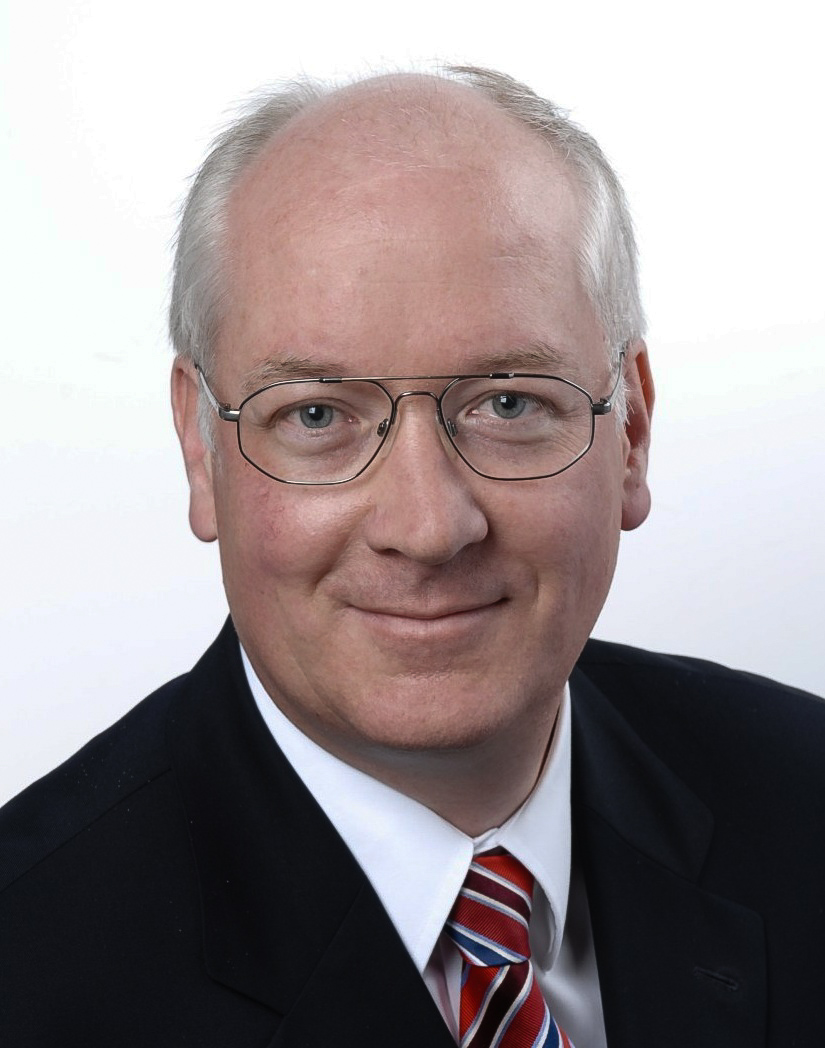
Introducing new SusChem Chair: Dr. Markus Steilemann

The European Technology Platform for Sustainable Chemistry (SusChem) Board has announced that Dr. Markus Steilemann is its new Chair, succeeding Dr. Klaus Sommer who served six years in this position.


Dr. Steilemann (above), who will lead the Board in managing SusChem’s strategy and activities, brings valuable expertise in innovation and management. He is the Chief Commercial Officer of material producer Covestro and - since 2015 - a member of the Covestro Board of Management. His responsibilities encompass all commercial functions, including innovation and the company’s three segments: Polyurethanes, Polycarbonates and Coatings, Adhesives and Specialties.

Dr. Steilemann holds a PhD in Chemistry and started his career at the Bayer Group, where he moved to various management positions at the former Bayer MaterialScience, which has become Covestro in 2015.

SusChem beyond 2020
“I am honoured to take the leadership of SusChem at a time when new strategies in the European research and innovation policy, missions and funding beyond 2020 are being designed,” Dr. Steilemann said, adding that SusChem is already working together with the European Commission on the preparation of the next EU Framework Programme after Horizon 2020.

“The role of the chemical industry should feature prominently in it as the crucial link between scientific breakthroughs and societal challenges for delivering impact. The disruptive technologies needed to transform our economy and society towards a more sustainable future will be enabled through chemistry,” Dr. Steilemann underlined.

A driving force for KETs
SusChem is a driving force behind the EU strategy for Key Enabling Technologies. Under Dr. Sommer’s leadership its strategy was refocused and its role for accelerating innovation reinforced. 

SusChem now includes 14 national technology platforms, connecting national and regional sustainable chemistry initiatives and developing synergies with EU policy and funding schemes. 

Dr. Sommer (pictured right) played a decisive role in the discussions, initiated by SusChem, which lead to the establishment of the SPIRE Public-Private Partnership in the process industries and of which he was also Chair of the Board of Management.

Wednesday, 18 May 2016

Wanted: Ideas for re-using CO2

The Climate-KIC flagship programme EnCO2re (Enabling CO2 re-use) working for sustainable production and circular economy has launched its first open call for proposals to the public. This call is aimed at projects that will begin in September (or earlier) and produce meaningful results within 2016. The selection process is two part, but to take part you need to be quick as the first submission deadline is 27 May.

EnCO2re will add new workstreams in the second half of 2016 and is looking for:

  • Projects related to any element of the CO2 value chain, from capture to conversion, and logistics
  • Organisations that bring industrial and/or start-up perspectives with pathways to commercialisation
  • Technologies and demonstrations for CO2-based products, especially intermediates and polymers
  • Business-model innovations that support the development of a CO2 re-use value chain
  • Other innovations, including incentives, that advance progress toward large-scale re-use of CO2

Two phase
The call is structured in two phases. The first phase requests a short Expression of Interest using a common template by 27 May.  In the EnCO2re Call profile you can find more details on the call.  You will find some help and guidelines for completing the EoI here.  Successful ideas that meet the call interests and requirements will be invited soon after 10 June to submit a full proposal by 1 July.

Because the programme is an open innovation programme and would like to be as inclusive as possible, all parties interested in joining enCO2re are urged to submit an EoI, even if they do not have a project that can begin in 2016.  All submissions should be emailed to Ted Grozier at Climate-KIC.


About EnCO2re
EnCO2re is an innovation and market development programme for CO2 re-use. Their vision is a balanced and prosperous market for re-used CO2, beginning with a focus on polymers and chemical intermediates. Their ambition is large-scale CO2 re-use through the establishment of a CO2 value chain.

EnCO2re was co-initiated by Climate-KIC and industry partner Covestro, forming a consortium of 12 European partners from industry and research sectors. The programme has a comprehensive approach towards CO2 re-use and comprises activities in technology development, product development, technology acceptance, ecological assessments and market development.

EnCO2re is pronounced like the French word encore, meaning “again,” in reference to the re-use of CO2 the programme aims to enable.

The initial open innovation consortium consists of 12 European partners: Bayer Technology Services, Chalmers University of Technology, Covestro, Imperial College London, Johanneberg Science Park, Engie Labs, Mines ParisTech, RWTH Aachen, TU Berlin, TU Delft, University of Copenhagen and Wuppertal Institut.

Tuesday, 8 December 2015

Taking a Leaf out of Nature’s Book

Mimicking photosynthesis may be the key to unlocking a future energy scene dominated by renewables. But nature’s simple process still holds many secrets. In light of the high-level Cefic breakfast debate on advanced materials and energy challenges that took place at the 7th European Innovation Summit, we asked science writer Ben Skuse to delve into how breakthroughs in materials may help resign fossil fuels to the past through the development of novel technologies and perhaps – eventually – artificial leaves.

The development of novel processes using waste carbon dioxide - up to and including the ultimate goal of artificial photosynthesis - feature in the SusChem Innovation and Research Agenda. 


Photosynthesis is a wonder of nature. It transforms energy from the light that the Sun bathes the Earth in to energy‐rich sugars. Simply put, it takes carbon dioxide and water, and converts them to glucose and oxygen.
There are two stages to this process. The first – water splitting – converts water into oxygen and a protein. In the next step, the protein reacts with CO2 to produce biomass. So far, scientists have only managed to master the former, splitting water using electrolytic processes to create hydrogen gas instead of biomass. But even on its own this feat was a huge achievement, paving the way for hydrogen fuel cell vehicles being actively commercialised today by the likes of Daimler and Toyota, and for the power industry taking hydrogen energy storage seriously as an option to deal with intermittent renewable power generation.

Hydrogen has some limitations
While hydrogen has one of the highest energy densities of any fuel, it is also the lightest of all elements. This means its storage requires very large volumes or very high pressures, resulting in issues of safety. Furthermore, the high cost of developing infrastructure and the energy intensity of the water splitting process offer sceptics a strong argument that hydrogen may not be the future for energy storage or the automotive industry.

“Hydrogen has some limitations,” confirms Sophie Wilmet, Cefic Innovation Manager. Sophie believes CO2 conversion technologies might provide a good alternative for large-scale storage of renewable energy using existing infrastructure. “CO2 can be used to address the energy storage challenge brought about by the rise in renewables, as well as for alternative fuels for transport.”

Carbon as a resource
Although not using direct photoconversion of CO2, a number of technologies are being actively explored to transform CO2 from a reviled waste product to a useful resource, as Sophie explains: “From CO2 you can produce basic and added-value chemicals”.

For example, a process co-developed by RWTH Aachen University and Covestro, formerly Bayer MaterialScience, has led to the construction of a plant that will be opened in 2016 in Dormagen, Germany, capable of producing up to 5000 metric tons per year of polyols, a polyurethane intermediate. About 20% of the content of the polyols will be from waste CO2 captured from a nearby ammonia plant, with the final material a flexible foam for mattresses.

Another innovator is Icelandic company Carbon Recycling International (CRI), whose renewable methanol reduces carbon emissions by more than 90% compared to fossil fuels. The fuel is produced from CO2 and hydrogen that comes from renewable sources of electricity. The world's first liquid renewable transport fuel production facility from non-biological sources of energy, CRI has a 4000 metric ton per year production capacity.

Further novel ideas include using large volumes of waste CO2 from industrial processes to produce syngas (BASF);  converting waste gases from iron and steel mills into ethanol and other important chemicals, such as acetic acid, acetone, isopropanol, n-butanol or 2,3 butanediol (Siemens/LanzaTech); and creating a closed carbon cycle using renewable energy, CO2 and water to provide sustainable fuels for vehicles and decentralised electricity generation (sunfire).

Mimicking nature
Capable of absorbing CO2 at the very low concentrations (400 parts per million) found in the air, absorbing energy from low-photon count sunlight, and photosynthetic cell self-repair, the ‘technology’ within plants is far more advanced than anything devised by humankind so far.
However, with aeons to perfect the technique, it comes as something of a surprise that energy conversion in plants is not actually particularly efficient: “For most plants the photosynthetic and storage efficiency is an average of 1%,” explains Dr Junwang Tang, Reader in Energy from University College London, UK.  Why is photosynthesis so inefficient? “The natural process is capable of utilising 100% of photons but green plants give up that potential to protect themselves – nature doesn’t need so much energy.”

As a result, if society were to mimic photosynthesis unaltered, there would not be enough land on Earth to cycle the carbon required for a sustainable future. Instead, researchers are aiming to enhance the process from a number of angles. “We have learnt how nature stores CO2 and we have realised that we can probably do better,” exclaims Junwang.

Direct photoconversion
A major roadblock in developing such technology is finding photocatalysts that can absorb as much of the solar spectrum as possible while still being efficient. As plants only use a fraction of the visible range, great potential lies in the untapped electromagnetic spectrum, so photocatalysts that respond to different regions are being investigated. Other researchers are exploring doping, nanomaterials and co-catalyst surface-loading to improve the photocatalytic response of promising materials.

However, with numerous other hurdles to climb before real-world application, Sophie expects there to be a long wait before artificial leaves are realised: “It still requires development in terms of new concepts, designs of photoelectrodes and integration of the system,” she explains. “For Cefic, it’s part of our overall long-term strategy, but more like a second- or third-generation technology that will not have impact by 2020.”

Even though tangible impact from direct photoconversion seems a long way off, Europe’s competitors are keen to advance the state of the art now, with a number of multi-million Euro projects funded in Japan, a Joint Centre for Artificial Photosynthesis set up in the US and well-funded initiatives in many other parts of the world.

As a result, Junwang believes Europe’s highly able yet currently fragmented and small community of scientists working in the area needs to be brought together: “Europe is very strong in fundamental understanding of artificial and natural photosynthesis, but countries like Japan, USA and China are investing heavily in this technology through well-funded projects. If we don’t invest more – just like has happened with graphene – other countries will heavily patent the field.”

The Cefic breakfast debate
The Cefic breakfast debate took place at the 7th European Innovation Summit in the European Parliament on 8 December. The event was hosted by Jerzy Buzek, MEP and covered the wide-ranging topic of 'Advanced Materials and breakthrough opportunities for the energy transition’.

Thursday, 13 August 2015

SusChem introduces: Flavio Benedito

Cefic Research and Innovation has recently recruited two new Innovation Managers who will be heavily involved with SusChem activities over the next few years. Flavio Luiz Benedito and Martin Winter both started their secondment to Cefic in June and many members of the SusChem community will have met them at the 2015 SusChem Stakeholder event. In this and a subsequent article we introduce both managers and ask them about what they are expecting to achieve for Sustainable Chemistry in Europe during their time with the platform. 

In this article we talk to Flavio. You can find the interview article with Martin here.

Career highlights
Flavio got his bachelors degree in Chemistry in Brazil and moved to Germany in 2003 to finish his Masters degree at Bayer. There he had the opportunity to be involved in the research and development of new fungicides.

Following this he was awarded a full scholarship to do a PhD at the Max-Planck-Institute for Bioinorganic Chemistry. His fascination for interdisciplinary research continued in 2009 when he joined the group of Prof. Ferdi Schueth as a post-doc fellow at the Max-Planck-Institute for Coal Research working in the field of nanomaterials and solid state Chemistry.

Seeking broader international experience he moved to Austria in 2010 to work as a research scientist in the field of natural product synthesis at the Innsbruck University. To combine and apply all this acquired know-how, he returned to Germany in 2011 and joined BASF in the Organic Electronics project cluster developing research in organic photovoltaics, OLEDs, as well as other upcoming technologies. This background in very innovative and sustainability-focused topics helped him to join the Cefic Research and Innovation team on secondment from BASF in June 2015.    

In his spare time Flavio likes sports, travels, plays the piano and helps to organize and play in benefit concerts.

What is your view on Sustainable Chemistry?
Sustainable Chemistry enables a better use of natural resources applied to fulfil societal needs for chemicals and services. One of the main key points of Sustainable Chemistry is to enable the development of safe, effective, and eco-efficient chemical processes that have benign environmental impact. 

But in my opinion Sustainable Chemistry goes far beyond this; it stimulates innovative research, opens several opportunities for new value chains favouring economic growth, boosts the chemical sector as a whole, generates new jobs, and is able to offer a better life quality for society.   

How do you see your new role contributing to your view on Sustainable Chemistry? 
The role of a Research & Innovation Manager is to find synergistic pathways that both industry and government can align their interests in order to address societal needs. One good example is the coordination of PPPs (Public-Private-Partnerships) that combines public funding and industrial initiatives to promote projects for the development of new innovative and sustainable technologies and processes. 

What challenges do you foresee? 
Nowadays the majority of chemical production relies on oil and the migration to a more biobased production is seen as an evolution and not a revolution. A significant change in the mind-set is needed. To influence and promote this change, intermediate governmental interests and industry willingness towards sustainability are some of the greatest challenges I foresee.   

What do you hope to achieve by the end of your three years at Cefic? 
After three years at Cefic I hope to have generated solid results, contributed and participated in several projects, helped the chemical industry in representing their interests, expanded my network and enjoyed a great time and experiences with my wonderful colleagues in the team.

What areas are you looking to collaborate with others and how do you prefer to be contacted? 
In the beginning I will mainly be involved in bioeconomy and rare raw materials projects, but I will also have the chance to work on other topics in the future. If you want to contact me please e-mail me directly.

Tuesday, 16 July 2013

F3 Factory Case Study: Active Pharmaceutical Intermediates

As a F3 Factory Case Study Bayer Technology Services (BTS) investigated the transfer of a multi-step synthetic batch process for pharmaceutical intermediates to a fully continuous manufacturing process in a modular, flexible infrastructure including downstream processing. Working with other industrial and academic partners, Ehrfeld, Britest, TU Dortmund, University of Paderborn, Ruhr-University Bochum and RWTH Aachen, this case study successfully validated and demonstrated a major paradigm shift towards modular, continuous processing of active pharmaceutical intermediates.

The BTS project sought to assess the potential to replicate the cost, quality and efficiency benefits of large-scale continuous production in modular, flexible, small-scale container-based production units. In demonstrating a sequence of synthesis stages in a container environment, BTS also integrated a range of innovative, highly efficient process equipment solutions.

Starting from a five stage reaction sequence with intermediate isolation, key stages of the project included:
  • chemical redesign against the paradigm shift of continuous processing
  • simultaneous chemical and continuous process development
  • integration of reaction and separation steps in the container unit  
  • demonstration of the new process in the modular F³ Factory design
Cost and efficiency
Research and development activity in the first phase of the project demonstrated significant savings and efficiency gains with cross-project benefits for the wider F³ Factory programme.

Transfer of the chemical synthesis to an intensified fully continuous process led to a significant reduction in processing steps, reaction time and the amount of solvent used.

BTS operated the process sequence successfully for several days at bench scale, confirming the assumed benefits of the F³ Factory approach in terms of impact on footprint, resource consumption, continuous monitoring and process operability. Key benefits identified to date include:
  • reduction in starting material costs (average 15% depending on transformations involved)
  • increase in space time yield (up by factors >100)
  • significant reduction in both reaction and processing time
  • simplified work up processes due to elimination of intermediate isolation and purification stages
  • unification of solvents and reduction in consumables
  • reduction in equipment size
  • reduction in design and installation costs (up to 30% depending on transformations involved)
  • reduction in apparatus cost (approximately. 30% depending on intensification of the specific modules)


Modular, flexible production
This was the first industrial case study to be demonstrated in the INVITE backbone facility (see above), and therefore the BTS project led the way in establishing standards for process equipment assemblies (PEAs), the Process Equipment Container (PEC) and its integration with the backbone infrastructure services at INVITE.

To achieve maximum flexibility the standardised and scalable equipment used for the development and production phases enabled a fast and robust transfer from research to production in line with the development time line and with minimal effort.

Modular PECs can provide the required production capacity throughout the full product life-cycle. In addition, standardised chemical and physical processing PEA units can allow faster implementation of new manufacturing strategies in the highly regulated environment of pharmaceutical production.

In the latter stages of the project, BTS successfully demonstrated synthesis steps 1 and 2 in the case study’s PEC at the INVITE backbone facility.

The technological and economic benefits demonstrated through this case study provide a platform for the introduction of new technologies, production concepts and process equipment solutions for the European pharmaceutical manufacturing sector.

More information
For more information visit the F3 Factory Project website.